
Sunil Wahi outlines how enterprise AI is shifting from pilots to core operations, driven by business outcomes, CFO scrutiny, and integrated data strategies—while multi-agent ecosystems and interoperable systems define the next phase of AI at scale.
As enterprises across Asia Pacific move beyond early-stage AI experimentation, the focus is rapidly shifting toward embedding intelligence into core business processes. The conversation is no longer about whether to adopt AI, but how to do so in a way that delivers measurable business outcomes, while navigating the growing complexities of data, compliance, and ROI.
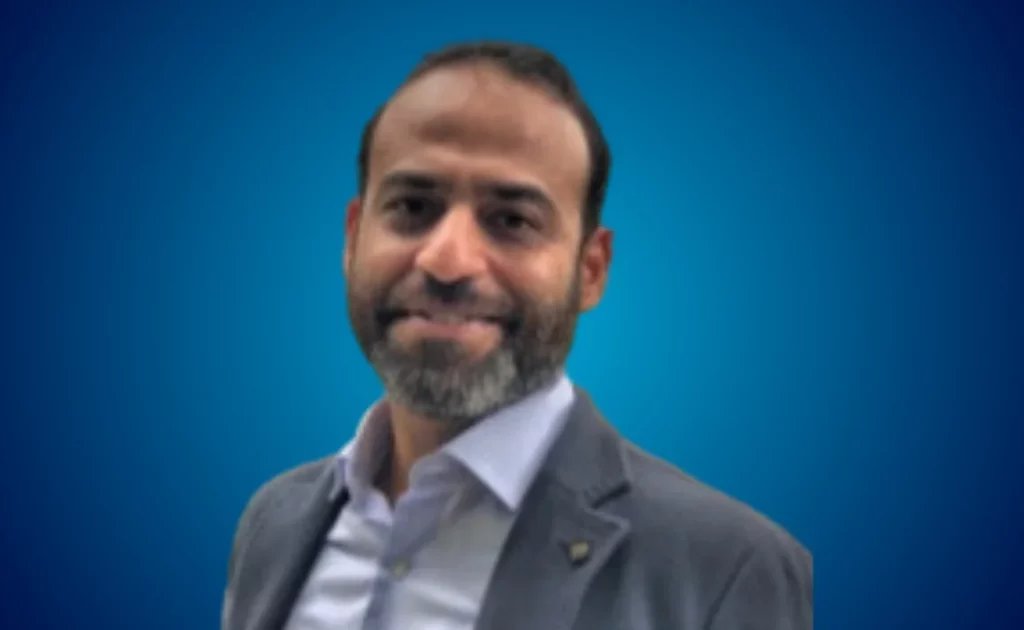
In this context, Sunil Wahi, Vice President and Head of Solution Engineering, Asia Pacific at Oracle, in a recent interaction with CIO&Leader, shared his perspective on how Oracle Fusion Cloud Applications is enabling organisations to operationalise AI at scale, and why the future of enterprise technology lies in deeply integrated, interoperable systems. Excerpts from the interaction
CIO&Leader: We are seeing increasing conversations around AI-driven business processes. How is adoption evolving among enterprises?
Sunil Wahi: What’s clearly changing is the nature of the conversation itself. Earlier, AI discussions were largely experimental focused on pilots, isolated use cases, or innovation labs. Today, the dialogue has shifted toward AI as a core enabler of business processes.
The conversation has moved from experimenting with AI to embedding it directly into core business processes.
Enterprises are asking: How do I embed intelligence into finance, procurement, HR, or supply chain, not as an add-on, but as a native capability?
We are seeing strong traction in pre-configured, plug-and-play AI agents that can be activated with minimal effort. These agents are not replacing human decision-making but augmenting it, introducing automation where it makes sense, while retaining governance and oversight.
For instance, in document-intensive workflows, organisations can now automate classification, validation, and routing within hours, dramatically improving cycle times and accuracy.
That said, adoption is still uneven. The key message to customers is:
don’t wait for perfection, start adopting, learn, and scale. The pace of innovation will continue, but value comes from continuous adoption, not delayed decisions.
CIO&Leader: Cloud maturity varies significantly across APAC. How do you ensure your solutions adapt to different geographies and compliance requirements?
Sunil Wahi: APAC is not a homogeneous market, it’s a collection of highly diverse economies, each with its own regulatory, operational, and digital maturity landscape.
Our approach has been to build a globally consistent yet locally adaptable platform. This means:
- Strong localisation across countries (taxation, compliance, reporting)
- A global tax engine that simplifies multi-country operations
- Continuous updates to reflect regulatory changes
However, the bigger challenge isn’t just compliance, it’s where each customer is in their transformation journey.
Some organisations are modernising legacy systems; others are leapfrogging directly to cloud. The cloud enables us to meet both scenarios through a modular, phased adoption approach.
Enterprises can start with a focused function—say finance or procurement—and expand as their maturity grows. This reduces risk, accelerates adoption, and aligns investments with outcomes.
CIO&Leader: Data is foundational to AI. How are you helping organisations manage and govern data effectively?
Sunil Wahi: AI without a strong data foundation is fundamentally flawed. What we’re seeing is that many organisations underestimate the complexity of data readiness, data silos, inconsistent definitions, and governance gaps.
Our strategy is to address this through an integrated AI data platform that sits at the core of the application ecosystem. This platform enables:
- Unified data governance
- Real-time data processing
- Scalable data architectures
The “adopt and extend” model is particularly important here. Customers can quickly adopt standardised processes while still retaining the flexibility to extend and customise where needed.
This balance between standardisation and flexibility is critical, it ensures speed without sacrificing differentiation.
CIO&Leader: Oracle emphasises “bringing AI to the data.” What does that mean in practice?
Sunil Wahi: This is a fundamental architectural principle, especially in an era where data privacy and sovereignty are non-negotiable.
Instead of moving large datasets across systems, we bring AI capabilities closer to where the data resides. Practically, this means:
- Only a minimal, context-specific data subset is processed
- Data is not persistently exposed to external models
- Outputs are generated within a controlled, secure loop
This approach significantly reduces risk while maintaining performance and scalability.
Running this within Oracle Cloud Infrastructure further strengthens security, as organisations benefit from a unified, enterprise-grade cloud environment.
The net result is trustworthy AI adoption, which is critical for enterprise-scale deployments.
CIO&Leader: Can you share an example where this approach has delivered measurable impact?
Sunil Wahi: A large logistics organisation in APAC provides a good example of progressive AI adoption.
They began with generative AI use cases, automating job descriptions, enhancing performance management frameworks, and improving internal productivity.
From there, they moved into process-level intelligence, particularly in finance and procurement, gaining better visibility and decision-making capabilities.
Now, they are transitioning toward agentic AI, where systems can autonomously orchestrate workflows based on predefined rules and real-time insights.
This phased journey, from assistive AI to autonomous processes—is what we expect to see across industries.
CIO&Leader: With rapid technology evolution, what architectural decisions should enterprises make today to stay future-ready?
Sunil Wahi: The biggest mistake organisations can make is to over-engineer too early.
Every technology wave—from ERP to RPA—has followed a similar maturity curve. Early adopters often try to build highly customised, complex solutions, which later become difficult to scale or sustain.
Our recommendation is to:
- Prioritise embedded intelligence within enterprise applications
- Leverage pre-built, industry-aligned use cases
- Focus on outcomes rather than architecture complexity
The reality is that 60–70% of enterprise requirements are common across industries. Addressing these through standardised solutions delivers faster ROI and reduces risk.
Customisation should come later, once the foundational value is established.
CIO&Leader: How are CFOs influencing AI adoption decisions today?
Sunil Wahi: CFOs have become central stakeholders in technology decision-making.
Unlike earlier phases, where innovation teams drove AI initiatives, today’s investments are being evaluated through the lens of financial impact and accountability.
CFOs are asking:
- What is the measurable ROI?
- How quickly can we realise value?
- What risks are we taking on?
This is actually a positive shift. It forces vendors and CIOs to move beyond hype and focus on tangible outcomes—productivity gains, cost optimisation, and revenue impact.
The most successful AI deployments today are those that are business-first, not technology-first.
The most successful AI deployments today are business-first, not technology-first.
CIO&Leader: What is driving enterprise decision-making today—cost, performance, or innovation?
Sunil Wahi: Cost has become a hygiene factor. Organisations expect cloud solutions to deliver cost efficiencies; it’s no longer a differentiator.
The real driver is innovation-led growth. Enterprises are asking:
- How can we enter new markets faster?
- How can we improve customer experience?
- How can we make better decisions in real time?
This is where AI and cloud together become powerful, enabling speed, agility, and intelligence at scale.
CIO&Leader: Which industries are seeing the most traction for Fusion Cloud applications?
Sunil Wahi: We’re seeing strong momentum across sectors like BFSI, healthcare, and professional services.
However, manufacturing and supply chain are emerging as high-growth areas, especially with initiatives like Make in India.
These industries are increasingly looking at:
- Smart operations
- AI-driven planning
- Predictive supply chains
The convergence of cloud and AI is enabling a new operating model for manufacturing, which is both agile and data driven.
CIO&Leader: How do you balance innovation with compliance across diverse APAC markets?
Sunil Wahi: Compliance is not a constraint, it’s an integral part of the design.
We address this through flexible deployment options, allowing customers to choose models that align with their regulatory requirements—whether public cloud, dedicated environments, or localised deployments.
At the same time, we continuously invest in localization and regulatory alignment, ensuring that innovation does not come at the cost of compliance.
This is particularly important in APAC, where regulatory landscapes are constantly evolving.
CIO&Leader: What key AI trends will shape the next 12–18 months?
Sunil Wahi: The next phase of AI will be defined by interoperability and orchestration.
We are moving toward a world of multi-agent ecosystems, where:
- Different AI agents collaborate across systems
- Enterprise applications interact with external AI platforms
- Workflows become increasingly autonomous
This shift from isolated intelligence to connected intelligence will redefine how enterprises operate.
The real value of AI will come not from individual capabilities, but from how effectively systems work together.
The real value will come not from individual AI capabilities, but from how effectively they work together across the enterprise ecosystem.