
Every few decades, a new technology arrives that sparks the same question: Will this take away jobs? Artificial intelligence is the latest trigger for that anxiety. The headlines are dramatic, the predictions extreme, and the uncertainty real. But if we step back and look at history, a more balanced truth emerges as technology does not eliminate work; it transforms it. AI is not here to replace humans. It is here to redefine how humans work.
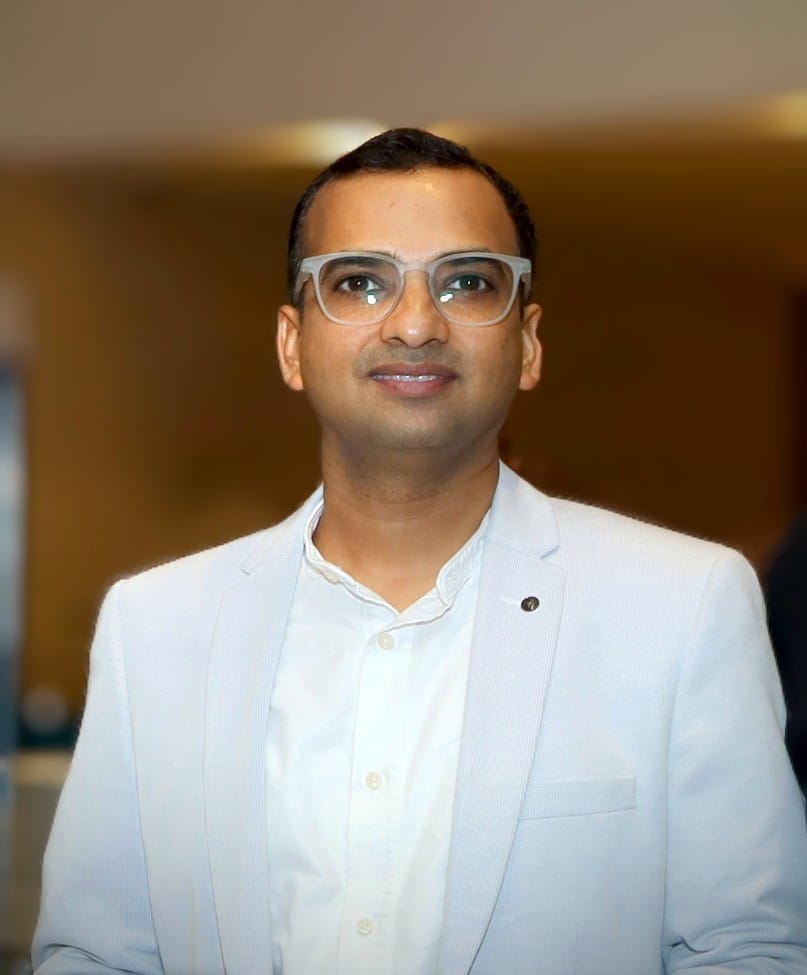
Co-Founder
Style Lounge
The Shift We Are Missing
The conversation around AI is often framed as a binary – human versus machine. That framing is flawed. What is actually unfolding is a shift from execution to orchestration. For decades, most jobs have revolved around performing tasks, processing data, managing workflows, responding to queries, or creating outputs within defined boundaries. AI is now exceptionally good at these tasks. This does not make humans redundant. It changes where humans add value.
The future professional will not be the one who does the most work, but the one who can get the most work done through intelligent systems. The role is evolving from task execution to problem definition, decision-making, and direction. In simple terms, we are moving from doing the work to designing the work.
The Emergence of a New Role: The AI Manager
Without formal announcements or job titles, a new role is quietly emerging across industries—the AI manager. This is not a designation. It is a capability.
A marketer today does not just design campaigns; they guide AI tools to generate insights, test variations, and optimise outcomes. A recruiter does not manually sift through hundreds of resumes; they use AI to identify patterns, shortlist candidates, and predict fit. A customer support team does not handle every query; they supervise AI agents that manage conversations at scale.
Across functions, the shift is clear – professionals are no longer just contributors; they are supervisors of intelligence.This requires a different skill set. Clarity of thinking, the ability to ask the right questions, and the judgment to interpret AI outputs are becoming more important than routine expertise.
Why Creativity Will Matter More, Not Less
A common fear is that AI will dilute human creativity. The reality is the opposite. AI can produce content. It can generate designs, write text, and replicate patterns at speed. But it cannot define intent. It does not understand context in the way humans do. It does not originate meaning.
As AI takes over production, creativity shifts from execution to direction. The value lies not in creating more, but in creating better with sharper ideas, clearer narratives, and stronger purpose. In a world where everyone has access to the same tools, the differentiator will not be technology. It will be thinking.
The professionals who stand out will be those who can frame problems uniquely, connect ideas across domains, and build narratives that resonate.
The Enduring Power of Emotional Intelligence
If there is one area where AI still falls short, it is emotional intelligence. Workplaces are not just systems; they are human environments. They are built on trust, relationships, and shared understanding. These cannot be automated easily. Leadership in an AI-driven world is less about control and more about guidance. It is about helping teams navigate change, reducing fear, and building confidence in new ways of working.
Similarly, in customer-facing roles, AI may handle volume, but it cannot replace moments that require empathy such as resolving conflict, building relationships, or making nuanced decisions. As automation rises, emotional intelligence becomes a strategic advantage, not a soft skill.
Adaptability Becomes the New Currency
Perhaps the most significant shift is in how we define job security.
Earlier, stability came from expertise, years of experience in a specific role or domain. Today, that model is weakening. Skills are evolving faster than ever, and static knowledge has a shorter lifespan.
The new currency is adaptability.
Professionals who are willing to learn, unlearn, and evolve will find themselves continuously relevant. Those who resist change may find their roles narrowing.
We are already seeing this transformation. Accountants are becoming advisors supported by AI-driven insights. Designers are evolving into creative directors working alongside generative tools. Developers are transitioning into architects who guide AI-assisted systems.
The question is no longer whether AI will change your role. It is how quickly you are willing to change with it.
What Businesses Must Rethink
For organizations, this is not just a technological shift; it is a strategic one. Hiring models need to evolve. Instead of focusing on fixed roles, companies must look for adaptable talent- individuals who can think critically, learn quickly, and collaborate with AI systems.
Training must also be reimagined. It is no longer enough to teach employees how to use tools. They must learn how to think with AI, question its outputs, and apply it responsibly within business contexts.
Equally important is cultural alignment. Fear of AI can slow adoption. Leaders must communicate clearly that AI is not a threat but an enabler for removing repetitive work and allowing teams to focus on higher-value contributions.
Organizations that succeed will be those that treat AI as a partner, not just a tool.
–Authored by Deepak Gupta, Co-Founder, Style Lounge