India has over a million registered doctors, yet the flow of trusted, timely medical knowledge remains stubbornly uneven. Saurav Kasera, Founder of CLIRNET and Doctube, is betting that the answer lies not in more information, but in smarter orchestration of it. With over 650,000 doctors already on his platform, Kasera is building something rare in Indian healthtech — a space where clinical credibility, peer-driven learning, and AI-powered personalization converge. In this conversation, he speaks candidly about why healthcare trust cannot be engineered like a consumer app, how pharma engagement is shedding its transactional skin, and why the next frontier isn’t data collection — it’s cognitive efficiency for the clinician at the coalface.
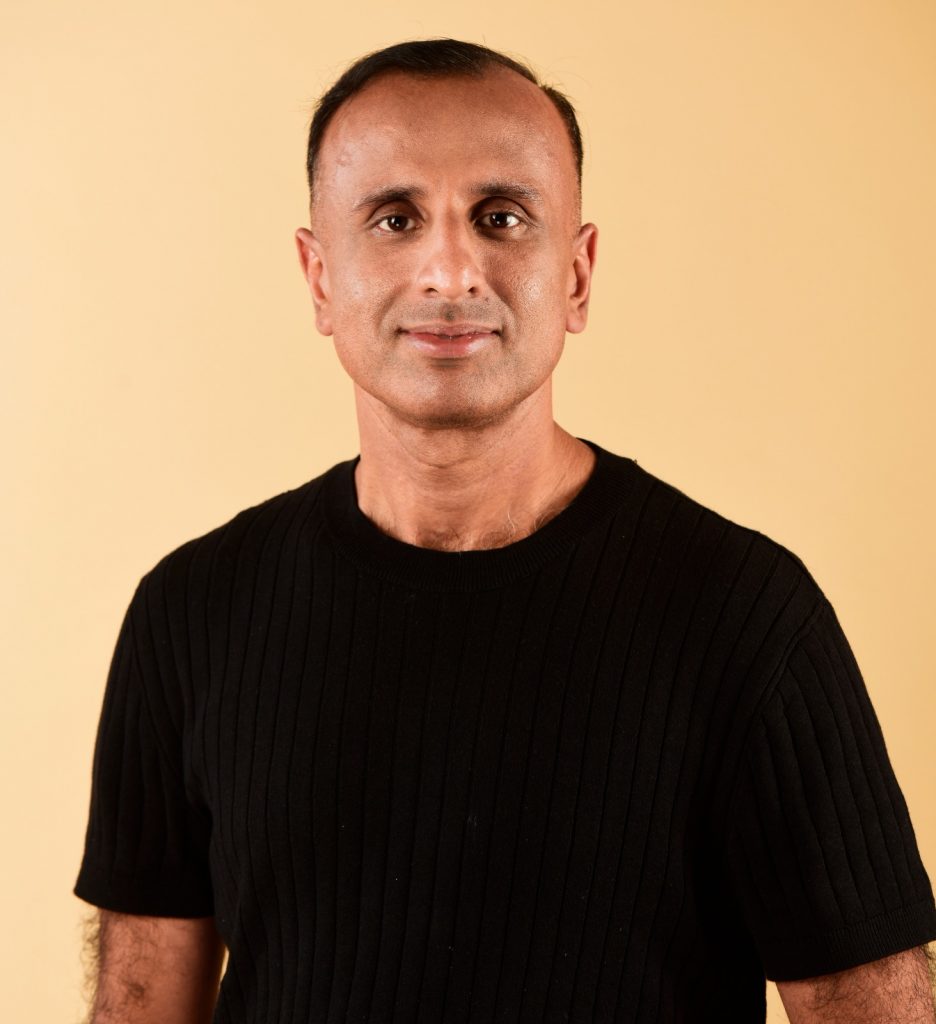
Founder
CLIRNET & Doctube
CIO&Leader: CLIRNET sits at the intersection of healthcare, education, and pharma — how do you define the core problem you’re solving, and why has it remained unsolved for so long in India?
Saurav Kasera: At its core, CLIRNET is solving the problem of knowledge fragmentation in healthcare. While medicine continues to evolve rapidly, the flow of practical and contextual knowledge among doctors remains highly uneven, particularly in a country as vast and diverse as India. Historically, medical education has been largely event-based or institution-centric, pharma engagement has often remained transactional, and most digital platforms have focused more on content distribution than meaningful clinical interaction. What the ecosystem lacked was a continuous, trusted, doctor-led environment where medicine could be discussed in real time. CLIRNET is addressing this gap by building a platform where doctors do not just consume information, but actively discuss, validate, and contextualize it through peer exchange and real-world experiences. The challenge remained unresolved for years because healthcare trust cannot be built like a conventional consumer internet product; it requires scientific credibility, community trust, and sustained long-term engagement.
CIO&Leader: How is AI actually changing the way doctors consume medical knowledge today — is it about speed, personalization, or something deeper?
Saurav Kasera: Speed and personalization are only the surface layer of healthcare transformation; the deeper shift lies in cognitive efficiency. Doctors today are navigating an overwhelming volume of medical literature, continuous treatment updates, and increasing time pressures in clinical practice. The future is not about exposing healthcare professionals to more information, but about helping them access the most relevant insights at the right time and within the right clinical context. AI is enabling this shift through faster summarization of relevant knowledge, personalized discovery of peer discussions and scientific updates, and decision-support tools integrated into clinical workflows. The real transformation is moving healthcare from information abundance to intelligent knowledge orchestration.
CIO&Leader: Pharma–doctor engagement has historically been relationship-driven. How does a digital platform earn that trust at scale without losing the human element?
Saurav Kasera: Trust in healthcare has always been human, and it will continue to remain deeply human even in a digital-first world. Digital platforms are not meant to replace relationships, but to scale meaningful interactions when designed with the right intent and credibility. At CLIRNET, trust is built through a doctor-first approach, consistent delivery of value, and the amplification of human expertise through technology. In many ways, digital platforms are democratizing access to trusted medical expertise by enabling doctors in smaller cities to participate in the same scientific conversations as peers from leading institutions. The real opportunity lies in ensuring that technology strengthens and enhances trust rather than replacing it.
CIO&Leader: What does ‘AI-driven personalization’ mean in practice on CLIRNET — can you walk us through what a doctor’s personalized experience actually looks like?
Saurav Kasera: AI-driven personalization is enabling healthcare platforms to evolve around a doctor’s clinical interests, behavior, and learning patterns. By understanding what doctors read, the sessions they attend, the discussions they engage in, and the formats they prefer, intelligent systems can deliver a far more relevant and contextual experience. Based on these insights, the platform can curate personalized scientific content, surface aligned peer discussions, recommend learning journeys and case-based conversations, and provide faster access to clinically relevant information. The long-term vision is to build a platform that functions less like a static content library and more like a clinical intelligence companion that supports doctors in real time.
CIO&Leader: Healthcare data is sensitive and regulated — how do you balance building a data-driven engine while staying compliant with India’s evolving data protection framework?
Saurav Kasera: In healthcare, trust and compliance are inseparable, making responsible data practices fundamental to any digital health ecosystem. CLIRNET’s approach is built around data minimization, explicit consent frameworks, role-based access controls, and strong security and governance standards. The company believes there is a critical distinction between using data to manipulate behavior and using it to improve relevance, education, and user experience. CLIRNET has consciously positioned itself as a knowledge and engagement platform rather than a data monetization platform. In the long term, the companies that will succeed in healthcare AI will not only be those with the most advanced technology, but those that earn and maintain the highest levels of trust within the healthcare ecosystem.
CIO&Leader: With 6.5 lakh+ doctors already on the platform, what’s the single biggest barrier to getting the next 10 lakh onboard — awareness, habit, or infrastructure?
Saurav Kasera: The biggest barrier in healthcare technology adoption today is no longer awareness, but habit formation. Most doctors are already digitally connected in some capacity; the real challenge is whether a platform can become an integral part of their daily or weekly professional workflow. This is why the focus must remain on delivering relevance, personalization, peer interaction, and practical utility. When a platform consistently adds value to a doctor’s learning, engagement, and decision-making, it gradually becomes embedded in their professional habits, allowing for scale and long-term adoption to follow naturally.
CIO&Leader: Pharma companies have traditionally measured rep visits and sample distributions — how are you shifting that ROI conversation toward digital engagement metrics?
Saurav Kasera: The healthcare industry is gradually shifting from measuring basic activity metrics to evaluating engagement quality and scientific impact. Traditionally, success was measured through questions such as whether a doctor was visited or whether promotional material was shared. However, digital ecosystems now enable far deeper insights into meaningful engagement. The focus is increasingly on understanding whether doctors engaged meaningfully with the content, what types of scientific discussions or formats resonated most, whether there was repeat engagement, and how interaction patterns evolved. As a result, the conversation is moving away from simple reach and exposure toward relevance, sustained interaction, and measurable engagement depth.
CIO&Leader: Five years from now, what does the doctor-knowledge-pharma triangle look like in India — and where does CLIRNET sit at the center of it?
Saurav Kasera: Over the next five years, healthcare engagement is expected to become more digital, personalized, evidence-driven, and significantly more AI-assisted. Doctors will increasingly seek continuous learning experiences seamlessly embedded into their workflows, along with instant access to contextual knowledge, AI-assisted summarization, and peer-driven clinical intelligence. The expectation will be for platforms that help save cognitive time rather than add to information overload. At the same time, pharma companies are likely to move toward more ethical, knowledge-led engagement models focused on precision scientific communication and real-time understanding of clinical trends and behavior. In this evolving landscape, CLIRNET aims to position itself at the center of the transformation as a doctor-led knowledge network, a real-world intelligence layer, and an AI-enabled healthcare engagement ecosystem.