
Dr Kamal Karnatak, Group CIO, RJ Corp, discusses how the group is using AI to improve demand forecasting, streamline operations, strengthen cybersecurity and enable faster decisions while keeping humans accountable for action.
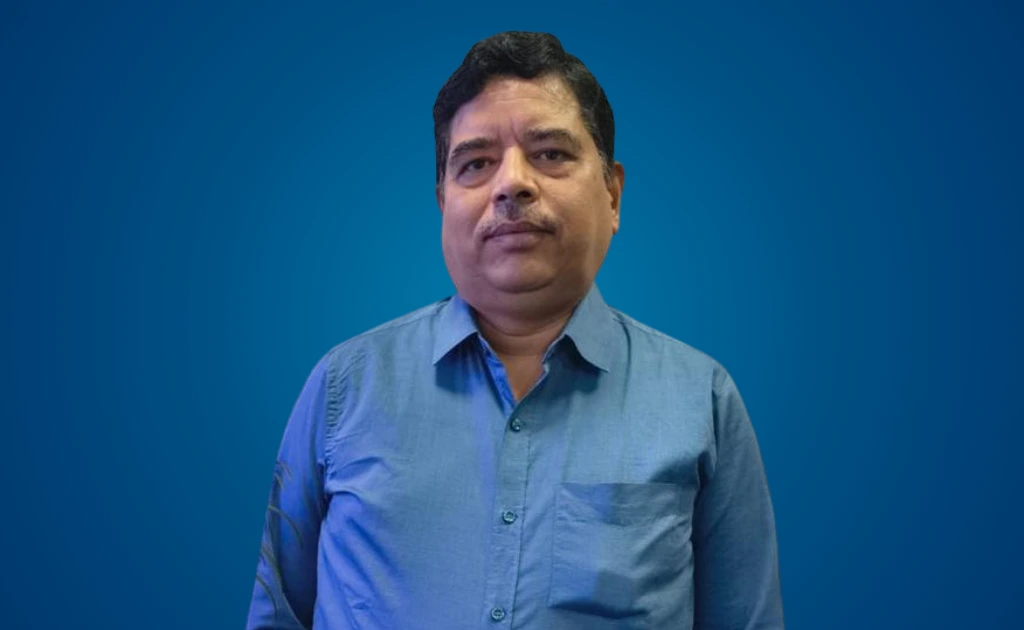
For diversified business groups, technology must do more than streamline processes. It must help improve sales, optimise costs and enable faster, better-informed decisions across business units with different operational needs and levels of IT maturity. At RJ Corp, this means building on a shared enterprise technology backbone while using AI to extract value from years of accumulated business data.
As AI moves from experimentation into production, the focus is shifting towards measurable business outcomes, from improving demand forecasting and automating invoice processing to reducing distributor-claim turnaround times. At the same time, AI-enabled threats are raising the stakes for cybersecurity, while the growing use of intelligent systems is prompting questions about how decisions should be governed.
In this conversation with CIO&Leader, Dr Kamal Karnatak, Group CIO, RJ Corp, explains how the group is deploying AI across its businesses, using enterprise data to identify patterns and support decisions, and maintaining human oversight over critical actions.
CIO&Leader: What are the top two or three business priorities on your agenda over the next 12 months, and how is technology enabling them?
Dr Kamal Karnatak: For any organisation in the FMCG or retail industry, the priority is to increase sales. This can be achieved by adding new revenue streams or entering new markets. To increase sales effectively, businesses need to anticipate demand.
Demand forecasting is therefore very important. Whatever an organisation produces, it should be able to sell. Accurate forecasting helps reduce the overall cost of selling and ensures that stock is available at the right place and at the right time. These are critical requirements for increasing sales and improving business performance.
CIO&Leader: How has your role evolved over the past few years, and what new expectations are emerging from CEOs, boards and business leadership?
Dr Kamal Karnatak: The role of a CIO has continuously evolved. Earlier, the focus was on implementing systems that streamlined processes and applications and enabled organisations to capture the right kind of data. Transactional and process-oriented systems formed the foundation of enterprise technology.
With AI and other emerging technologies, the focus has shifted towards leveraging that data. Data is the fuel for AI, so organisations need the right data architecture and high-quality information to make these technologies useful.
At RJ Corp, we have accumulated 10 to 15 years of data. The priority now is to use it to improve the cost structure, increase revenue, enhance employee productivity and reduce cycle times across processes. The question is no longer just how to capture data, but how to derive meaningful business value from it.
CIO&Leader: Where are you seeing the greatest business value from AI, and what has helped RJ Corp move beyond pilots to enterprise-wide adoption?
Dr Kamal Karnatak: We are already using several AI systems. We conducted pilots, but I always say that a demo is easy and deployment is hard. At RJ Corp, we have crossed that line and deployed AI systems that are creating value.
Whenever we consider an AI system or any other IT initiative, we build a business case. Unless a technology delivers the right value, we will not invest in it. We do not implement technology simply for the sake of implementation. It must create meaningful value for the organisation.
We do not implement technology simply for the sake of implementation. It must create meaningful value for the organisation.
Some of our AI projects are now in production because they have demonstrated a business case and are delivering tangible benefits. We apply the same discipline to AI as we do to any other technology investment.
CIO&Leader: How is the evolving cyber threat landscape influencing RJ Corp’s security strategy and investment priorities?
Dr Kamal Karnatak: Cybersecurity has always been a priority because organisations depend on their data and systems. However, with the emergence of agentic AI, the threat landscape is becoming more complex. AI agents can identify and exploit security vulnerabilities, so our ability to detect threats early has become increasingly important.
Cybersecurity is a top priority in the AI era. AI systems depend on data, and if that data is breached or its integrity is compromised, the organisation is in trouble. We now need to defend against threats from both humans and AI agents.
This requires organisations to strengthen their security posture and identify vulnerabilities before they can be exploited. As AI becomes more capable, the urgency of detecting and responding to threats will only increase.
CIO&Leader: RJ Corp operates across diverse businesses, including beverages, quick-service restaurants and hospitality. How does enterprise technology help integrate operations while maintaining agility and efficiency?
Dr Kamal Karnatak: For a diversified group such as RJ Corp, having the right IT infrastructure is essential. When we designed our IT backbone, we decided to establish a common foundation that could support businesses across the group.
From the beginning, we chose to operate a single ERP instance across multiple businesses and countries. This shared backbone provides a consistent foundation for operations.
The advantage is that individual companies can build on this foundation according to their needs. The IT maturity and resources available to different businesses within a group may vary. One company may have more advanced capabilities, while another may have fewer resources.
With a common data and infrastructure backbone in place, businesses can benefit from established systems and use technology meaningfully in their own operations. This approach helps us extend the benefits of enterprise IT across the group without requiring every business to build everything independently.
CIO&Leader: How can AI, machine learning and advanced analytics improve demand forecasting, consumer insights, sales performance and strategic decision-making across RJ Corp’s businesses?
Dr Kamal Karnatak: This is not a futuristic possibility; it is already happening. In the AI world, the role of traditional analytics is changing. Instead of relying only on dashboards, users can ask questions in natural language and obtain meaningful information from enterprise data.
We often describe the progression from data to information, knowledge and wisdom. What organisations need is not merely information, but knowledge that helps them decide what action to take. AI should help people identify what requires attention and make better decisions.
We do not allow AI to take action independently. A human remains responsible for the final decision.
We have developed systems through which users can ask questions in plain English and receive answers based on data from enterprise systems. These systems can also identify patterns across different datasets. For example, they can analyse relationships between sales and HR data to highlight potential red flags or identify areas where performance is improving.
However, we do not allow AI to take action independently. A human remains responsible for the final decision. AI should remove mundane tasks, surface relevant insights and help people make better decisions, ultimately leading to better action. Human oversight remains central to our approach.
CIO&Leader: How is RJ Corp using AI and digital platforms to improve customer engagement, service delivery and operational efficiency across its businesses?
Dr Kamal Karnatak: The approach depends on the business and the type of customer it serves. In quick-service restaurants, for example, the focus is on direct consumers. In Varun Beverages, we work with more than 6,000 distributors, who are important customers for the business.
We are using AI to improve processes for suppliers and distributors. On the supplier side, we have systems that allow suppliers to upload invoices directly. AI-based optical character recognition helps process the invoices, while the system supports bill processing and basic three-way matching checks.
On the distributor side, AI helps perform initial checks on claims. This is improving the claim-processing cycle. Earlier, processing could take 15 to 20 days. With the new AI-based system, we expect the turnaround time to fall to around six or seven days, with a target of reducing it further to two or three days.
The system also improves visibility, allowing customers to track the processing of their bills and claims.
We are also using sales force automation to help our sales teams work more efficiently. The system incorporates promotional schemes, taxation and other relevant information, reducing the need for salespeople to handle these details manually. They can spend more time selling and serving retailers, while the system manages the supporting information.
The objective is to reduce administrative effort, shorten processing times and improve the experience for business partners and customers.
(Authored by Punam Singh, with inputs from Dipanjan Mitra)