As India’s manufacturing sector pushes toward digital maturity, the conversation is shifting from isolated digitization to building connected, intelligence-led supply chains. At the heart of this transition are MSMEs—globally competitive in capability, yet often constrained by visibility, trust, and access to organized demand. In this interview, Kshitij Tiwari, CEO and Founder of ideazmeet, outlines how technology, when applied with intent, can rebalance that equation.
Ideazmeet positions itself as more than a marketplace. It is being built as a full-stack manufacturing ecosystem that leverages verified digital identities, structured capability mapping, and AI-driven insights to reduce ambiguity and friction in sourcing. Tiwari explains how real-time data signals, risk scoring, and interoperability are helping manufacturers move from relationship-driven discovery to merit-based participation in global supply chains.
From AI-enabled matchmaking to the evolution of managed sourcing and traceability, the conversation offers a grounded view of how India’s industrial platforms can scale trust, unlock MSME participation, and shape the future of digitally orchestrated manufacturing.
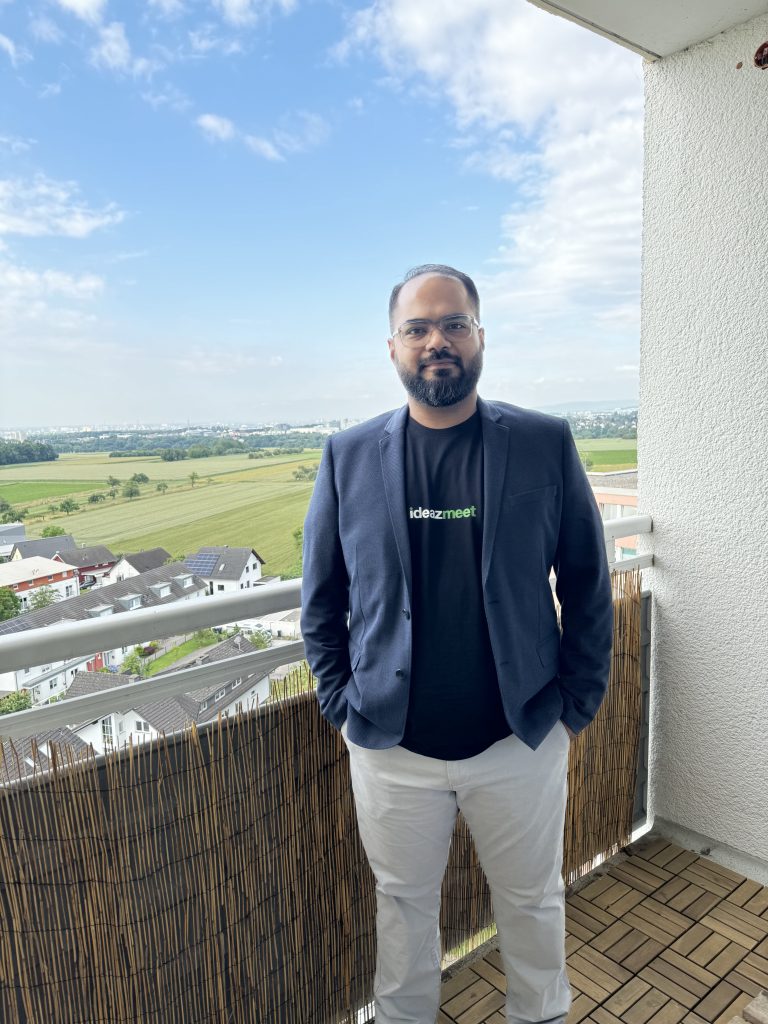
CEO and Founder
ideazmeet
CIO&Leader: How is ideazmeet using AI to improve supplier–buyer matchmaking for manufacturers?
Kshitij Tiwari: ideazmeet is a full-stack global manufacturing ecosystem that brings together manufacturers, suppliers, and buyers through verified profiles, structured visibility, and meaningful collaboration. Designed for ease of use and real-world impact, the platform enables businesses, especially MSMEs, to showcase their capabilities, discover credible partners, and manage sourcing workflows transparently and efficiently.
The platform’s technology layer, including thoughtfully applied AI features, supports practical needs such as better partner discovery, capability mapping, and surfacing relevant opportunities. It uses technology to simplify adoption, reduce friction, and help users make faster, more informed decisions.
By combining verified identities, standardized capability information, and built-in collaboration tools, ideazmeet strengthens trust, reduces ambiguity, and creates a dependable environment for industrial engagement. This structured digital approach connects MSMEs to new demand pools, both locally and globally, and supports their transition to digital-first, future-ready supply chains. The company is building a scalable, transparent, and globally connected manufacturing ecosystem where access, credibility, and collaboration drive sustainable growth for India’s industrial sector.
CIO&Leader: What real-time data signals matter most for MSMEs, and how does your platform surface them?
Kshitij Tiwari: For MSMEs, the most meaningful real-time signals are those that reveal demand, visibility, and genuine business potential. Ideazmeet brings these signals into clear focus through its unified digital dashboard that helps manufacturers understand buyer interest, active RFQs, profile visits, match relevance, and engagement patterns across the ecosystem.
The platform surfaces indicators such as which buyers are evaluating their capabilities, how their offerings align with current sourcing requirements, response behaviour, and traction across industries and geographies. Verified identities, capability mapping, and certification badges reinforce credibility, ensuring that every interaction begins on a foundation of trust.
By turning dispersed data into clear, actionable insights, ideazmeet helps MSMEs identify high-intent opportunities, strengthen their digital presence, and respond with confidence. It enables businesses to make informed decisions quickly and participate more effectively in a transparent, connected, and opportunity-rich manufacturing ecosystem.
CIO&Leader: Can AI marketplaces evolve into full-stack supply chain platforms? How is ideazmeet preparing for that?
Kshitij Tiwari: Marketplaces are evolving beyond simple match-making, moving towards full-stack supply chain platforms that integrate discovery, verification, sourcing, collaboration, and fulfilment into one seamless ecosystem. Ideazmeet is already building towards this future.
● From listings to connected ecosystems – ideazmeet combines verified supplier profiles, capability mapping, and curated engagement tools to ensure every connection, from vendor identification to qualification, is relevant, trustworthy, and actionable.
● Verified digital identities as the foundation – By standardizing and authenticating supplier profiles, certifications, and capabilities, ideazmeet provides the credibility layer necessary for a full-cycle, globally connected supply chain.
● Dotsupply as the managed sourcing layer – ideazmeet. Supply supports end-to-end sourcing for buyers in the US, UK, and EU, covering vendor discovery, due diligence, negotiation, and logistics coordination. This moves the platform beyond a traditional marketplace into a structured global sourcing engine.
● Real-time visibility and traceability – A unified dashboard tracks order status, documentation, and milestones, providing transparency, accountability, and a fully auditable sourcing process, key elements of a full-stack supply chain ecosystem.
CIO&Leader: How can AI-driven risk scoring and digital identity improve trust in India’s supply chain?
Kshitij Tiwari: AI-driven risk scoring and digital identity can fundamentally reshape trust in India’s supply chain. When every manufacturer and supplier is verified, and their performance is continuously assessed through data, not perception, buyers gain transparency into credibility and risk.
AI can analyze real signals such as responsiveness, fulfilment behaviour, certification validity, and historical engagement patterns to generate dynamic trust scores. This shifts the ecosystem from relationship-based sourcing to intelligence-led decision-making. Digital identities further eliminate ambiguity by creating a single, authenticated profile of each supplier’s capabilities and compliance readiness.
Together, AI-led risk scores and verified digital identities reduce procurement uncertainty, accelerate vendor onboarding, and enable MSMEs to compete on merit. They create a supply chain where trust is measurable, transparent, and scalable, a foundational shift for India’s manufacturing future.
CIO&Leader: What makes AI-enabled sourcing accessible and valuable for first-time digital MSME users?
Kshitij Tiwari: AI-enabled sourcing makes it easier for first-time digital MSME users to access organized procurement. Through a simple digital platform, AI understands what a manufacturer can offer, finds relevant opportunities, and connects them with buyers who need their products, removing reliance on offline networks or intermediaries.
For many small manufacturers, the most significant barrier isn’t production capacity; it’s discoverability. AI solves this by highlighting opportunities based on capability and merit, helping MSMEs reach the right buyers quickly. This allows them to respond faster, build trust, and grow their business with clear, data-backed insights.
CIO&Leader: What role will AI-native, data-interoperability platforms play in India’s digital manufacturing future?
Kshitij Tiwari: AI-native, data-interoperability platforms will be foundational to India’s next phase of digital manufacturing, enabling the sector to move from fragmented, labour-intensive processes to fully connected, intelligence-driven production ecosystems.
These platforms will act as the “digital backbone” that unifies OEMs, suppliers, MSMEs, logistics partners, and service providers on a single, interoperable network. By enabling seamless data exchange across machines, workflows, and enterprises, they will unlock real-time visibility, predictive insights, and automated decision-making at scale – capabilities that are essential for global competitiveness.
For India’s manufacturing landscape, dominated by diverse, multi-tier supply chains, interoperability is not just a technology upgrade; it is the bridge that allows small and mid-sized factories to participate in high-value, digitally orchestrated production. AI-native platforms will democratize access to advanced sourcing, quality intelligence, demand forecasting, and supply chain optimization, enabling MSMEs to meet international standards without heavy capital investment.
These platforms will enable India to move beyond digitizing individual factories and towards creating fully connected, end-to-end industrial value chains – a transformation that will accelerate Make in India 2.0, strengthen export capability, and position India as a global hub for smart manufacturing.