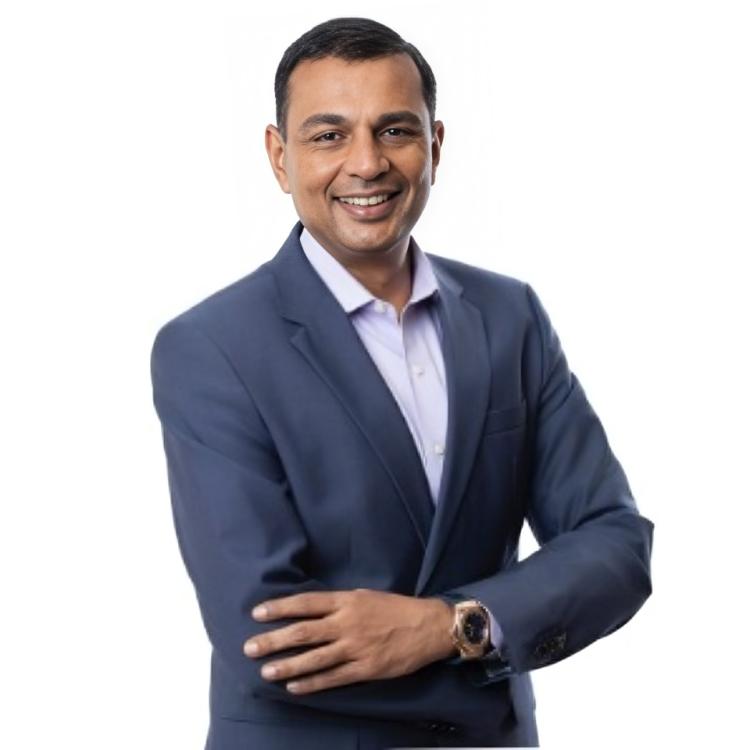
Amit Suxena, Head of NetSuite Asia, discusses how the company is approaching AI, scale, and regional expansion in India.
Oracle NetSuite, the cloud-native ERP platform acquired by Oracle Corporation in November 2016 for $9.3 billion, has established a distinct position in the mid-market cloud segment. While Oracle’s broader enterprise portfolio, including Oracle Fusion Cloud ERP, serves large and globally complex organizations, NetSuite focuses on scaling small and medium size businesses that need an integrated, cloud-first platform without the architectural overhead typical of traditional enterprise deployments
At the recent Oracle AI World Tour in Mumbai, Amit Suxena, Head of NetSuite Asia, interacted with Jatinder Singh, Editor, CIO&Leader, to discuss the company’s approach to AI, scalability, and regional expansion in India. Suxena, who leads the NetSuite business across Asia, including Southeast Asia, the Indian subcontinent, and Greater China, emphasized a clear principle: for mid-market enterprises, AI cannot operate as a parallel initiative. It must be embedded within core ERP workflows, anchored in a single source of truth that connects finance, CRM, supply chain, and operations.
As Indian companies in the ₹100 crore to ₹2,500 crore range expand across geographies and pursue global ambitions, NetSuite is positioning itself not merely as an ERP vendor but as a scalable operating backbone. With rapid deployments, partner-led vertical specialization, and an expanding footprint in tier-2 markets, the company is betting that embedded intelligence and architectural simplicity will shape the next phase of India’s mid-market growth trajectory. Excerpts from the interaction.
CIO&Leader: There is enormous buzz around AI. How does NetSuite translate AI into real value for Indian SMEs and mid-market enterprises?
Amit Suxena: We operate on a very simple principle — single source of truth. Whether it’s customer data, finance, supply chain, employees, or receivables, everything sits in one integrated system.
AI is only as good as the data it is fed. If CRM data sits separately from finance, you will never get the right answer. For example, a CRM-driven AI might suggest doubling down on a high-growth segment. But if that segment has payment cycles that are 2.5 times longer than your average, your profitability actually drops. Unless AI can see receivables and cash flow, it gives you incomplete intelligence.
For mid-market companies, AI cannot be a separate strategy. They don’t have the bandwidth for that. So we embed AI into workflows, conversational queries, pricing intelligence, market-entry insights, directly inside ERP and CRM processes.
Customers are not buying “AI tools.” They are investing in better business outcomes. AI is part of that engine.
AI has made it a level playing field — SMEs can now compete with large enterprises
CIO&Leader: Where does NetSuite sit within Oracle’s broader strategy?
Amit Suxena: We have a very clear lane. In India, our sweet spot is companies in the Rs 100 crore to Rs 2,500 crore range. That’s a broad band, but it’s where scalability matters.
We help companies that are growing, expanding across geographies, managing multiple subsidiaries, operating in multiple currencies. Many startups want to list eventually or expand globally. They need a system that grows with them.
Even as companies scale into multi-billion-dollar revenues, many stay with NetSuite because the complexity of their environment still fits our architecture. It’s not about revenue size. It’s about operational complexity.
CIO&Leader: CIOs often struggle with application sprawl and fragmented data. How do you address that?
Amit Suxena: Many software companies began with one brilliant module, accounting, CRM, or supply chain, and bolted on the rest later. We didn’t.
From day one, our architecture assumed business is not siloed. Finance talks to sales. Supply chain impacts profitability. Customer performance affects working capital.
When customers implement NetSuite, they can prioritize modules, CRM first, finance later, or vice versa, but it’s the same platform underneath. That eliminates application sprawl before it begins.
For SMEs, the biggest dilemma is: Do I invest in growth or fix my backend? With NetSuite, they can adjust priorities without changing systems.
CIO&Leader: Boards are now asking tough ROI questions about AI. How do you respond?
Amit Suxena: We never separate AI from business processes. That changes the ROI conversation. No board will reject a proposal for an end-to-end ERP that delivers industry-specific intelligence. And when they ask, “How much does the AI cost?” the answer is — it’s embedded in the platform you’re already investing in.
For SMEs especially, speed matters. We’ve had customers in India go live in 23 days — which is unheard of in ERP. That dramatically shortens time-to-value.
The focus is tangible outcomes: Faster reporting, better productivity, improved working capital and scalable growth. That’s how you build the board deck.
CIO&Leader: What is driving NetSuite’s growth in India?
Amit Suxena: Over the last three to four years, we have grown more than 2.5x in India.
We are expanding aggressively into tier-2 markets: Jaipur, Punjab, Kerala, and beyond. Each region has distinct industry needs. For example, gold and jewellery manufacturers have highly specialized inventory requirements. Hospitality is strong in Rajasthan. Regional hospitals need integrated, AI-enabled systems.
There’s a large digitalization opportunity in these markets. Many companies couldn’t afford enterprise-grade ERP earlier. Cloud delivery and embedded AI are changing that equation.
India is central to our Asia strategy.
CIO&Leader: With regulations like India’s DPDP Act and sectoral mandates, how do you ensure compliance and trust?
Amit Suxena: At the core, we are a finance engine. Regulatory compliance is non-negotiable.
We are not just SaaS, we are also a platform. Our SuiteCloud platform allows certified partners to build industry-specific extensions directly on NetSuite, hosted on Oracle Cloud Infrastructure (OCI). Everything upgrades together. There’s no version mismatch. We have over a thousand global partners building on this platform. In India, vertical partners handle industry-specific compliance needs. Every certified solution undergoes rigorous architectural and security reviews.
From a trust standpoint, customers get a unified, secure environment hosted on OCI.
AI is only as good as the data you feed it. Without a single source of truth, intelligence becomes incomplete
CIO&Leader: How critical is the partner ecosystem?
Amit Suxena: Extremely critical. India’s diversity requires vertical expertise. We work with partners specializing in jewellery manufacturing, hospitality, specific manufacturing segments, and more. They build solutions on our platform. At the same time, they drive local implementations — which is essential as we expand into tier-2 cities.Partner-led verticalization is central to our growth strategy.
CIO&Leader: ERP implementations are traditionally long and complex. How do you differentiate?
Amit Suxena: Speed. We have seen Indian customers go live in 23 days. That’s transformative for SMEs. They don’t have the luxury of year-long ERP projects. Rapid deployment reduces risk, shortens ROI cycles, and builds confidence for future expansion, whether adding CRM, supply chain modules, or expanding internationally.
For the mid-market, AI cannot be a separate strategy. It has to be embedded into everyday business processes
Amit Suxena, Head of NetSuite Asia
CIO&Leader: Looking ahead to 2026 and beyond, what trends stand out?
Amit Suxena: AI has created a level playing field. SMEs can now compete with large enterprises in ways that were impossible earlier. Over the next three years, I believe India’s mid-market and niche product players will reshape business dynamics.
We will see more localized innovation from different parts of India — companies building globally competitive products, powered by scalable cloud ERP and embedded intelligence.
That is where I am most bullish.