
The boundaries of enterprise security have dissolved. As organizations race to embrace cloud infrastructure, hybrid workforces, and AI-driven operations, the humble access card has transformed into something far more consequential — a unified digital identity spanning every physical door and virtual system an employee touches. Prabhuraj Patil, Senior Director for ASEAN & India Subcontinent PACS at HID Global has spent decades watching this transformation unfold. In this conversation, he makes one thing unmistakably clear: enterprises that treat identity as an afterthought aren’t just behind the curve — they’re dangerously exposed.
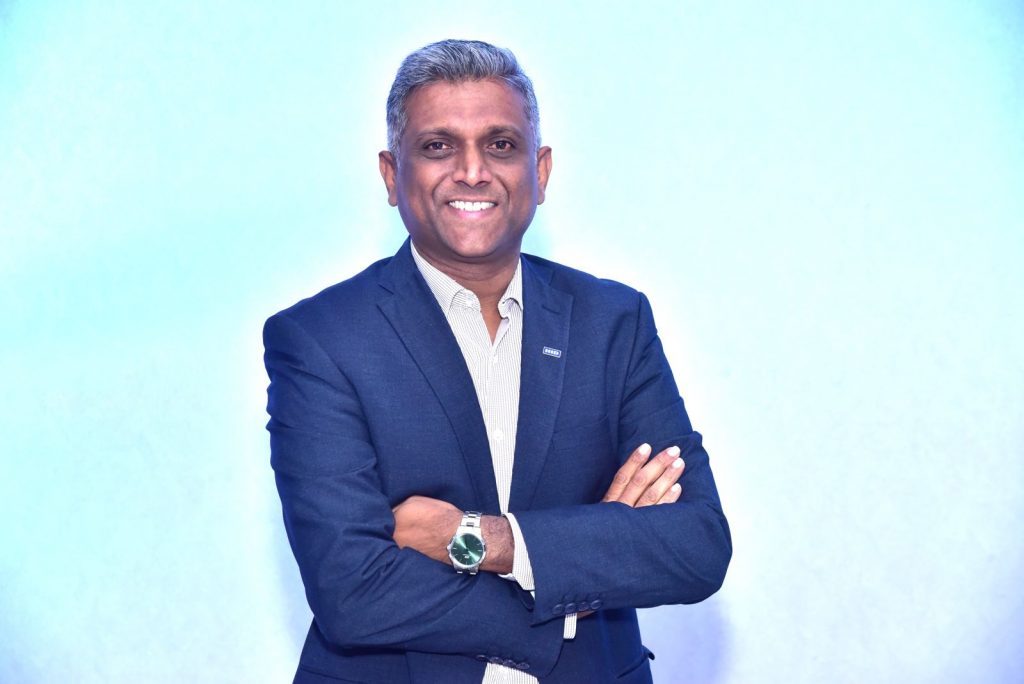
Senior Director for ASEAN & India Subcontinent PACS
HID Global
CIO&Leader: How is enterprise identity evolving from access control to a strategic trust layer across physical and digital environments?
Prabhuraj Patil: If you look at it, access control has been around for a long time. However, its evolution has gradually shifted from physical to digital environments.
One clear example is mobile-based access control, which has been a key innovation in moving access systems into the digital domain. This has enabled the convergence of physical and digital access, with identities increasingly stored and managed in the cloud.
Today, organizations are steadily transitioning their access control frameworks toward digital environments. This shift is driven largely by the rapid adoption of cloud technologies and the growing importance of cybersecurity in managing and securing data.
Devices themselves have now become IP-enabled. Once systems become digital and IP-based, cybersecurity becomes critical. As a result, cyber resilience is no longer optional—it has become a central priority.
That is the direction in which the overall trend is moving.
CIO&Leader: What are the most significant shifts you’re seeing in the convergence of physical access control and cybersecurity?
Prabhuraj Patil: The shift has been quite clear. Earlier, systems were largely independent and operated in silos. Today, most hardware has evolved into IoT-enabled devices with IP connectivity, which means they are now part of the network.
Once systems become IP-based, cybersecurity becomes essential. At the same time, access control solutions themselves have moved to the cloud. When systems and data are hosted in the cloud, securing them becomes even more critical.
As a result, cybersecurity has taken on a much larger role in our industry—particularly in protecting data and safeguarding identity privacy. Over the past decade, cybersecurity has become increasingly important. While our industry has existed for over 30 years, cybersecurity has expanded nearly twentyfold in comparison. This clearly shows how central it has become within the overall ecosystem.
CIO&Leader: Are mobile credentials and biometrics reaching enterprise-scale maturity, or are adoption barriers still holding CIOs back?
Prabhuraj Patil: That’s a very relevant question. Security teams primarily handled earlier access control decisions. As access control systems transitioned from physical to digital, IT teams became involved, leading to a convergence of responsibilities.
This shift meant that adoption took some time, as decisions had to be aligned across both functions. However, mobile credentials and mobile-based access have now reached a stage of maturity. They are no longer seen as innovations, but as standard requirements.
Today, CIOs and CISOs are the primary decision-makers for these solutions, and mobile access has become a baseline expectation across the access control industry.
CIO&Leader: How should organizations rethink identity architecture in a world of hybrid work, distributed assets, and AI-driven operations?
Prabhuraj Patil: Identity architecture today is increasingly moving toward convergence and unification. The most effective approach is to build a unified identity ecosystem that can manage identities seamlessly across multiple systems.
This essentially means enabling a single credential to access and operate across different platforms. That is the direction organizations are taking, and it is the right approach.
In a hybrid work environment—where people operate from offices, homes, airports, and cafés—users are constantly connecting to different networks. This creates multiple security risks, including the possibility of identity interception. Therefore, identity systems must be built on highly secure platforms with strong encryption across all layers to ensure seamless and secure access.
For example, a user entering an office should be able to use the same credential—whether a card or a mobile device—to access both physical infrastructure and digital systems, such as laptops or desktops. This level of integration enhances both security and user experience.
Additionally, with large volumes of data being generated across systems, analysis becomes complex. This is where AI plays a critical role. Organizations need to effectively leverage AI to process this data, improve efficiency, and enable more proactive, real-time decision-making.
CIO&Leader: What are the biggest risks enterprises underestimate when modernizing identity and access systems?
Prabhuraj Patil: The biggest risk I see is when enterprises underestimate the importance of securing identities. Even today, some organizations do not treat identity as a critical component of their security architecture—and that is a major risk.
However, many organizations are becoming more mature in their approach. They are beginning to understand the implications of not having a secure identity framework in place. Ultimately, even the best systems in the world will fail if the identity ecosystem is not designed correctly.
This is where architecture becomes critical. Building the right identity architecture is fundamental to ensuring that the entire system functions securely and effectively.
CIO&Leader: How are leading organizations balancing stronger identity security with rising concerns around privacy and user consent?
Prabhuraj Patil: Privacy and user consent remain significant challenges, especially given the varying data protection regulations across countries. At the same time, users are increasingly aware of and concerned about how their data is handled.
Organizations need to take a more strategic approach when selecting solutions—prioritizing platforms that are secure, cloud-ready, and built with strong cybersecurity foundations. The focus must be on protecting data within controlled environments and ensuring it is not misused.
Balancing identity security with privacy requires aligning technology choices with evolving data protection policies, while ensuring that user consent and trust remain central to the system design.
CIO&Leader: From your latest State of Security and Identity insights, what will define identity leadership for CIOs and CISOs in the next 2–3 years?
Prabhuraj Patil: The trends are quite clear—convergence will define the future. This includes the convergence of physical and digital systems, as well as the move toward a unified identity that can manage access across the entire organization.
Organizations are also moving toward more digital-first, mobile-enabled access models that are not only more convenient but also more secure. With most devices now connected to IT systems and software increasingly hosted on the cloud, identity has become central to the overall technology ecosystem.
CIOs and CISOs will need to take a more structured approach—choosing solutions built on open architectures that integrate seamlessly across systems. These platforms must be secure, scalable, and non-proprietary to avoid future limitations.
In essence, identity leadership will be defined by the ability to unify systems, strengthen security, and enable seamless access across increasingly complex environments.