AI Impact Summit 2026 positioned India as a global AI hub, spotlighting inclusive governance, real-world use cases, and compute investments.
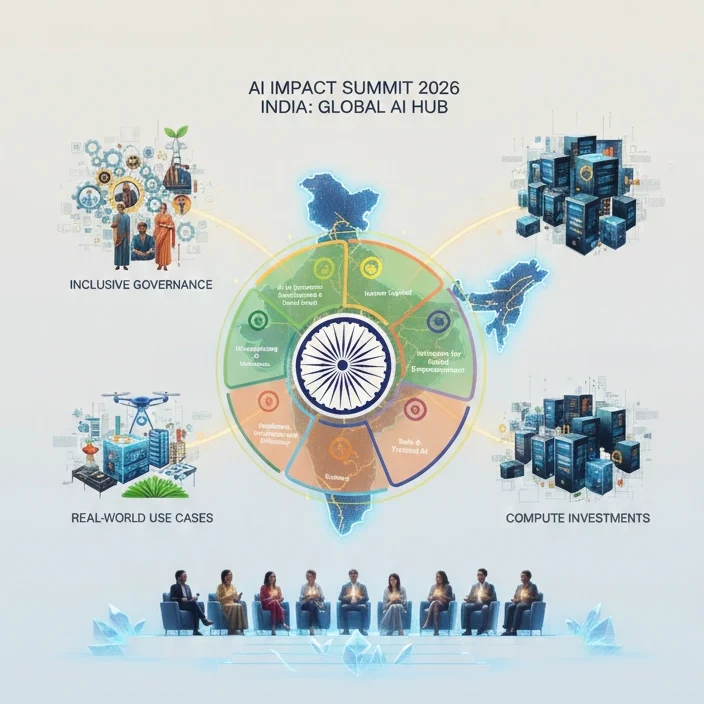
The India AI Impact Summit 2026, held at Bharat Mandapam from February 16 to 20, was among the most ambitious artificial intelligence gatherings in the Global South. The five-day event brought together global policymakers, industry leaders, research innovators, and enterprise technologists to discuss AI’s future, its opportunities, risks, and the investments shaping its development.
Organised under the IndiaAI Mission, the Summit focused on three strategic pillars: People, Planet, and Progress. This framework guides global dialogue toward inclusive, ethical, and sustainable AI adoption.
Global Participation, Local Leadership
Prime Minister Narendra Modi inaugurated the summit, positioning India as a global hub for AI innovation focused on public benefit and inclusive growth. He noted that India’s extensive digital ecosystem and growing talent pool uniquely position the country to influence global AI deployment.
The Summit drew delegations from more than 100 countries and included over 20 heads of state and 60 ministers, underscoring its diplomatic and technological significance. Notable attendees ranged from French President Emmanuel Macron to leaders of major AI firms.
Tech CEOs, Strategic Initiatives, and Infrastructure Pushes
Senior executives from leading global tech companies, including Sundar Pichai (Google) and Sam Altman (OpenAI), participated in panels and plenary sessions exploring AI’s commercial opportunities, governance challenges, and societal impacts. Strategic commitments were a central theme. One of the biggest announcements was a collaboration between OpenAI and Tata Consultancy Services (TCS) to build 100 MW of dedicated AI compute infrastructure in India to support large-scale AI workloads and bolster the country’s global competitiveness.
Reliance Industries and its telecom subsidiary Jio pledged approximately $110 billion to AI and data center infrastructure over the coming years. This investment aims to address local compute shortages and expand capacity for enterprise and public sector adoption.
Innovation Showcases & Societal Impact
Beyond policy and infrastructure, the Summit highlighted real-world AI applications. Youth-led innovation challenges and education-focused AI platforms demonstrated practical impact. For example, SATHEE, an AI-enhanced education platform supported by the Ministry of Education, was recognized for expanding access to personalized learning tools.
The Expo featured over 300 exhibitors from more than 30 countries across thematic pavilions, showcasing breakthroughs in healthcare, agriculture, governance, and other sectors.
Challenges, Criticism, and Logistics
Despite its scale, the Summit faced organizational challenges. Reports from opening day highlighted long queues, overcrowding, and logistical confusion, prompting public criticism and operational reassurances from officials. Speakers such as Bill Gates withdrew from scheduled addresses, a development widely reported in the media.
What IT Leaders Should Watch
For CIOs, CTOs, and technology strategists, the India AI Impact Summit 2026 highlighted several key takeaways:
- AI is now a national and international policy priority, not just a business initiative. Governments and multilateral partners are shaping frameworks with long-term economic and ethical implications.
- Infrastructure commitments indicate where enterprise capabilities in cloud, compute, and data centers will expand, particularly in India and neighboring regions.
- Innovation ecosystems are growing beyond major tech hubs, with startups and youth-led projects gaining visibility at global summits.
As AI becomes integrated across all sectors, the Summit emphasised that effective leadership requires connecting technological innovation with governance, societal impact, and strategic infrastructure investment.