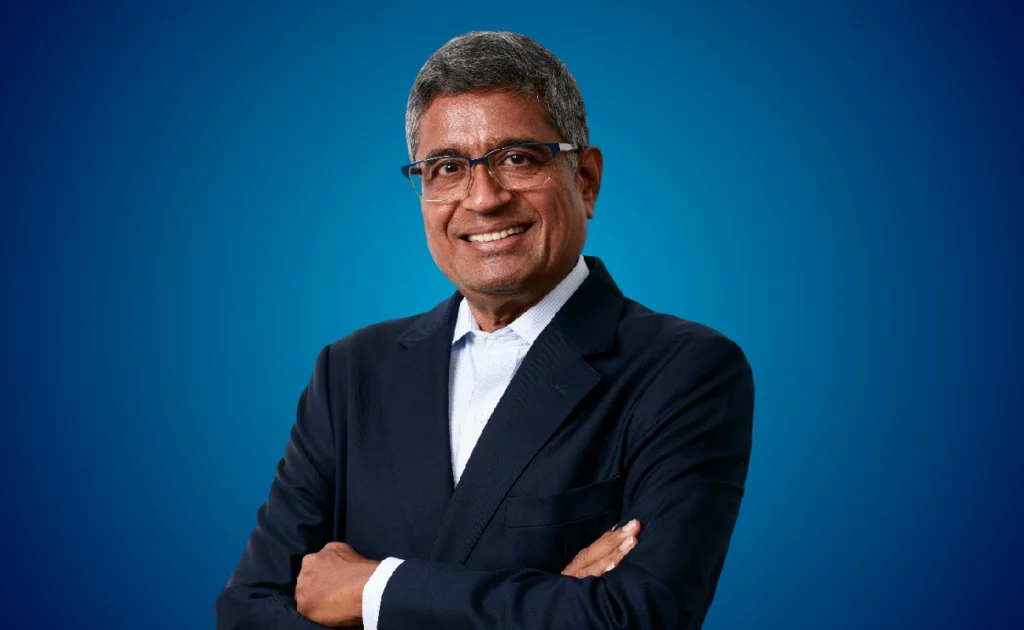
Hemant Tiwari, Managing Director & VP – India and SAARC, Hitachi Vantara highlights the data strategy within defined jurisdictions.
In conversation with CIO&Leader, Hemant Tiwari, Managing Director & VP – India & SAARC, Hitachi Vantara, shares how Indian CIOs can build sovereign, hybrid data foundations aligned to DPDP, RBI and MeitY mandates. He unpacks how to modernise legacy storage, enable AI-ready infrastructure, and embed zero trust at the data layer. The discussion also explores cyber resilience, edge-to-cloud architectures, and governance at scale.
CIO&Leader: How is Hitachi Vantara tailoring its global data platform strategy to align with India’s unique priorities such as data sovereignty under the DPDP Act, “Make in India”, and sectoral mandates from RBI and MeitY?
Hemant Tiwari: India’s regulatory and digital priorities demand a data strategy that is both globally robust and locally precise. At Hitachi Vantara, we design platforms that enable data sovereignty by keeping sensitive data governed, protected, and accessible within defined jurisdictions. Our core data infrastructure and hybrid cloud strategy deliver policy-centric controls, robust governance, and security posture that support compliance demands across industries. At the same time, we invest in local capabilities and partner engagement to support digital growth initiatives and innovation across government and enterprise sectors. This approach helps CIOs build a future-ready foundation aligned to national and regulatory priorities while enabling scalable outcomes.
CIO&Leader: Can you share some examples where Hitachi Vantara has co-developed or localized data solutions with customers to address India-specific challenges like vernacular data, rural edge connectivity, or regulatory complexity?
Hemant Tiwari: Our customer engagements in India focus on practical outcomes that reflect local needs. We work with partners and customers to tailor hybrid data solutions that cope with distributed operations, vernacular and large-scale unstructured data, and environments with variable connectivity. We also build localized proof-of-concepts and workshops with partner ecosystems, ensuring that regulatory complexity is translated into consistent compliance and governance frameworks within the data layer. This collaborative approach allows CIOs to deploy resilient data platforms that remain relevant to India’s diverse operational landscape while leveraging global best practices.
For example, with Malayala Manorama, one of India’s largest regional media groups, we worked closely with their technology teams to modernize data infrastructure for managing high volumes of vernacular and unstructured content across print, digital, and mobile platforms. The solution was tailored to support rapid content ingestion, scalable storage, and secure access across distributed newsrooms, enabling faster publishing cycles while maintaining strong data governance and long-term archival integrity.
In the BFSI and IT services sectors, our engagements with an Asia-based bank operating in India and Infosys focused on building resilient, compliant hybrid data platforms that align with local data residency, risk, and audit requirements. We worked closely with customers to design architectures that ensure high availability, secure recovery, and consistent data governance across distributed delivery environments, helping organizations confidently scale digital services while adapting global best practices to India’s regulatory and operational landscape.
CIO&Leader: As Indian enterprises accelerate cloud adoption, how do you help CIOs design hybrid data infrastructures that balance performance, cost, and compliance—without creating new silos or lock-in?
Hemant Tiwari: Modern IT architecture demands hybrid agility without fragmentation. Our hybrid cloud solutions unify data services across on-premises, private, and public cloud environments, so enterprises can optimize performance, cost, and compliance holistically. By focusing on open, interoperable data platforms and consistent management layers, we help CIOs avoid silos and simplify governance while enabling workload mobility.
“This unified approach empowers organizations to scale at their pace, optimize TCO, and retain control over their data estate in a way that meets compliance and performance expectations.” ~ Hemant Tiwari
CIO&Leader: Many organizations still rely on fragmented, aging storage systems. What’s your recommended path to modernize this infrastructure while minimizing business disruption? What lessons can CIOs apply from early adopters?
Hemant Tiwari: The journey to modernization begins with consolidation, visibility, and prioritizing non-disruptive transformation. We recommend leaders start by unifying fragmented storage and data estates into intelligent data platforms that simplify operations and automate management. Early adopters benefit from predictable performance, reduced complexity, and improved resilience without disrupting business-critical workloads. By taking a phased approach, leveraging automation and policy-based governance, organizations can modernize steadily while unlocking the performance, scalability, and flexibility needed for digital-era workloads.
CIO&Leader: With AI/ML (and now agentic AI) becoming boardroom imperatives, how does Hitachi Vantara ensure its storage and data platforms deliver the performance, reliability and integration needed to power scalable, responsible AI workloads?
Hemant Tiwari: AI success starts with a reliable, high-performance data foundation. Hitachi Vantara delivers integrated data infrastructure built to support high throughput, scalable storage, and hybrid cloud operations needed for advanced analytics and AI workloads. With platforms designed to unify block, file, and object data and native integrations across hybrid environments, organizations gain consistent performance and governance. Our hybrid cloud and data management capabilities help CIOs move from experimentation to production with enterprise-grade reliability, enabling responsible AI adoption that is governed, secure, and optimized for real business value.
CIO&Leader: Given the sharp rise in ransomware targeting Indian enterprises, how does your data stack provide protection and resilience?
Hemant Tiwari: We see ransomware today not as a perimeter failure, but as a data survivability challenge. The way our data stack is designed, we aim to predict breach and focus on guaranteed recoverability, immutability, and business continuity. At the core of our approach is a zero-loss recovery architecture that combines immutable snapshots, air-gapped backup copies, and continuous data integrity validation. In case the primary systems are impacted, we focus on supporting enterprises in restoring clean data copies in a short span of time, helping to minimize operational disruption.
What further distinguishes our approach is that resilience is supported through our Cyber Resilience Guarantee, which outlines recovery objectives when recommended best practices are followed. For Indian enterprises navigating increasing regulatory scrutiny and the financial impact of downtime, this helps position cyber resilience as part of a broader business risk management strategy rather than solely an IT consideration.
CIO&Leader: Beyond perimeter security, how are zero-trust principles embedded into your data infrastructure?
Hemant Tiwari: At Hitachi Vantara, we believe zero trust must extend all the way to the data layer, not stop at identity or network controls. Our approach assumes that internal networks can be just as hostile as external ones, which is why we embed Zero Trust Architecture directly into the data infrastructure, ensuring that security travels with the data rather than remaining perimeter bound. Every access request, whether from a user, application, cloud workload, or edge device, is treated as untrusted by default and continuously verified based on identity, role, and contextual signals before any interaction with data is allowed.
From an implementation standpoint, we enforce zero trust through fine-grained access controls, least-privilege permissions, and strict separation between production, backup, and recovery environments, all with full auditability, even privileged users. We apply micro-segmentation to prevent lateral movement and contain breaches to the smallest possible footprint, while data-centric encryption protects information both at rest and in transit across hybrid and multi-cloud environments. By embedding these controls directly into our storage and data protection layers, we significantly reduce the blast radius of insider threats, credential compromise, and ransomware attacks, the challenges that are increasingly prevalent across Indian enterprises.
CIO&Leader: For enterprises in manufacturing, logistics, and utilities deploying IoT, how do you architect secure, low-latency data pipelines from edge devices to central analytics—while maintaining governance and uptime?
Hemant Tiwari: For industrial environments where downtime is not an option, we deploy an edge-to-cloud data fabric that unifies data management across distributed environments and enables secure, high-speed data flow from the factory floor to the cloud. We aim to secure the “first mile” of data by embedding security directly at the edge, protecting endpoints such as PLCs in smart factories or sensors in utility grids that often operate in unsecured networks, ensuring the edge devices do not become entry points for cyber threats. To maintain low latency and uninterrupted operations, we enable real-time processing at the edge, while sending only essential, aggregated data to the core to optimise bandwidth usage.
This unified data fabric abstracts the complexity of underlying infrastructure and enforces consistent governance and security policies across the entire data pipeline. Whether data is generated by a logistics tracker, a smart meter, or an industrial sensor, it adheres to the same rigorous standards as core enterprise data.
“AI- and ML-driven anomaly detection continuously monitors data flows and device behaviour, enabling rapid identification of deviations or integrity issues and helping maintain uptime, resilience, and operational reliability.” ~ Hemant Tiwari
CIO&Leader: The DPDP Act mandates purpose limitation, consent management, and data minimization. How can your platform help in the discovery, classification, and enforcement of dynamic usage policies on personal data across hybrid environments?
Hemant Tiwari: We at Hitachi Vantara view the DPDP Act as a catalyst for operationalizing data responsibility, not just compliance. Our platform enables automated discovery and classification of personal and sensitive data across structured and unstructured sources, on-premises, in the cloud, and at the edge. Once data is classified, we help enterprises dynamically enforce usage policies throughout the data lifecycle. This ensures data is used only for defined purposes, retained only as long as required, and governed in line with consent conditions, even as data flows into analytics and AI workloads. Since these controls operate continuously rather than through periodic audits, enterprises gain stronger accountability, reduced regulatory risk, and the confidence to scale data-driven innovation in India’s evolving privacy landscape.
CIO&Leader: Enterprises struggle with fragmented oversight across on-prem, cloud, and SaaS. How does Hitachi Vantara enable a single data governance fabric?
Hemant Tiwari: Fragmentation can make governance more complex, and we address this through Virtual Storage Platform One (VSP One) and our unified data fabric approach, which aims to provide a true single pane of glass across the entire data ecosystem. VSP One abstracts the complexity of on-premises, private cloud, and public cloud environments, giving IT leaders a centralized control plane to view, manage, and govern data consistently, regardless of where it physically resides.
Instead of maintaining fragmented policies across AWS, Azure, and local data centers, our data fabric allows enterprises to define governance policies once and enforce them everywhere, ensuring uniform controls across all data assets.
“A centralized metadata layer enables global search, lineage tracking, and auditability, which is critical for regulatory compliance, while consolidated oversight reduces manual effort, supports DataOps practices, and allows teams to focus on driving business value rather than managing infrastructure complexity.” ~ Hemant Tiwari
CIO&Leader: Many firms retain data indefinitely due to legal uncertainty. How do your solutions automate data lifecycle management in alignment with Indian sectoral regulations?
Hemant Tiwari: Across sectors in India, organisations are managing unprecedented data growth while also navigating evolving regulatory expectations. In this context, data often gets retained longer than necessary simply to avoid risk. Our focus is on helping enterprises bring structure and automation to data lifecycle management. Using metadata-driven classification and policy-based controls, data can be governed from the moment it is created. Retention, archival and deletion rules can then be aligned with sector specific needs, whether it is audit requirements in financial services, record management in the public sector, or long term content preservation in media organisations. For example, platforms such as Virtual Storage Platform One and Hitachi Content Platform allow organisations to apply consistent lifecycle policies while maintaining audit readiness and operational clarity.
CIO&Leader: Since enterprise data fuels AI models, how does your governance framework help detect bias, ensure explainability, and maintain accountability—especially in regulated sectors like BFSI?
Hemant Tiwari: As AI adoption expands across enterprises, governance becomes a prerequisite for trust. Our approach centres on data quality, lineage and transparency so that organisations have a clear understanding of where data originates and how it is transformed before it is used in AI models. Through solutions such as Hitachi iQ, data can be catalogued, profiled, and traced end to end, which supports explainability and accountability in decision making. In regulated sectors like BFSI, this level of visibility helps teams demonstrate how outcomes are derived and supports internal risk and compliance processes. More broadly, it helps organisations build confidence in AI driven insights across use cases.
CIO&Leader: CIOs want flexibility across AWS, Azure, GCP, and Indian sovereign clouds. How portable is data on your platform—and how do you ensure consistent governance regardless of where it resides?
Hemant Tiwari: Flexibility has become a core requirement for CIOs as organisations adopt hybrid and multi cloud strategies. Our platforms are designed so that governance, security, and lifecycle policies are applied at the data level rather than being tied to a specific location. This means data can move across public clouds, private environments or Indian sovereign clouds while retaining the same controls for access, encryption and compliance. Solutions like Hitachi Content Platform support this portability by enabling a unified view of data across environments, which allows organisations to respond to business or regulatory changes without fragmenting governance practices.
CIO&Leader: With sustainability now a board-level mandate, how do your storage innovations help Indian enterprises meet ESG goals and reduce TCO simultaneously?
Hemant Tiwari: Sustainability and cost management can go together when infrastructure is engineered thoughtfully. Our sustainability reporting outlines how energy efficiency is embedded into modern storage architectures. For example, systems that are ENERGY STAR certified and designed to reduce power consumption through automated efficiency features which help lower carbon footprint while also reducing operational costs for power and cooling. Customers deploying solutions like VSP One Block have experienced meaningful improvements in energy usage and rack space efficiency, which in turn supports broader ESG commitments while positively impacting total cost of ownership. This kind of alignment means technology investments contribute both to financial discipline and sustainability reporting.
CIO&Leader: Beyond uptime and compliance, how should CIOs quantify the business value of their data infrastructure investments? What KPIs do you recommend to demonstrate ROI to the CFO or the board?
Hemant Tiwari: CIOs should frame infrastructure value in terms that resonate with business goals. Useful KPIs include data availability for analytics and AI workflows, governance maturity scores, time to insight, reductions in redundant or unused data, and operational efficiencies such as lower energy use per terabyte stored. In regulated industries, demonstrating how governance reduces audit cycle times can also be meaningful. For ESG mandates, tracking energy savings or carbon reductions tied to infrastructure platforms creates tangible business value. These metrics help bridge the language between technology performance and organisational outcomes, making it easier to articulate ROI to CFOs and boards.
CIO&Leader: Looking ahead, what three foundational data capabilities should Indian CIOs prioritize today to stay ahead of technological disruption, evolving regulation, and next-gen innovations?
Hemant Tiwari: Looking at the evolving landscape, three capabilities stand out. First, a unified, metadata-driven governance layer that spans hybrid and multi-cloud environments helps organisations manage risk and compliance consistently. Second, AI-ready data foundations that support transparency, explainability, and bias mitigation enable more reliable and ethical AI adoption. Third, sustainable and resilient infrastructure ensures organisations can grow responsibly while balancing performance, cost, and environmental impact. These foundations help organisations not only respond to current pressures but also support emerging imperatives around AI scale-up and regulatory nuance.