Agentic AI enables enterprises to move AI from passive recommendations to accountable, goal-driven action.
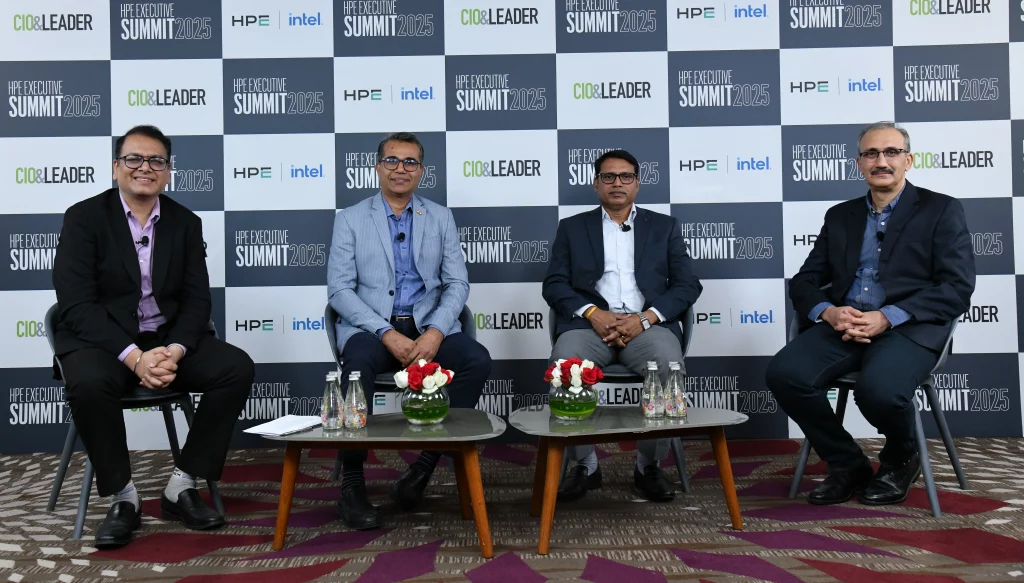
As we stand at the threshold of a new era, the conversation in the tech world is shifting from mere automation to true autonomy. At the recent HP Executive Summit, senior technology leaders gathered to unravel how Agentic AI, artificial intelligence that can reason and act, is fundamentally reshaping the enterprise landscape. This is not just a leap in software; it is a shift in how we conceive of decision-making and digital collaboration.
The Goal-Seek Paradigm: Reasoning Beyond the Script
Aashish Kshetry, Vice President of Supply Chain at Asian Paints, views the evolution of agentic AI as a move beyond traditional chatbots toward a “goal-seek paradigm”. In this future, agents do not just follow a script; they can reason and act on a user’s behalf. Perhaps most significantly, these agents will be able to interface with one another, working in concert to deliver complex results. To ensure this power remains a force for good, Kshetri emphasises the need for organizational guardrails that anchor AI in domain-specific knowledge, preventing the “hallucinations” often found in broad, internet-trained models.
The Infrastructure of Intelligent Automation
For LB Sharma, General Manager IT at BPCL, the arrival of agentic AI provides a clear direction for intelligent automation, filling a gap that has existed in the industry for years. However, he warns that moving from recommendation to autonomous action requires a robust backend infrastructure. To scale effectively, organizations must ensure their network and end-user computing can handle local command processing without lag. Sharma advocates a “start small” approach, prioritizing thorough validation in sensitive areas such as finance and legal to ensure the AI’s output never compromises organizational standards.
Human Intelligence as the Ethical Compass
Pradipta Patro, Head of Cybersecurity and IT Platform at KEC International, brings a critical perspective on trust and security. While agentic AI can revolutionize fields like pharmaceutical research and cybersecurity, detecting incidents and behavioral anomalies faster than ever, it cannot function in a vacuum. Patro argues that human intelligence must remain a central factor, as 100% reliance on AI is not yet feasible. He highlights that the industry narrative is now being shaped by AI governance and ethical frameworks, such as ISO 42001 and NIST, to prevent a “complete ecosystem collapse” from misconfigurations or compromised AI.
Critical Inputs Shaping the Industry Narrative
The industry is moving toward a more nuanced understanding of AI’s value, defined by several critical inputs:
- Defining Success Through New Metrics: Organizations are looking beyond simple ROI to measure productivity gains, 24/7 availability, and the minimization of risk through internal control systems that agents can monitor.
- The Transition from Theoretical to Tangible: We are seeing a shift from “hazy decision making” to procedural knowledge, where AI handles internal policies before being exposed to end consumers.
- Governance as a Foundation: With regulations such as India’s DPDP Act and emerging global AI standards, responsible and ethical AI is becoming a mandatory operational requirement rather than an optional feature.
An Analogy for the Future: Think of Agentic AI not as a replacement for the workforce, but as a highly skilled co-pilot. Much like an aircraft’s autopilot can handle complex navigation while communicating with other systems, it still requires a human captain to set the destination, oversee the journey, and take the controls when the weather becomes unpredictable.