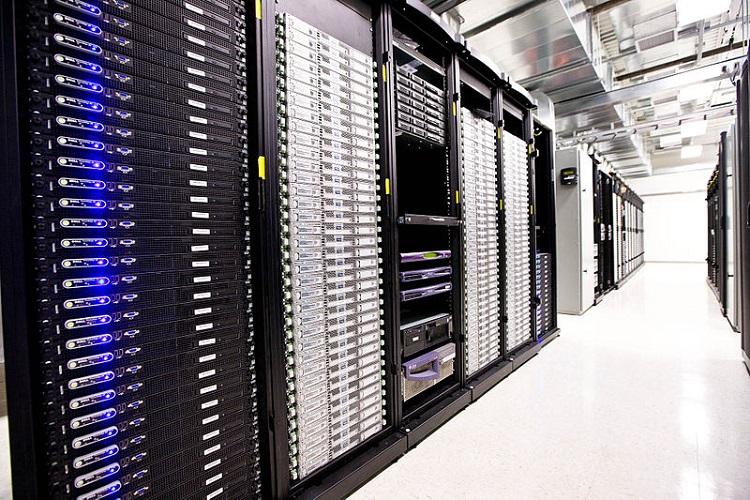
For years, India’s infrastructure imagination has been shaped by what we can see: highways, airports, ports and power plants. But the infrastructure that may define the country’s next growth phase is less visible. It sits in secure buildings, consumes enormous power, runs on advanced cooling systems and processes the data that now underpins everyday life.
Data centres are fast becoming the new backbone of India’s digital economy. The debate, therefore, should move beyond technology. This is now a question of infrastructure, investment, sovereignty and national competitiveness.
The numbers tell the story. India generates nearly one-fifth of the world’s data, yet has only a small share of global data centre capacity. According to KPMG in India’s report, India data centre opportunity: From emerging demand hub to integrated data centre powerhouse, India’s data centre market could grow from approximately USD 1.7 billion in FY26 to nearly USD 6.8 billion by FY30. That is not just a growth forecast. It is a signal that India’s digital expansion now needs a much larger physical foundation.
The invisible infrastructure behind daily life
A UPI transaction, Aadhaar authentication, DigiLocker access, telemedicine consultation, e-commerce order or AI-enabled customer query may feel instant to the user. Behind each interaction, however, sits a chain of data processing, storage, security and connectivity.
This is the physical side of the digital economy. Data centres do for digital services what highways do for logistics and ports do for trade. Without them, digital ambition remains just that: an ambition.
India’s scale makes the issue urgent. With more than 950 million internet users, over 600 million smartphone users and a fast-expanding digital economy, demand for reliable and scalable digital infrastructure will only rise. In the coming decade, data centre capacity could become as central to growth as roads, telecom towers and power grids.
AI is changing the equation
Artificial intelligence adds urgency to this debate. Cloud adoption created the first wave of demand for data centres. AI is creating the next one, and it is far more demanding.
AI requires far more than conventional storage. It needs high-density GPU clusters, advanced networking, higher power availability and sophisticated cooling systems. In other words, the data centre of the AI era will look very different from the data centre of the past.
This matters for India’s AI ambitions. The country cannot aspire to be a serious AI economy while remaining overly dependent on compute infrastructure located elsewhere. Domestic compute capacity will be central to speed, resilience, control and trust.
Data sovereignty is becoming a strategic priority
There is also a sovereignty argument. As banking, healthcare, government services and enterprise operations move deeper into the digital realm, where data is stored and processed becomes a strategic question. The Digital Personal Data Protection Act has only sharpened the need for secure, compliant and domestically hosted infrastructure.
Around the world, countries are beginning to treat digital infrastructure with the same seriousness as energy, transport and communications. India should be no exception. Data centres are not simply technology facilities or real estate assets. They are part of the country’s economic security architecture.
The multiplier effect beyond the facility
The economic upside is wider than the facilities themselves. A data centre project creates demand for engineering, construction, power infrastructure, cooling, connectivity, cybersecurity and managed services. As the sector scales, it can deepen domestic supply chains, support manufacturing and build specialised capabilities in high-growth technologies.
India has the ingredients to compete- competitive construction costs, access to power, a large technology talent pool, expanding connectivity and growing policy support. But ingredients are not enough. Leadership will require coordinated action on land, energy, sustainability, financing, regulation and last-mile connectivity.
India has spent decades building the visible infrastructure of growth. It must now build the invisible infrastructure of competitiveness. The question is no longer whether data centres matter. It is whether India can move fast enough to build the capacity, resilience and ecosystem depth that its digital future demands. The next great infrastructure race may not be on the road or at the port. It may be inside the data centre.
Authored by Rohan Rao, Partner, M&A Consulting, KPMG in India and Raghavan Viswanathan, Partner, M&A Consulting, KPMG in India