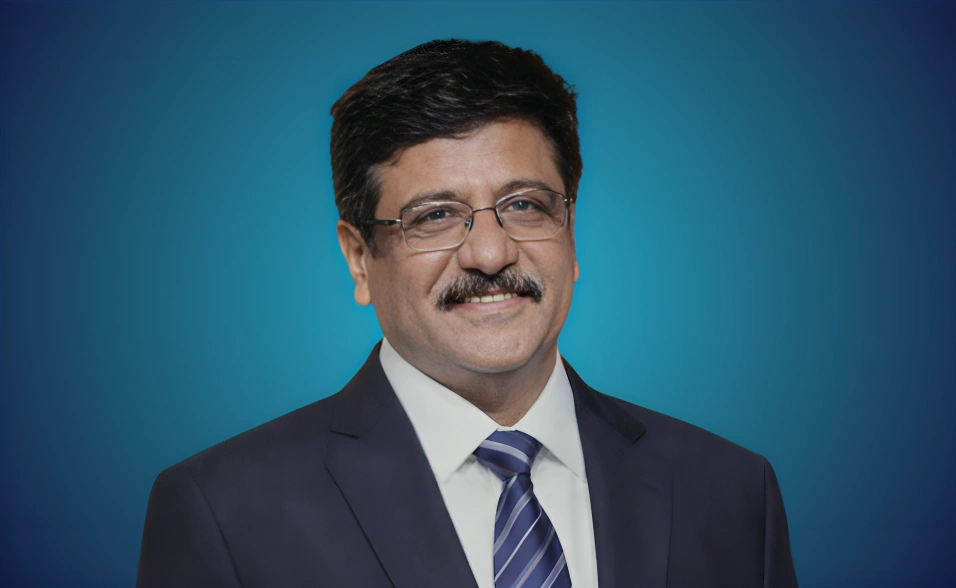
Viraj Deshpande, Sr VP & CIO, Petrochemicals at Reliance Industries, shares how expectations, metrics, governance, and relationships are being redefined for 2026 and beyond.
Reliance’s Intelligence Manifesto, articulated by our Hon’ble Chairman, sets a clear ambition, to become India’s first AI-native enterprise—one that systematically converts data into insights, insights into actions, and actions into customer delight.
Understanding every customer with unmatched depth and empathy, creating experience so intelligent and effortless, they feel like magic. Intelligence is our power; India is our purpose.
Over the last three years, the CIO mandate has undergone a fundamental shift. Technology is no longer evaluated as an enabler, a cost center, or even a transformation program.
It is now assessed as a direct driver of enterprise outcomes, with explicit accountability for value realization, risk, resilience, and speed of execution.
In asset-intensive sectors such as petrochemicals, this shift is even more pronounced. It is no longer asked what systems were delivered; they ask what business outcomes moved, what risks were reduced, and what decisions became faster and more reliable as a result of technology investments.
Drawing on the AI-Native Petrochemicals execution framework and outcome model, that reflects a real-world CIO perspective on how expectations, metrics, governance, and relationships are being redefined for 2026 and beyond.
CIO&Leader: In 2026, what are the top business outcomes businesses expect from technology, and how have those expectations shifted over the past three years?
Viraj Deshpande: In 2026, expectation from technology is to deliver measurable business outcomes, not abstract digital maturity. The shift over the last three years is clear
- From efficiency to value creation: Technology is now expected to improve EBITDA, ROCE, working capital, and margin resilience, not just reduce cost.
- From automation to decision superiority: Expectation is for better, faster, and more consistent decisions across pricing, asset performance, supply chain, and capital allocation.
- From digitization to AI-native execution: The expectation is no longer digitized workflows, but closed-loop, AI-executed workflows with human supervision.
In petrochemicals, this translates into outcomes such as:
- Higher on-stream factors and lower unplanned downtime
- Faster grade introduction and portfolio optimization
- Improved OTIF with lower inventory
- Disciplined pricing, credit, and working-capital control
- Improved customer value, operational excellence, and shareholder returns
From digitized processes to AI-executed workflows
The expectation is no longer dashboards or reports but closed-loop workflows where AI executes repeatable operational and commercial decisions within defined safety, DoA, and regulatory guardrails—under human supervision.
Technology is now judged by its ability to move these needles consistently, across cycles.
CIO&Leader: How are CIOs demonstrating measurable value from digital, AI, and transformation investments to the board, and which metrics truly matter today?
Viraj Deshpande: CIOs no longer defend spend using system uptime or adoption metrics. Value is demonstrated through workflow-linked KPIs, plant-level and P&L-visible outcomes
What resonates with executive leaderships today:
- Outcome-linked metrics, such as margin per ton, inventory days, yield improvement, or reduction in manual intervention hours
- Decision cycle-time reduction, especially in planning, logistics, pricing, and turnaround execution
- Risk-adjusted value, showing not just upside but volatility reduction and downside protection
In an AI-native model, each canonical workflow (e.g., Order-to-Delivery, Asset Performance, Billing & Credit) has
- A clear business owner
- Codified decision rights (DoA-as-code)
- Embedded policy guardrails
- Quantified impact on EBITDA, ROCE, safety, or working capital
This allows CIOs to report value at the level, where outcomes are appreciated, not platforms.
Autonomous workflows cannot bypass safety, regulatory, or financial guardrails. As autonomy increases, governance must become stronger not looser” ~ Viraj Deshpande
CIO&Leader: Where do expectations align with reality, and where do execution complexity and trade-offs create the biggest challenges on the ground?
Viraj Deshpande: There is strong alignment between Business Leadership and CIOs on what must be achieved. The challenge arises in how fast and how cleanly it can be executed.
Key on-ground challenges include:
- Legacy fragmentation across plants, functions, and systems that resists end-to-end workflow ownership
- Change fatigue when transformation is layered on top of existing operating models instead of rewiring them
- Data readiness gaps, where AI ambition outpaces data quality and governance maturity
- Risk aversion around autonomy, especially in safety-critical environments
This is why parallel-run (“make before break”) models are essential. AI-led execution must prove superiority on safety, reliability, stability, and outcomes before authority is shifted not as a leap of faith, but as an evidence-based transition.
CIO&Leader: Which technology risks are now viewed as enterprise risks, and where are accountability boundaries still unclear between the CIO, CISO, and business leaders?
Viraj Deshpande: Several technology risks are now firmly viewed as enterprise risks:
- AI decision integrity and explainability
- Data quality and lineage
- Cloud cost volatility
- OT cybersecurity and plant safety interlocks
However, accountability boundaries remain blurred. CIOs own platforms and data, CISOs own cyber defense, but business leaders own outcomes. The most effective organizations make this explicit: technology risk governance is shared, with clear escalation paths and codified limits.
CIO&Leader: How has the cybersecurity conversation evolved from protection to enterprise-wide resilience, recovery, and accountability?
Viraj Deshpande: Cybersecurity has evolved from a perimeter defense conversation to an enterprise resilience mandate.
The expectation is:
- Business-continuity assurance, not just breach prevention
- Time-to-recover metrics, especially for plants, logistics, and order fulfillment
- Clear accountability for cyber-physical risks in OT, IT, and AI systems
In AI-native enterprises, security is embedded as policy-as-code, not manual enforcement. Autonomous workflows cannot bypass safety, regulatory, or financial guardrails. As autonomy increases, governance must become stronger not looser.
CIO&Leader: Which technology risks are now viewed as enterprise risks, and where are accountability boundaries still unclear between the CIO, CISO, and business leaders?
Viraj Deshpande: Several technology risks are now firmly viewed as enterprise risks:
- AI decision integrity and explainability
- Data quality and lineage
- Cloud cost volatility
- OT cybersecurity and plant safety interlocks
However, accountability boundaries remain blurred. CIOs own platforms and data, CISOs own cyber defense, but business leaders own outcomes. The most effective organizations make this explicit: technology risk governance is shared, with clear escalation paths and codified limits.
CIO&Leader: How are boards reassessing cloud costs, ROI, and modernization priorities, and what tensions does this create for long-term digital strategy?
Viraj Deshpande: Cloud economics are being assessed with sharper scrutiny. The question has shifted from cloud first to value first.
Imperatives considered are:
- Short-term cost control conflicts with long-term modernization
- Lift-and-shift models fail to deliver promised agility
- AI workloads demand scalable platforms but lack clear outcome ownership
Successful CIOs anchor cloud investments to specific workflow economics — for example, how faster planning cycles or predictive maintenance reduce working capital or downtime. Cloud is no longer a strategy; it is an execution enabler.
CIO&Leader: What do CIOs need more from boards to deliver outcomes successfully, clearer direction, investment discipline, patience, or shared risk ownership?
Viraj Deshpande: CIOs do not need more enthusiasm for technology. They need:
- Clear outcome priorities, not shifting digital agendas
- Investment discipline, tied to measurable value realization
- Patience for foundational rewiring, especially data, governance, and operating-model change
- Shared ownership of risk, particularly in AI-led decisioning and autonomy
When business treat transformation as an enterprise shift — not an IT program — execution accelerates dramatically.
CIO&Leader: What is the most underestimated technology risk or opportunity for 2026–27, and how do expectations differ across sectors?
Viraj Deshpande: The most underestimated opportunity is AI-native execution at scale — not pilots, copilots, or dashboards, but AI systems that run the business within defined boundaries.
Conversely, the most underestimated risk is partial transformation: adopting AI without rewriting workflows, governance, and accountability. This creates complexity without compounding value.
Sector expectations vary. Asset-heavy industries focus on reliability and safety; consumer sectors focus on personalization and speed. But across sectors, the winners will be those who treat AI not as a tool — but as a new operating system for the enterprise.