Sunil Kumar, Chief Technology Officer and Praful Poddar, Chief Product Officer, Shiprocket, on how Shiprocket unifies data, AI, and logistics to empower India’s SMBs
Founded in 2017 by Saahil Goel, CEO and MD and Gautam Kapoor, COO, Shiprocket has emerged as one of India’s most influential logistics and enablement platforms for small and mid-sized businesses. What began as a logistics aggregation play has steadily evolved into a full-stack commerce and fulfillment platform, helping sellers manage everything from shipping and warehousing to checkout, payments, marketing, and returns.
At its core, Shiprocket solves a simple yet underserved problem: enabling India’s SMBs and digital-first entrepreneurs to compete with larger enterprises on speed, cost, and customer experience. By combining scale-driven logistics partnerships with a deeply integrated technology layer, the company has positioned itself as a critical infrastructure player in India’s booming e-commerce ecosystem.
Technology has been central to this journey. Shiprocket operates a cloud-native, API-first platform that increasingly leverages data science, machine learning, and generative AI to optimize supply chains, reduce friction, and improve seller decision-making. With more than a third of its business flowing through APIs and a rapidly expanding AI footprint, the company is pushing toward a unified, intelligent platform designed for scale.
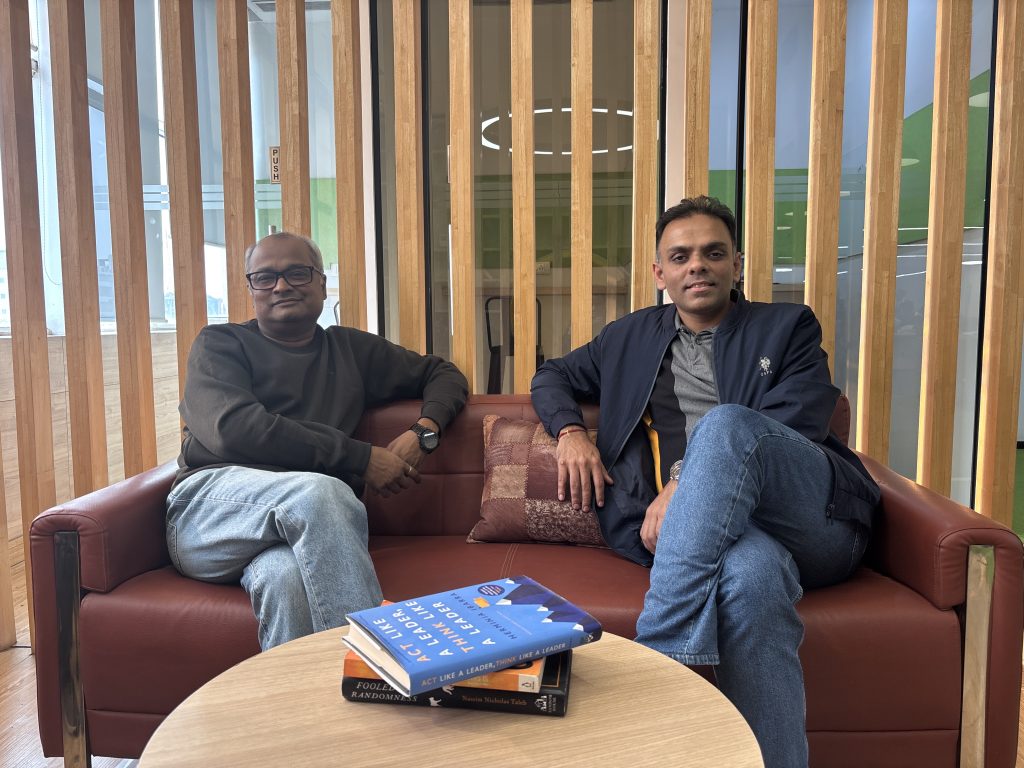
In this conversation with Jatinder Singh, Editor, CIO&Leader, Sunil Kumar, Chief Technology Officer and Praful Poddar, Chief Product Officer share how Shiprocket is using technology to solve fundamental logistics challenges, how AI is reshaping both internal operations and merchant experiences, and what lies ahead as the company prepares for its next phase of growth.
CIO&Leader: As you build an end-to-end logistics platform, how does technology enable orchestration across sellers, carriers, and partners? What structural gaps in India’s logistics ecosystem are you aiming to address?
Sunil & Praful: Some principles have been core to Shiprocket right from the beginning, when Sahil and Gautam started the company. We have always focused on solving problems for SMBs. This segment is significantly underserved by cost-effective, scalable technology solutions that actually work.
Enterprise-grade solutions exist, but they are expensive and out of reach for most SMBs. That creates an uneven playing field, where smaller sellers cannot compete effectively with large enterprises. Our mission has been to identify the correct problems and solve them in a scalable, technology-driven way.
In logistics aggregation, the original problem statement had two parts. The first was access. SMBs needed access to multiple courier partners in one place. Once a small seller tries to work directly with tier-1 couriers [such as Blue Dart or Delhivery], it becomes difficult to get attention, negotiate contracts, or secure competitive pricing. Aggregation gives them choice and flexibility.
The second was pricing. Because we operate at scale, we can negotiate better rates, which are then passed on to sellers. Combined with the technology layer, this creates a largely hands-off logistics experience. Traditionally, an SMB would need one or two people to manage couriers, disputes, delays, and daily coordination. We absorb that complexity through technology, operations, and managed services, so logistics feels outsourced by default.
As we continued solving logistics challenges, we kept hearing from sellers about issues beyond shipping. After logistics, there were challenges around returns, cancellations, customer communication, and remarketing. Before logistics, there were gaps in payments, checkout, ads, and commerce workflows.
We chose to expand selectively, focusing only on areas where we had confidence and complementary capabilities, and where we could take a proper zero-to-one approach.
One insight we gained early was that SMBs do not like paying fixed SaaS fees. They are uncomfortable committing to an INR 5,000 monthly subscription. What they are comfortable with is paying per transaction. That led us to build a pay-per-use model in which costs scale with usage and margins are embedded in the transaction flow.
On warehousing, this again came from a seller problem. SMBs selling on marketplaces like Amazon and Flipkart benefit from fast delivery expectations, often one or two days. Sellers operating through their own websites, WhatsApp, or social media struggled to match that experience.
Warehousing enables us to distribute inventory nationwide rather than tying sellers to a single location. If inventory is closer to the buyer, delivery becomes faster. For instance, if a seller places inventory in our Bengaluru warehouse, orders from South India can be fulfilled locally, enabling same-day or next-day delivery. This is why we now operate around 30-35 warehouses across India.
On exports, we currently do not operate our own international warehouses. However, we support both B2C parcel shipping and cargo shipping for Indian sellers shipping to markets like the US, Europe, the Middle East, Africa, Asia, and Australia. Some sellers ship single parcels through dropshipping models, while others move inventory in bulk to international fulfilment centres. We support both use cases through our international shipping offerings.
CIO&Leader: Technology today is central to optimizing shipping choices and unlocking better cost efficiencies. As AI and machine learning take on a larger role, what new intelligence or decisioning models are you building to drive these outcomes? Are these capabilities being developed in-house, or in collaboration with ecosystem partners?
Sunil & Praful: From the outside, Shiprocket appears to be a single end-to-end platform that handles fulfillment, warehousing, shipping, checkout, and value-added services. Under the hood, however, these are distinct products operating in parallel.
The future platform has to be unified, intelligent, and AI-first, even if that means reimagining existing workflows
Praful Poddar, Chief Product Officer, Shiprocket
The challenge is that they must work together seamlessly because it is the same customer and the same order moving through multiple stages, from placement to delivery, returns, or exchanges. This requires a federated data architecture in which products are self-sufficient but communicate via events. Every order status change triggers events, including warehouse processing, courier assignment, and delivery updates. This orchestration layer is critical.
We have built a strong data foundation using our internal data lake and Snowflake. This allows teams to access real-time, reliable data and enables advanced analytics and AI use cases. Clean and structured data is a prerequisite for effective AI, especially LLMs.
We approach AI across three tracks:
– AI for Shiprocket, focused on internal efficiency
– AI for merchants, focused on simplifying seller workflows
– AI for Bharat, contributing to broader ecosystem needs
We use a mix of internally built models and fine-tuned external models. Use cases include address correction, text-to-speech, speech-to-text, and experimentation with open-source and commercial LLMs such as OpenAI, Claude, and others. We are also working on India-first voice models to address linguistic diversity.
Even before GenAI, we ran machine learning models for courier recommendation across 17-plus partners, RTO risk prediction for COD orders, and lead scoring across hundreds of thousands of monthly signups.
With GenAI, platforms like ours are becoming conversational. Instead of navigating screens, sellers can issue instructions. We built an AI Copilot that automates actions and answers queries within the platform.
We also launched Trends AI, powered by insights from billions of transactions across millions of Indian buyers. It helps sellers understand what sells where, payment preferences, buyer personas, and demand patterns, enabling better marketing and product decisions.
CIO&Leader: How does your technology architecture help you handle demand spikes during festive seasons or sudden surges?
Sunil & Praful: We are cloud-native and operate across AWS and GCP, which gives us the elasticity we need. While we are not hybrid yet, our multi-cloud setup allows us to scale workloads dynamically.
We are fully containerized, using Kubernetes and EKS. This makes scaling faster and more predictable, as everything runs in small, modular pods.
Monitoring is another critical pillar. We use an ELK stack based on Elasticsearch to process terabytes of logs, with real-time dashboards and alerts. On top of that, Prometheus and Grafana help correlate infrastructure metrics with business performance.
If a large client expects a three- to four-times spike over a short period, we can scale efficiently while maintaining buffer capacity. At our current scale, we can absorb a 30 to 40 percent upside without issues, purely through elasticity rather than idle infrastructure.
Every new product or feature is stress-tested at five to ten times the projected load. Automation and QA testing run continuously to identify vulnerabilities early.
Warehousing introduces a unique challenge. Unlike software, physical capacity cannot scale instantly. Shelf space, workforce, and processing stations must be forecasted accurately. Data-led planning is critical because both underutilized and overloaded warehouses create problems for sellers.
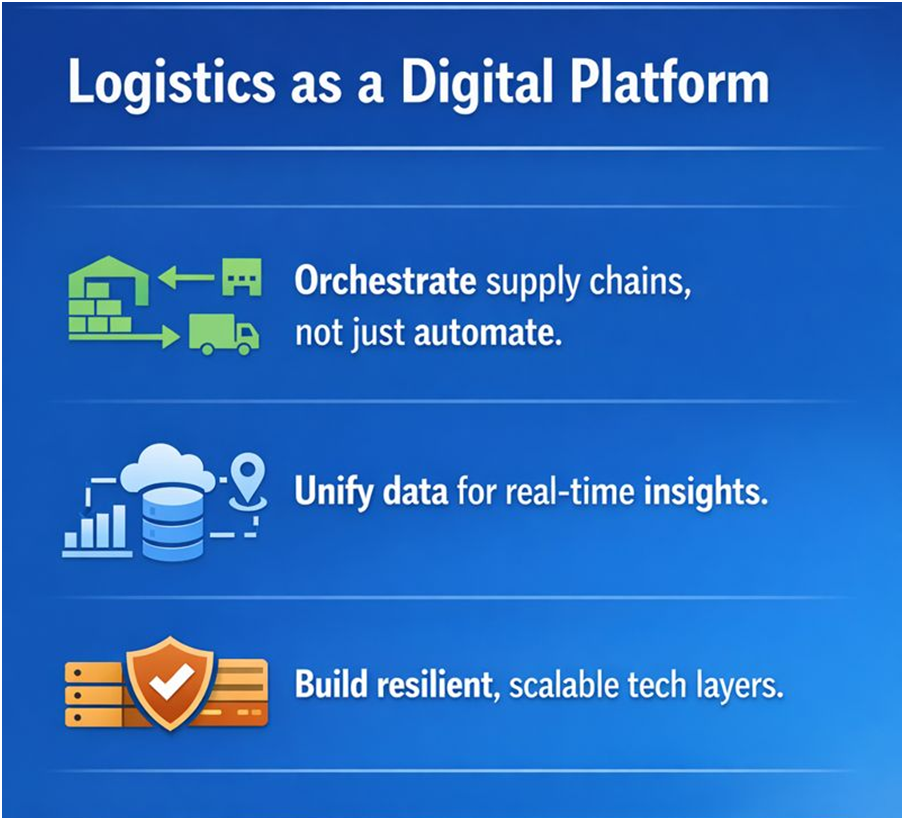
Shiprocket’s journey highlights a broader lesson: physical industries are increasingly being run by software platforms. Success depends not just on automation, but on orchestration, data unification, and resilience across digital and physical layers.
CIO&Leader: With an IPO on the horizon, how do you see Shiprocket’s next phase of growth? What are your technology priorities over the next two to three years?
Sunil & Praful: Our long-term vision has always been to become a one-stop shop for SMBs. While enterprises contribute 20 to 25 percent of revenue, our base is highly fragmented. No single customer contributes more than 3 percent of revenue.
Our core focus is on sellers shipping between 500 and 10,000 orders a month, though we also serve micro-entrepreneurs and large enterprises. Across this spectrum, sellers need a range of tools spanning cataloging, payments, marketing, logistics, warehousing, and returns.
Our effort has been to bring more of this under one platform, so data flows better and products work together more effectively. We do not want to build everything ourselves. In areas like website creation, Shopify already does an excellent job, and we integrate deeply with them.
Over the next phase, unifying our products into a single, cohesive platform is a significant priority. Many solutions were built independently to find product-market fit. Now the focus is on integration and orchestration.
AI is the second central pillar. We are moving toward an AI-first platform, rethinking workflows and experiences through an AI lens.
CIO&Leader: As enterprises scale GenAI and AI driven systems, concerns around data poisoning, hallucinations, and data integrity are becoming more prominent. How real are these risks in your view, and how should tech leaders think about deploying AI in mission critical environments?
Sunil & Praful: We are very conscious of this balance. Not every interaction should be AI first. For example, an initial call about a delayed pickup can be handled by AI. However, if the customer calls again within a short window, we route the interaction directly to a human agent.
AI should reduce friction, not increase frustration. The key is knowing when to step back and let humans take over.
These risks are very real, but their impact depends entirely on where and how AI is being applied. GenAI systems are inherently probabilistic, not deterministic. That distinction is critical for CIOs to understand.
If you are dealing with high stakes, transaction heavy workflows such as COD remittances or any process involving financial reconciliation, even a single hallucination is unacceptable. One incorrect output could mean a loss of a rupee or a million rupees. In such scenarios, GenAI cannot be allowed to operate autonomously.
However, in lower risk use cases such as querying a knowledge base or generating internal insights, there is some tolerance. A small margin of error may be acceptable because the output is advisory rather than transactional. The risk profile is dictated by the business context, not the technology alone.
Hallucination and data integrity issues are inherent challenges with GenAI today, which is why blind trust is dangerous. Our approach has been very deliberate. We never hand over end to end control to AI. Instead, we follow a human in the loop model. AI handles roughly 70 to 80 percent of the task, including speed, pattern recognition, and summarisation, while a human validates, approves, and takes final accountability.
This is quickly becoming an industry best practice. For CIOs and CTOs, the lesson is clear. Deploy AI as an augmentation layer, not an autonomous decision maker, especially in mission critical systems. Keeping humans in the loop is not a temporary safeguard. It is a governance requirement for responsible AI adoption.
Hallucination and data integrity issues are inherent challenges with GenAI today, which is why blind trust is dangerous.
Sunil Kumar, CTO, Shiprocket
CIO&Leader: Looking ahead, what are the most pressing structural challenges the logistics industry still needs to address, and where do you see technology making the most meaningful impact?
Sunil & Praful: Many logistics challenges remain fundamental. COD efficiency, weight discrepancies, and delivery speed are persistent issues. Technology can reduce information asymmetry, improve transparency, and help sellers make better decisions.
AI, predictive planning, and more intelligent inventory placement can help SMBs deliver faster without excessive duplication. Ultimately, solving simple, fundamental problems well still matters the most.