
Agora’s Ranga Jagannath says Voice AI is scaling in India, mainly in BFSI, but regulation, security and privacy remain hurdles, and humans must stay involved.
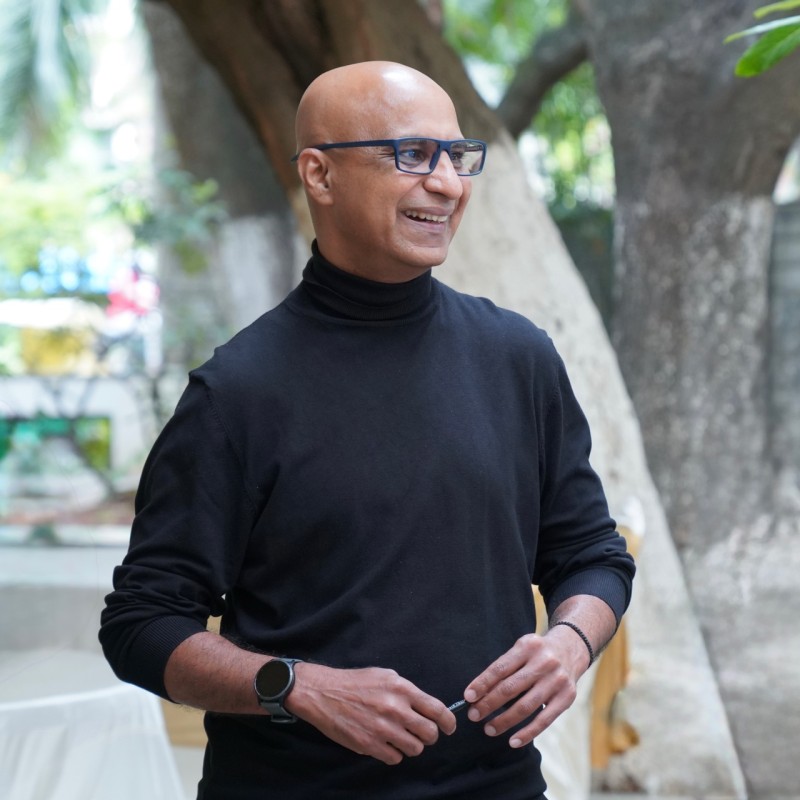
Voice AI is moving out of the pilot phase in India. According to a recent Nasscom report, 31% of organizations have deployed it in limited production, while 13% have scaled it, mostly in BFSI and select consumer segments. Yet regulated industries, healthcare, and child-related use cases remain hard to crack. In this conversation with CIO&Leader, Ranga Jagannath, Growth Leader at Agora, explains where speech recognition still stumbles on accents and code-mixing, why sub-500-millisecond latency is key to a natural exchange, and how legacy CRMs and security gaps slow integration. He also outlines practical DPDP Act safeguards, from masking personal identifiers to limiting data storage, and argues that however advanced the technology gets, a human should always remain in the loop.
CIO&Leader: The Nasscom report says 31% of organizations have Voice AI in limited production and 13% have scaled it. What separates scaled companies from those still piloting?
Ranga Jagannath: Most of the 13% we are talking about is in BFSI, in calls for collections, debt collections, and product offerings, with a large share in BFSI and some consumer space. By consumer space, I mean real estate and similar areas, not consumer durables. Generally, most mature organizations fall in that segment.
CIO & Leader: Which Indian industries are adopting Voice AI fastest, and where is traction still hardest to gain?
Ranga Jagannath: The hardest traction is in BFSI, of course. The non-core banking side has adopted it. The tougher ones to crack are the regulated ones within BFSI and healthcare. Another tough one is Edtech. The reason I mention Edtech is that when children are exposed to something, how do you ensure guardrails are in place to prevent harm to children or their education? These three are top of mind when it comes to being tough to crack: regulated industries and anything involving children in any way, shape, or form. These would be the tough ones.
CIO&Leader: India has dozens of languages, plus code-mixing like Hinglish and strong regional accents. Where do speech recognition systems fail most often?
Ranga Jagannath: Over the past couple of years, this has evolved significantly; now we have excellent code options and good multilingual support. It is still there, and we have seen significant success in this part of the world. Compared with a couple of years ago, it has evolved significantly. People still have problems with accents and stuff like that. The problem could be that it tries to speak extremely chaste Hindi, or something very textbook-style vernacular. That is where we get a little better. But we are almost there. It works to our advantage that we have so many languages and dialects, and that we have access to so many models that can help us train or get trained.
CIO & Leader: When customers switch languages mid-sentence, how should a voice agent handle it without breaking the conversation?
Ranga Jagannath: It depends on what your app can handle and on the business logic itself. How quickly can it process whatever comes from the speech-to-text and text-to-speech models, and where will the processing happen? It depends on how fast the edges and your LLM process this information, how fast your infrastructure and network are, and how well you remove extraneous noise from the system. There could be a child crying in the background, or just a fan moving in the room. All these add to the pollution of the voice itself, which humans can obviously separate. But for machines, the more robust the networks you have for transporting all this, the more magic truly happens.
CIO & Leader: Latency often decides whether a voice agent feels natural or frustrating. What delay is acceptable in a live conversation, and what usually causes it?
Ranga Jagannath: Several factors can cause the delay. If you break it down into four parts, the first is the speech-to-text system. You are speaking into a system that converts your speech to text. It then goes to an LLM. I’m talking about a cascading flow: from the LLM to your app for whatever it needs to pick up, then to a text-to-speech model, and finally back to you as speech. There are four different ops in any typical cascading flow. There could be latency in any one of these. As for how much latency is acceptable, it depends on the use case. But if you want a very good conversation or something natural, anywhere from 500 milliseconds or less is what one should look for.
CIO&Leader: Many Indian users are on patchy mobile networks. How do you keep voice interactions reliable in those conditions?
Ranga Jagannath: I’ll split it into two parts. The conversational AI part is one aspect, but the core—the engine that transports your voice data from the handset to the other end and back—is the network. Of course, your handset is one unit. Still, if the handset is not capable of handling certain things, then the software inside the handset and on the network should be capable of managing those packet losses and latencies, and hopefully stitching them together on the other side, even if you’re getting broken packets. But on the other end, if your system can stitch them together coherently, that is where it becomes interesting. And then for conversational AI, of course, you need a certain level of network and capability, which is sometimes beyond the provider’s reach due to different factors. But as long as you’re optimizing for some of these things, that’s where it gets very interesting to solve for poor handset and network conditions.
CIO&Leader: Most enterprises already run legacy CRMs, contact centers, and telephony. What are the biggest integration roadblocks when adding Voice AI?
Ranga Jagannath: One is the friction in terms of legacy systems: they’ll have to expose certain APIs from their side. One challenge is creating and exposing the API. Now, while they may want to do it, the service provider from whom they took the CRM may be in the market, may not be, or may have other priorities. So that is one technical challenge. The other concern is security: by exposing certain information, are enterprises exposing themselves to external threats that could be exploited? So there are two different things we’ll have to factor in, or these are the roadblocks that we generally come across. One is the legacy system’s inability to communicate with modern systems. The second is the real concern: how secure are those systems actually?
CIO & Leader: Voice data is sensitive, and the DPDP Act is now shaping how Indian companies handle personal data. What should enterprises prioritize for consent, storage, and security when deploying voice agents?
Ranga Jagannath: One of the simplest things they could do is make sure that any personally identifiable information not required by the other end is not sent. If I can manage a conversation without sending any personally identifiable information, that’s the ideal scenario. So you mask a user’s information or user ID with a temporary UUID or another string, so the other system need not know who the person on the other end is; that’s the simplest way to secure that information. But coming back to your question about logging information, DPDP, and related issues, different industries have different regulatory requirements regarding how long they can store data. Data should be stored only with the people or organization that needs it. It should not be stored on, let’s say, for example, somebody that’s powering conversational AI need not store that data for any reason or purpose. So those are some of the safeguards that one can, or one should, consider in terms of what data am I sending, in what form am I sending it, and who is actually storing and saving the data at which different points in that journey. And are they auditable, and in what forms are they stored? Sometimes a provider may need to store information for a certain duration. But if they are storing it, what is their policy in terms of getting rid of that data or encrypting that data or who has access to that data? Security is a whole different discussion itself. But these are some of the quick things that come to mind.
CIO & Leader: How does Agora’s Conversational AI Engine help businesses build voice-first agents, and how much flexibility do they get with their speech, language, and AI models?
Ranga Jagannath: We thrive on the premise that you can bring your own TTS, yTT models, and yLMs. At the same time, we are on a robust network provided by Agora, called the software-defined real-time network. The conversational AI engine runs on top of that SDRPN network. All three or four of these elements are easy to embed into the conversational AI flow. It’s just coincidental that 24 hours ago, I was able to build a conversational AI engine in 5 minutes using AI coding tools and Agora’s MCP and CLI capabilities. So 5 minutes is what it takes to inject these elements.
CIO&Leader: Looking two to three years ahead, what will Voice AI in India look like? Which customer journeys will it own end-to-end, and where will humans still stay in the loop?
Ranga Jagannath: Three years from now, one area that may evolve is real-time translation. That’s one area that’s there but not there yet. From a voice-capability perspective, real-time translation is one thing I can think of. As for your other question, it’s very open-ended. Who knows what happens in three years? We don’t know what happens in three weeks or three months. It’s tough to predict what the future actually holds. Still, it’s an exciting time for anyone in the voice AI and conversational AI business. I want to add one more thing about which industries may adopt this quickly: as I mentioned, BFSI and some aspects of consumer conversations are already powered by AI. But where does the human come into the loop? As a consumer, the human should always be in the loop. It’s extremely frustrating to have to talk only to an agent. While it solves some things, it doesn’t solve everything. So the human in the loop, irrespective of industry, will and should always be there, at least in the foreseeable future.