
Radha Krishnan discusses how AI is transforming simulation, digital twins and generative design while physics, validation and engineering control remain critical to accelerating deep-tech product development.
India’s role in global engineering has moved well beyond execution, with centres such as DEP’s Chennai operation increasingly contributing to core product development, software and advanced R&D. As AI enters CAD, CAE, simulation and digital-twin workflows, the opportunity is not simply to automate engineering but to accelerate it without compromising physical accuracy or engineering control.
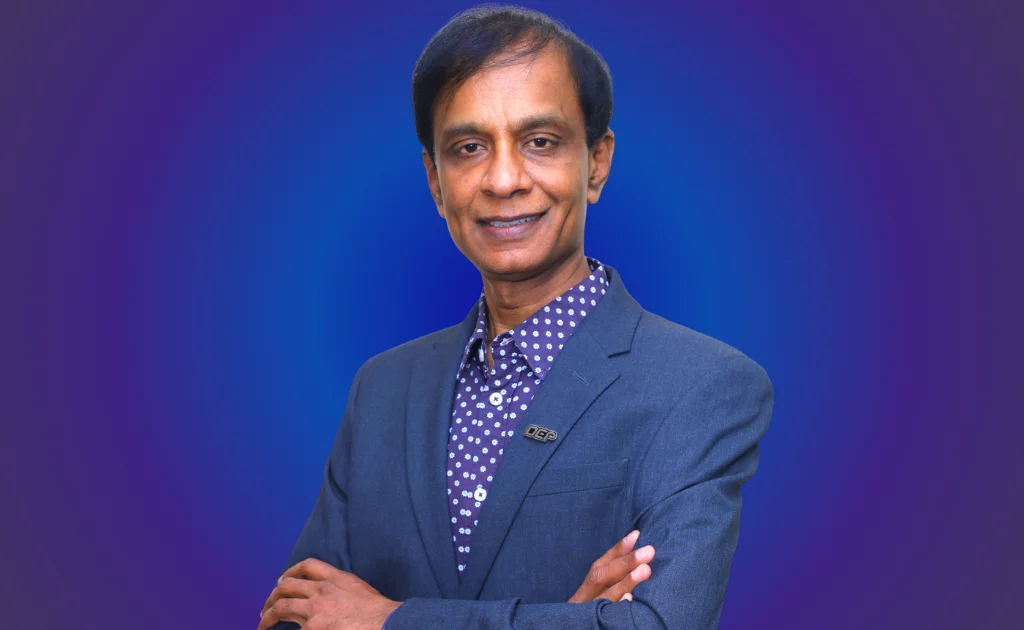
In this interview, Radha Krishnan, Founder and President of Detroit Engineered Products (DEP), discusses how physics-based simulation is reshaping virtual engineering, while India becomes an increasingly important hub for deep-tech product development.
CIO&Leader: DEP established its Chennai R&D and operations hub back in 2000. How have you seen India evolve from an offshore delivery center into a core deep-tech engineering powerhouse for global product development?
Radha Krishnan: When we started our Chennai operation in 2000, India was still largely viewed as an execution and delivery location. That has changed significantly. The engineering talent here has matured, and companies are now comfortable having core product development, software architecture and advanced R&D happen in India.
At DEP, Chennai has been central to our software journey for more than two decades. Our entire team that builds the software sits in India. The bigger change in India overall is ownership. Engineers in India aren’t simply executing someone else’s specifications anymore. They’re defining algorithms, building products and solving difficult engineering problems for global customers. That shift is probably the most important change I’ve seen.
CIO&Leader: As traditional CAD and CAE platforms mature, how is the competitive landscape changing with the rise of integrated AI engineering tools?
Radha Krishnan: CAD and CAE aren’t going away. Their role is changing. For years, engineers have worked through a sequence of tools, moving data from CAD to meshing, from meshing to simulation, and then into separate optimization or post-processing environments. AI is beginning to challenge that workflow because some of those decisions can now be assisted or automated.
The real question is whether AI can reduce engineering effort without taking away engineering control.
The interesting competition won’t simply be between one CAE software and another. It will be between different ways of doing engineering. The industry is moving towards more integrated workflows where traditionally separate activities can be brought closer together, while machine learning can assist with prediction, optimization and repetitive engineering tasks. The real question is whether AI can reduce engineering effort without taking away engineering control. Customers are likely to choose platforms that can demonstrate that balance rather than simply having an AI label.
CIO&Leader: You recently introduced DEP AIWorks and an AI-powered version of MeshWorks. Architecturally, how do these platforms integrate machine learning models with classical FEA and CFD solvers without hallucinating unrealistic physical boundaries?
Radha Krishnan: An important thing worth noting is that the AI model is not asked to replace physics. The traditional solver remains the source of physical truth, while machine learning can learn from simulation data to create surrogate models, predict outcomes or explore a much larger design space. With AIWorks, for example, we can use data generated from established solvers such as Nastran or Abaqus to train ML models around specific engineering problems. We can also use approaches such as physics-informed neural networks where appropriate. MeshWorks provides much of the engineering workflow around model preparation, automation and simulation.
The important thing is validation. An AI model can produce an answer that looks statistically convincing and still be physically wrong. We therefore treat ML as an engineering aid, with simulation and physical constraints providing the checks that keep predictions grounded.
CIO&Leader: In an era dominated by purely data-driven AI models, you emphasize that physics-based simulation still matters. How does DEP ensure that the laws of physics anchor ML-driven generative design to prevent structurally unsound results?
Radha Krishnan: Generative design needs boundaries. Otherwise, a computer can produce something mathematically interesting but physically impossible or unsafe. Our approach is to keep engineering constraints in the loop, including loads, material properties, boundary conditions and manufacturing requirements.
Generative design needs boundaries. Otherwise, a computer can produce something mathematically interesting but physically impossible or unsafe.
Machine learning can help explore a much larger design space, but the objective isn’t to let AI invent anything it wants. It is to let AI search faster within a space that still respects engineering’s reality. Simulation and engineering validation remain important parts of that process.
CIO&Leader: Digital twins are increasingly replacing physical crash and stress testing in the mobility space. How does digital twin solutions enable real-time virtual validation, and how close are we to completely eliminating physical prototyping in automotive safety compliance?
Radha Krishnan: Digital twins can reduce physical testing significantly, but I wouldn’t say we’re close to eliminating it, particularly for automotive safety compliance. A useful digital twin connects a virtual representation of the product with simulation models and, increasingly, operating data. Engineers can then evaluate many conditions and design variations before building another physical prototype. AI can take that further through reduced-order models or surrogate models where full simulation isn’t practical for every iteration.
The real benefit is better use of physical testing. If engineers can screen hundreds of possibilities virtually and physically validate only the most relevant candidates, every prototype and test can provide more value. Certification and correlation will continue to require physical evidence for some time.
CIO&Leader: In fast-moving sectors like drones, advanced air mobility (AAM), and aerospace, prototyping cycles must be rapid. What specific bottlenecks are virtual engineering and AI-driven simulation solving for these aerodynamics and lightweighting challenges?
Radha Krishnan: The biggest challenge in these sectors is the number of design iterations engineers need to evaluate. A small change in an aircraft, drone or AAM vehicle can affect aerodynamics, weight and structural performance, so every iteration can involve significant model preparation and simulation effort.
The engineer can spend more time making engineering decisions and less time preparing models and waiting for every simulation to complete.
Virtual engineering helps reduce that burden by automating tasks such as geometry preparation, meshing and simulation setup. AI takes it a step further by learning from simulation data and allowing engineers to screen many design options before running detailed analysis. The broader opportunity is to shorten that design loop. The engineer can spend more time making engineering decisions and less time preparing models and waiting for every simulation to complete.
CIO&Leader: For manufacturing clients adopting digital twins on the factory floor, how are virtual models kept continuously synchronized with live operating data across varying operating conditions?
A digital twin isn’t very useful if it represents yesterday’s factory. The connection between the physical system and virtual model has to be continuous, with data coming from sensors, machines and factory systems. Conditions also change constantly. Temperatures, production loads, machine behaviour and equipment health can all vary. AI and machine learning can identify patterns or deviations as new data arrives, while engineering models provide the context for interpreting them. The virtual model can then be recalibrated as operating conditions change rather than remaining a static representation.
CIO&Leader: Engineering organizations often struggle with the cost and complexity of maintaining fragmented toolchains. How does consolidating design, meshing, and AI simulation translate into tangible cost savings and time-to-market reduction for enterprise clients?
Radha Krishnan: Fragmentation has a hidden cost. Engineers spend considerable time moving data between systems, cleaning geometry, rebuilding models and learning different interfaces instead of solving the engineering problem itself. Bringing more of that workflow together can reduce those handoffs. From our experience, integrating activities such as CAD preparation, meshing, automation, simulation and post-processing can help reduce repetitive work. AI can further extend that workflow into areas such as prediction, surrogate modelling and optimization.
The savings aren’t only about software licenses. Engineering hours are usually the larger cost. If a model that once took several days to prepare can be generated much faster, teams can evaluate more design alternatives without adding the same amount of engineering effort. That can shorten development cycles, reduce repetitive work and allow organizations to make design decisions earlier, when changes are still relatively inexpensive. For large engineering organizations, those accumulated hours can become a meaningful business benefit.
CIO&Leader: Looking ahead, what are DEP’s key strategic priorities for scaling its global operations, R&D in Chennai, and industry footprint across emerging sectors?
Radha Krishnan: Our priority is to keep investing in engineering software while staying close to real customer problems. Chennai will remain an important R&D center because we’ve built deep software and engineering expertise there over many years. At the same time, we want to expand our global presence closer to customers and industry partners, particularly in sectors where simulation and AI are coming together. We’re also looking beyond our traditional automotive and CAE base toward aerospace, advanced mobility, manufacturing and other engineering-intensive industries.