
For Indian SMEs, the ERP conversation is no longer about finance. As AI becomes part of everyday software, businesses from metros to tier-two cities want systems that connect their data and act on it. Amit Suxena, Group Vice President & Head of Asia at NetSuite, says NetSuite’s answer is AI built into every workflow, with people accountable for decisions, not a chatbot bolted on to the ERP. In this conversation with CIO&Leader, he explains how NetSuite Next and Ask Oracle fit into that vision, which sectors are driving growth in India, how Oracle balances a global product with local needs such as GST compliance and data residency, and why CFOs should judge ERP on total cost of operating, not license price.
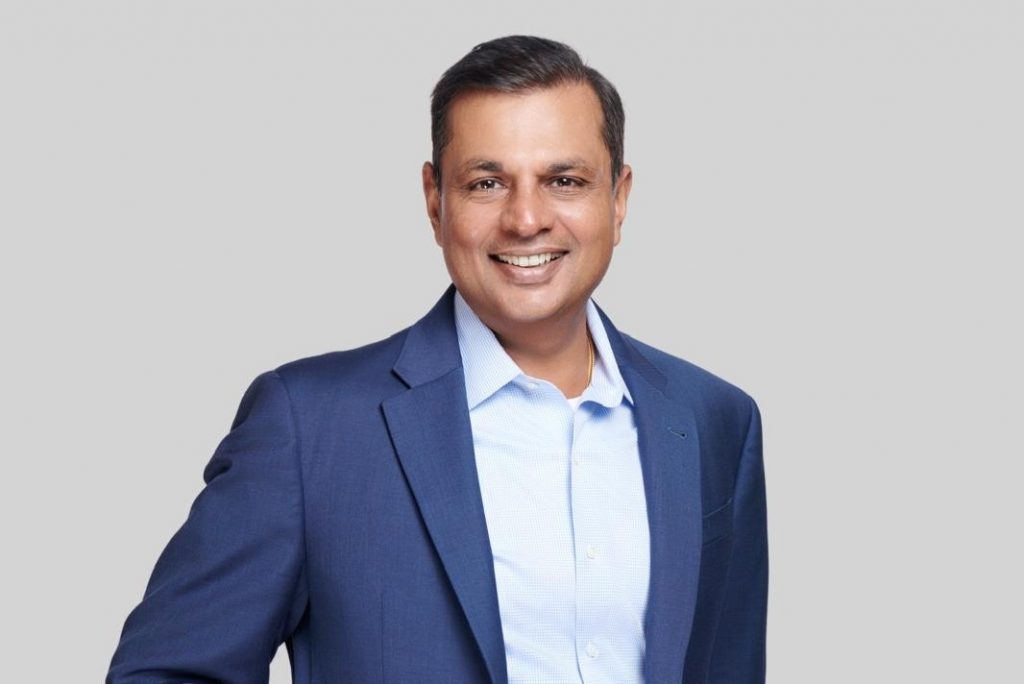
CIO&Leader: Oracle has been investing heavily in AI agents across its stack. What would an “agentic” NetSuite do for a finance or operations team: replace tasks, or accelerate them?
Amit Suxena: You cannot just replace tasks or accelerate them. You need both: automate repetitive tasks and accelerate the work that still requires people. We look at AI through three participants: people, who set the intent and exercise judgment about whether to use it.
People remain accountable for whatever happens. NetSuite provides transactions, workflows, permissions, and ERP functionality.
AI interprets all this with context. It proactively recommends the next steps and, when authorized, takes action. So there have to be these three participants in something like this. We do not want to say, let’s just put a chatbot next to an ERP. That’s not how this works. There are a lot of things that are AI-powered—for example, where a bank transaction occurs and is matched, reducing reconciliation. We have NetSuite EPM planning, which supports natural language analysis and what-if scenarios.
NetSuite Next extends that model, and Ask Oracle is at the center of an AI-native experience. It is designed to help users search, analyze, and act in their own words.
CIO&Leader: Looking across JAPAC, which markets or industries are showing the strongest momentum for NetSuite right now and what’s driving that— is it more about new customer acquisition or expansion within existing accounts?
Amit Suxena: I will have to say both. We have a very strong foothold in software services. In India, manufacturing is important. Hospitality is expanding exponentially. Healthcare is also expanding into tier-two cities and wants automated, connected systems for patient records and other functions.
FinTech, for example, was traditionally absent from tier-two cities. It is getting there, so it requires a lot of connectivity. India remains a very strong growth market for NetSuite. As I said earlier, it was metros; now it’s going into tier-two cities. The common need is to manage more entities, handle more transactions, and adopt more business models without multiplying systems and manual work. Both new adoption and deeper use of NetSuite are very important for our strategy.
We are seeing a lot of disconnected applications in Indian SME. So we are going to them and acquiring them as new customers so they can make use of NetSuite. Existing customers are using us more and more.
They could have started with ERP or financials, and they could now be expanding to CRM, as we are seeing users adopt CRM because they like to see customer and financial data in the same place. AI is only as good as the data you feed it. If you have both data sets in the same place, AI can do so much more. If your data is fragmented, AI is useless. Existing customers are expanding across different departments with us.
CIO&Leader: India is a very different buyer market from, say, Australia or Southeast Asia — different regulatory regimes, different maturity levels, different price sensitivity. How does NetSuite tailor its go-to-market and product strategy for India specifically versus the rest of JAPAC?
Amit Suxena: Firstly, our product strategy is consistent. In India, we have localization in place through SweetTax, which supports GST, regulatory requirements, tax deducted at source, and electronic invoicing that can connect with GST Subida providers. NetSuite has the India localization to do that. Globally, we are a cloud company, and every one of our 44,000-odd customers is on the same version. From a product perspective, it’s the same.
We don’t want Indian businesses to miss out on learning from and benefiting from what an SME in a more mature market did a few years ago. So our system adopts, learns, and extends that usage to India. We don’t want to keep that separate. But as I said, local reference, local relevance. We have to do that right locally, and we wanted local data to be here. So we’ve got our Oracle Cloud regions where we have local data storage and disaster recovery in Mumbai and Hyderabad.
We’ve done all of that. We also give customers choice in India. Do you want AI embedded in NetSuite, or do you want to support external AI assistance connected through the NetSuite AI connector service? In India, people want a choice. As I mentioned, we have AI embedded, but if you want to use another party, we can provide the connector. We realized that India is India, with tier two cities and metro cities having very different requirements. It’s like operating in both a mature and a developing country, even though it’s the same country. We tailor-make our solutions for that.
We have specific industries, like diamond exporters in Rajasthan, whose requirements are very high-value and low-transaction. Our partners help with extensions in that area: gold and jewelry manufacturers. They want to measure how much gold is in air conditioning ducts. No other industry does that. Our partners have built extensions for our product to handle that kind of thing. While you have a global instance of the product that works globally, we have built in local nuances for the local SME.
CIO&Leader: Competition in the mid-market ERP space is intensifying, from both global players and local/regional vendors offering cheaper, India-specific solutions. What’s NetSuite’s differentiator when a CFO in India is comparing options today?
Amit Suxena: The comparison has to be across the total cost of operating capacity, not license price alone. Imagine the cost of maintaining integrations, reconciling spreadsheets, and connecting inconsistent data. That is a lot of cost. At the two ends, there are many smaller ERP companies where very few things are unique to us: multi-country capability, multi-currency capability, capability across multiple regulatory requirements, and AI.
AI built in means every single thing you do has AI answering in context. By contrast, when you bring in AI from outside and bolt it on, it doesn’t automate everything you are doing. That is a big differentiator. We have one of the fastest implementations because we have anticipated SMEs’ needs and realize that SMEs cannot afford a long, drawn-out implementation. You want to see results today, especially in India. We have catered our product for the Indian market in a way that actually allows you to see results much, much faster. Those are our differentiators: we are not a large, complex ERP that takes forever to implement, and we can give customers connected data, unlike smaller companies.