
Every May 11th, India pauses to celebrate National Technology Day. A reminder of how far this nation has come as a technology builder. But in 2026, the conversation has fundamentally shifted. It is no longer about whether India can build world-class technology. The question is: can Indian-engineered, AI-first platforms set the global benchmark for how enterprises secure their operations, protect their people, and make smarter decisions?
India’s AI market is projected to grow from $13 billion in 2025 to over $130 billion by 2032, and with over 600,000 AI professionals contributing 16% of the global AI talent pool, India ranks second only to the United States. But talent alone does not define leadership. What defines it is the ability to translate engineering depth into real-world impact, at scale, across industries, and across the three pillars that matter most to enterprises today: Security, Safety, and Business Intelligence.
Unlike generative AI models that dominate global headlines, vision AI and deep learning platforms are quietly transforming how organisations, from city administrations to large enterprises, approach security. Indian organisations today face thousands of cyberattacks and physical security incidents weekly, with BFSI, healthcare, telecom, and public infrastructure among the most vulnerable.
The response to this cannot be more cameras or more rules. It requires platforms that think; analyzing live environments, identifying anomalies in real time, and enabling proactive responses before threats materialise. This is where India’s engineering depth is making a genuine difference, building AI security systems that are tested not in controlled settings, but in the lived complexity of real environments.
The traditional model of safety: periodic checks, compliance documentation, reactive response, is being replaced by something far more powerful. Physical AI is proving that intelligence now lives inside machines, not dashboards, continuously monitoring, flagging risk, and enabling intervention before incidents occur.
Whether on a factory floor, a hospital campus, a transport network, or a public space, AI-first platforms are redefining what it means to keep people safe. The shift is from documenting what went wrong to ensuring it never happens. That is not an incremental improvement. That is a reinvention of safety itself.
Perhaps the least discussed, but most transformative capability of an AI-first platform is what it does for decision-making. Organisations have never lacked data, they have lacked the ability to act on it with speed and confidence.
Nearly 60% of enterprise-scale organisations in India already have AI actively in use, yet the gap between those using it for basic automation and those extracting genuine business intelligence is growing. AI platforms today can track operational patterns, measure productivity, anticipate demand, and surface insights that were previously invisible — turning physical environments into sources of strategic advantage.
At the centre of this evolution is the work we have been doing at Videonetics, building an indigenous AI and deep learning platform from the ground up, with deployments across 150+ cities and recognition among Asia’s top video management software providers. What this journey has taught us is what it truly takes to build AI for dense, unpredictable, real-world environments: scalability, accuracy, and contextual intelligence that no lab can fully simulate.
This signals a broader shift in how global AI leadership may be defined. While much of the world competes on foundational models, India’s opportunity lies in owning applied AI in the physical world, solutions that are not designed in controlled settings, but proven in some of the most complex environments on earth.
As AI continues to integrate deeper into public and enterprise infrastructure, the definition of safety will evolve from preventing harm in digital systems to ensuring reliability and trust across every layer of real-world operations. India’s experience offers a powerful blueprint: AI safety, AI security, and AI-driven intelligence are not what systems should do in theory. They are what they must consistently deliver in practice.
That is the standard India is setting. And the world is beginning to take note.
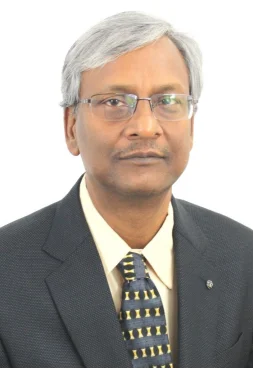
Authored by Dr. Tinku Acharya, Founder and Chairman, Videonetics