
AJ Sunder explains that enterprise AI success will depend less on automation itself and more on governance, trust, knowledge management, and human oversight as CIOs evolve into strategic business leaders.
AI is forcing enterprise leadership into unfamiliar territory. The conversation is no longer about whether organisations should adopt AI, but about how much decision-making can realistically be delegated to machines without compromising trust, accountability, or business judgment. As autonomous systems begin influencing revenue operations, customer engagement, infrastructure management, and strategic workflows, CIOs are increasingly becoming custodians of governance, organisational intelligence, and operational ethics rather than just enterprise technology.
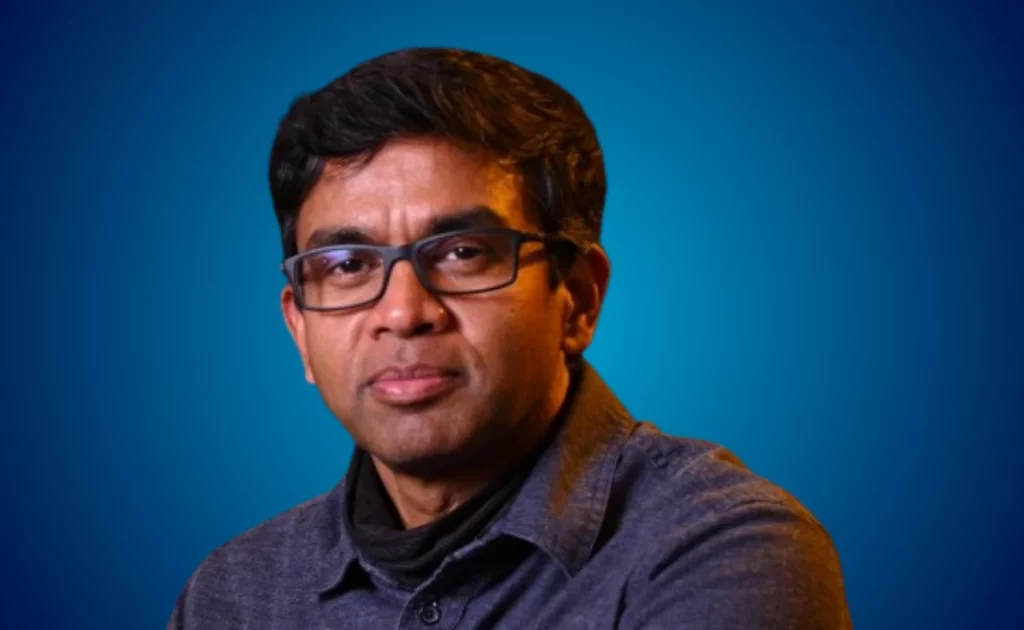
In this interaction with CIO&Leader, AJ Sunder, CIO & Co-founder, Responsive reflects on how that shift is changing the structure of IT organisations and the mandate of modern CIOs. From building governance models for agentic AI and redesigning teams around human-AI collaboration to embedding AI into core business workflows, he shares why the future of enterprise technology will depend less on automation itself and more on how organisations manage knowledge, accountability, and trust at scale.
CIO&Leader: As AI increasingly informs or automates operational and strategic decisions, where do you draw the line between what AI should recommend and what must remain a human—or a CIO’s—call?
AJ Sunder: AI has evolved in stages — from assistant, to advisor, to automation. But at every stage, human oversight remains essential. What changes is its form.
When AI assists, humans review every output. When AI advises, humans evaluate and interpret. When AI automates, humans design the guardrails and audit the outcomes. The oversight doesn’t go away — it just moves upstream.
At Responsive, this has fundamentally reshaped my role. I spend less time on technology decisions and more time on questions of business risk and trust: where does an AI error cost us a relationship? What do customers expect a human to own? Are our teams exercising judgment, or just accepting what the model says?
The line between AI and human accountability isn’t fixed, it shifts as the technology matures. My job is to ensure the right oversight is in place for where that line sits today, and to design the accountability model for where it moves tomorrow.
CIO&Leader: As a CIO, what are the major concerns you have while scaling your AI initiatives? Kindly share some successful use cases of AI within your organisation and the best practices around them.
AJ Sunder: Scaling AI comes with real challenges: content quality, hallucination risks, governance, and the shortage of deep AI expertise across teams are concerns we navigate daily. The risk isn’t just that AI gets something wrong; it’s that it gets something wrong confidently, at scale, before anyone notices.
What has kept us grounded is a simple principle – AI is only as trustworthy as the knowledge it draws from. At Responsive, our AI operates within curated, governed knowledge libraries which is what allows our customers to deploy it in high-stakes, revenue-critical workflows with confidence.
The results speak for themselves. Microsoft leveraged AI-powered content recommendations to save over US $17M across four years while supporting 22,000 field team members. Netsmart went from five minutes to thirty seconds per answer, submitted 67% more proposals, and saw user adoption grow by 540%. These aren’t pilot projects but rather they are scaled, embedded workflows.
The best practices that got us here are unglamorous but non-negotiable. Actions such as human review loops at critical decision points, continuous content health monitoring, and governance frameworks that treat AI output as a starting point, not a final answer. Shallow AI expertise remains the hardest problem since tools can be deployed quickly, but building teams that know how to question, correct, and improve AI output takes time and deliberate investment.
CIO&Leader: AI governance and talent readiness are among the biggest concerns for most CIOs. In your view, what is needed to address these concerns, especially in the era of agentic AI?
AJ Sunder: Governance and talent are two sides of the same coin and both demand more attention as AI moves into agentic territory.
Governance fundamentals are non-negotiable, including clear data privacy policies, transparency in how AI makes decisions, and human oversight at critical points. Agentic AI raises the stakes because the system is no longer just recommending, it’s acting. That requires governance frameworks designed not just for outputs, but for autonomous behaviour.
On talent, our priority is building from within. We invest in reskilling teams to understand AI capabilities and limitations, think critically about AI-driven decisions, and design workflows where human judgment and AI work together effectively. Agentic AI in particular demands people who understand how to define boundaries, evaluate outcomes, and intervene when systems go off course.
We do hire specialists externally where deep technical capability is needed, but we don’t want AI fluency to sit in a small expert team. It needs to be distributed across the organisation.
We’ve been fortunate to build a strong foundation through good hiring over the years, which has given us a head start. But this isn’t a problem you solve once. It requires continuous learning embedded into how teams work every day.
CIO&Leader: With execution increasingly automated, what does your IT organisation actually exist to do? How are you redesigning its structure, purpose, and talent composition?
AJ Sunder: When AI can write code, run tests, and monitor infrastructure, it raises an honest question about what IT’s role is in all of this activity.
Our answer is that execution was never the point, outcomes were. AI taking over repeatable execution frees the organisation to focus on what machines still can’t do well, which is understanding business context, making judgment calls under ambiguity, and designing systems that people actually trust and use.
AI taking over repeatable execution frees the organisation to focus on what machines still can’t do well, which is understanding business context, making judgment calls under ambiguity, and designing systems that people actually trust and use.
In practice, this means our teams are shifting from building and maintaining to curating, governing, and connecting. The most valuable people in IT today are those who understand both the technology and the business problem deeply enough to know where AI should be trusted, where it needs guardrails, and where a human needs to stay in the loop.
We are redesigning team structures around those capabilities and moving away from function-based silos toward roles that sit at the intersection of technology, data, and business domains. That transition is not painless. It requires honest conversations about which skills remain relevant and deliberate investment in helping people grow into new ones.
The IT organisation of the future isn’t smaller, it’s different. A team with specialized skills maintaining systems and more people ensuring that AI-driven systems are reliable, explainable, and aligned with what the business actually needs.
CIO&Leader: Looking two to three years ahead, how do you see the CIO role evolving? What should new-age CIOs be doing today to remain relevant tomorrow?
AJ Sunder: The CIO role is changing in a fundamental way, not just in title or scope, but in where it sits within the organisation.
Two to three years from now, the CIO’s most important function will be ensuring that an organisation’s collective knowledge — its people, processes, data, and decisions — is structured in a way that AI can act on reliably and that humans can trust. That is neither a pure technology problem nor a pure business problem. It sits squarely in between, which is exactly where the CIO role needs to live.
The role of the CIO will evolve and move closer to the business, not as a support function delivering technology, but as a strategic partner shaping how the organisation learns, decides, and competes. That means deep relationships with business unit leaders, a clear view of where AI creates real value versus where it creates risk, and the credibility to influence both.
What should new-age CIOs be doing today? Three things. First, get governance right before scale forces your hand. It is far harder to retrofit accountability into AI systems than to build it in from the start. Second, deploy AI in core workflows now, learn from it, and build institutional knowledge about what works. Third, invest in people who can think across domains because that intersection is where the next generation of competitive advantage will be built.
CIO&Leader: What are the three biggest focus areas for you as a CIO over the next 12 months, and why?
AJ Sunder: Over the next twelve months, three things are keeping me focused.
First, making AI accessible where work actually happens. Adoption only creates value when it shows up in the tools people use every day, not in a separate platform they have to remember to open. We are deepening integrations across CRM, collaboration, and productivity environments so that teams get validated, current knowledge in the flow of their work.
Second, making AI practical at scale. We are investing in purpose-built agents that allow teams to build and deploy automation without heavy technical dependency. The organisations pulling ahead are not those with the most sophisticated AI in a lab. They are the ones that have made AI usable across the business, by people who are not AI specialists.
The organisations pulling ahead are not those with the most sophisticated AI in a lab. They are the ones that have made AI usable across the business, by people who are not AI specialists.
Third, turning knowledge into a strategic asset. Most organisations store knowledge. Few actively govern it, measure its health, or use it to guide decisions in real time. We are investing in the infrastructure to do exactly that.