
For years, COMPUTEX Taipei was an exhibition where tech enthusiasts came to see flashy gaming rigs, watch overclocking contests, and explore the latest laptops and PC hardware. It was, above all, a show about personal technology.
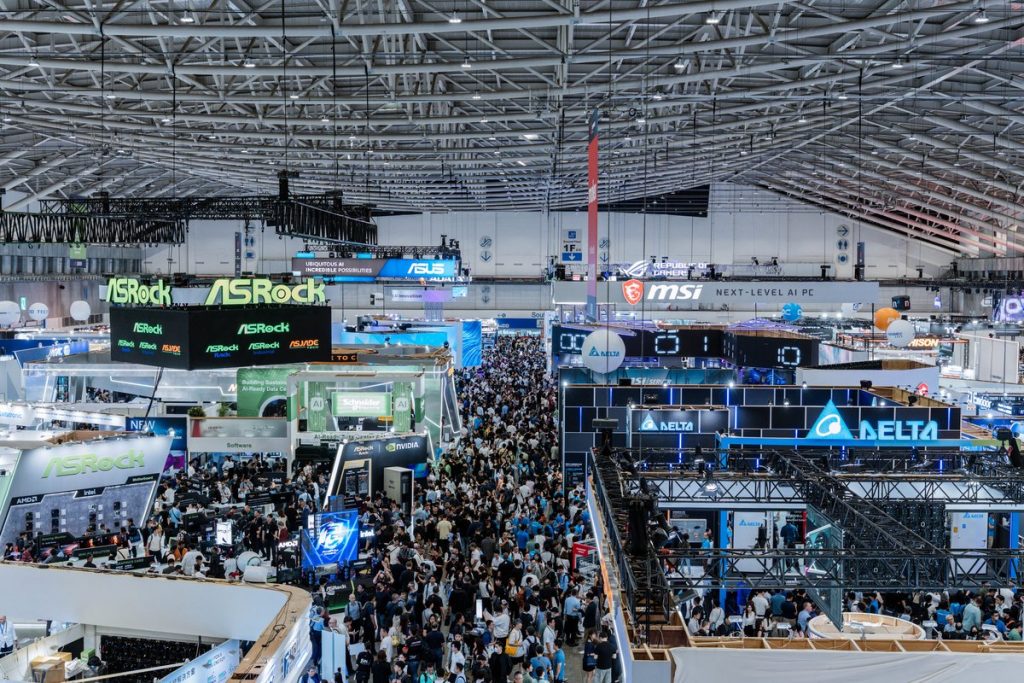
That spirit is still there. But walking the halls of the 45th COMPUTEX, held from June 2–5, 2026, under the theme “AI Together,” it became clear that the industry’s focus has moved well beyond PCs and consumer gadgets. The change has been visible for a few years now, but this year’s show felt different. AI wasn’t simply one of the big stories at COMPUTEX, it was the story, shaping conversations across nearly every booth and product announcement.
Now, companies attracting the most attention aren’t showing faster gaming laptops. Instead, they unveil server racks, AI accelerators, and liquid cooling systems for the next wave of artificial intelligence. In short, COMPUTEX has matured!
This year, 111,312 buyers and visitors from 152 countries and regions, including Japan, the United States, South Korea, China, Singapore, India, and Vietnam, came to Taipei to see where the tech industry is headed.
Key announcements
NVIDIA arguably drew the most attention at the event. The company unveiled RTX Spark, an ARM-based laptop processor developed with MediaTek, marking an entry into a market it has largely stayed away from.
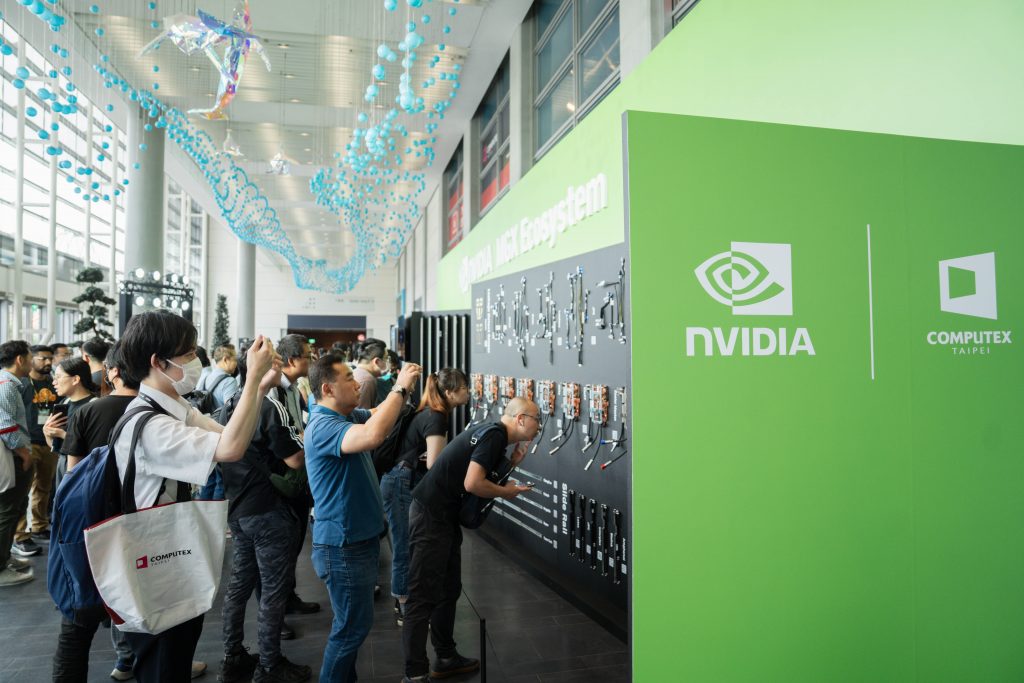
For a company best known for its GPUs, the move reflects a broader ambition: to have a presence wherever AI computing happens, including the laptops people use every day. It is another sign of how NVIDIA is expanding beyond its traditional roots. The Santa Clara, California-based company has become one of the biggest beneficiaries, and architects, of the AI era, providing the chips and computing platforms that power much of today’s generative AI ecosystem.
It also introduced Vera Rubin, a new AI architecture designed for autonomous AI systems moving from research labs into real businesses. Instead of just answering questions, this AI can act on its own and needs robust infrastructure to support it.
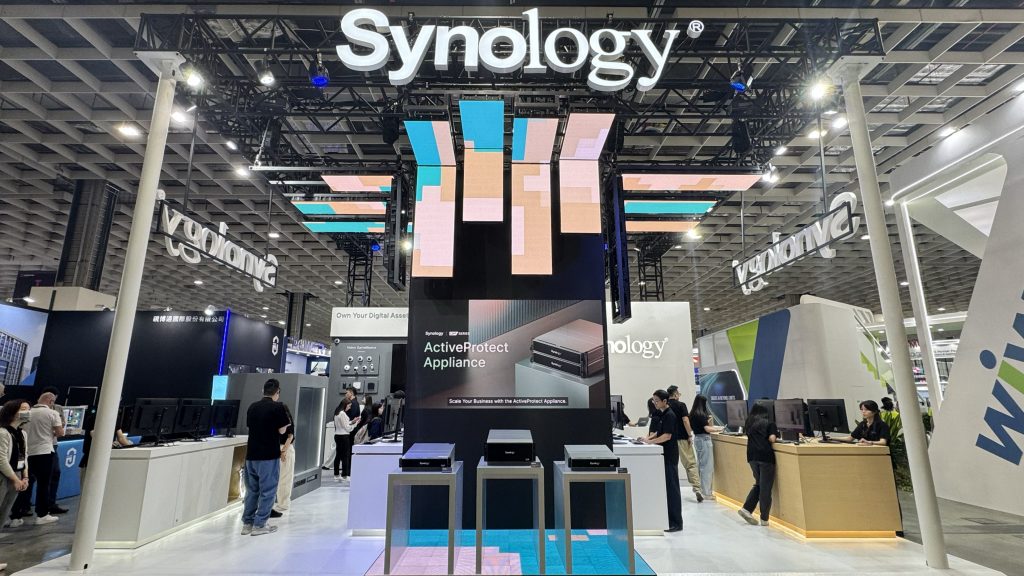
Network-Attached Storage (NAS) devices and software solutions provider Synology took a different but equally interesting approach. Its updated DiskStation Manager platform lets you use AI entirely on your own hardware, without needing the cloud. This means smart search, automated workflows, translation, and admin help, all while keeping sensitive company data on-site. The company also introduced ActiveProtect Manager 2.0, which uses AI to find and isolate suspicious files before they cause problems, and its PAS7700 enterprise storage system, which holds 216 NVMe drives and delivers 30 GB/s of sequential throughput.
AMD and Qualcomm each shared their own ideas about the future of AI. AMD focused on its Ryzen AI processors, saying your PC should handle more tasks locally instead of sending everything to a data center. Qualcomm made a similar point, especially about energy savings, which matters for devices that need to run AI all day on a single charge. Together, they highlighted a future in which AI workloads are dynamically distributed across PCs, edge environments, and the cloud, balancing performance, cost, and energy efficiency.
Transformation of the global exhibition
Three years ago, at COMPUTEX 2024, everyone talked about AI PCs—laptops with special AI chips and even a Copilot key on the keyboard. Back then, it felt more like a novelty, something to show off rather than something that truly changed how you worked.
By 2025, AI in laptops, gaming handhelds, and accessories made a real difference, with better battery life, smarter performance, and features people used.
In 2026, the conversation shifted again, this time in a bigger way. Now, it’s less about what AI can do for your laptop and more about what it takes to build AI systems that run whole companies. The hardware on display shows that ambition—not just personal devices, but the large-scale infrastructure behind them.
The exhibition floor tells the story
At COMPUTEX 2026, one could see server cabinets as tall as a room, complex liquid-cooling setups, and networking gear built to move data at speeds that seemed impossible a few years ago. Vendors weren’t just showing single products, they presented full AI infrastructure stacks, from chips and cables to the software that connects everything.
NVIDIA described this as building “AI factories,” meaning that future data centers won’t just store and process information—they’ll create intelligence at scale. Intel brought its own story about edge AI and robotics. Many other vendors added innovations in cooling, storage, and connectivity, all of which are quietly essential for keeping these systems running.
It’s very different from the days of overclocked gaming PCs. But in its own way, it’s just as exciting if you know what to look for.
Gaming and consumer tech aren’t going anywhere
Still, COMPUTEX hasn’t forgotten its roots, and the crowds around gaming and consumer areas showed personal technology remains very important.
ASUS celebrated 20 years of its Republic of Gamers brand at the show, a major milestone. They introduced AI-powered gaming laptops, handheld devices, creator systems, and many peripherals, showing how much the ROG line has grown. AMD highlighted its gaming strengths and AI efforts. MSI, Acer, Gigabyte, and others kept the COMPUTEX tradition with many new laptops, monitors, graphics cards, and handheld gaming devices.
These consumer products are no longer just standalone gadgets. Increasingly, they’re the user-facing part of a bigger system, connected, sometimes visibly, sometimes not, to edge infrastructure, enterprise platforms, and cloud AI. Your gaming laptop is still your gaming laptop, but now it’s part of something larger.
AI closer to home
One important trend at the show was the move toward edge AI. This means running AI locally on hardware you own and control, rather than relying solely on remote cloud servers.
This matters for several reasons. Privacy is one—organizations want to run AI on sensitive data without it leaving their building. Speed is another: local processing is faster than sending data to the cloud and back. Resilience is also important since systems that work without a constant internet connection are more reliable.
Global cybersecurity company Trend Micro showcased AI-powered security tools designed to protect the next generation of AI-driven businesses from increasingly sophisticated threats. Overall, AI is spreading from central data centers to the edges of networks and devices at their ends, a more distributed and resilient intelligence.
Robots are having their moment
If anything surprised people at the show, it was robotics.

These weren’t just robots like in past tech shows. Exhibitors showed real systems: autonomous warehouse robots, industrial manufacturing platforms, AI assistants for physical spaces, and smart logistics technologies. The key point was that this AI doesn’t just think it acts in the real world with real results. In healthcare, manufacturing, logistics, and smart cities, these technologies had wide-ranging uses and, in many cases, were already being tested. In Taipei, it felt like physical AI was moving from demos to real-world use faster than most expected.
The startups worth watching
If you wanted a different kind of excitement, the InnoVEX startup pavilion was the spot to visit.
While big company booths had polished presentations and rehearsed demos, InnoVEX felt livelier and more chaotic. It was a place where you could talk directly to a founder and get a real answer about what their technology does and why it matters. The startups covered robotics, semiconductors, green tech, AI infrastructure, healthcare, and smart mobility.
This year’s event had over 500 startups, an 11% increase from last year, from 23 countries. Taiwan, Japan, and South Korea had the largest groups. For many visitors, this was the most valuable part of the show—a chance to see technologies that could shape COMPUTEX in the next five years.
So, what is COMPUTEX now?
COMPUTEX began as a show for computer parts. It grew into the world’s top event for gaming hardware. Now, it’s harder to sum up in one sentence: a global stage for AI infrastructure, enterprise computing, robotics, and intelligent systems, with consumer tech still beating beneath it all.
The RGB lighting is still there, and gaming rigs still attract crowds. But this year, the most important conversations happened in front of server racks, cooling systems, and robotics platforms that most people wouldn’t have recognized five years ago.
If 2024 was about bringing AI to COMPUTEX, and 2025 about making it useful for everyday people, then 2026 feels like the year the industry focused on building essential, behind-the-scenes AI foundations that everything else relies on, even if they aren’t glamorous and cost a lot.
–The author attended COMPUTEX 2026 at the invitation of Synology.