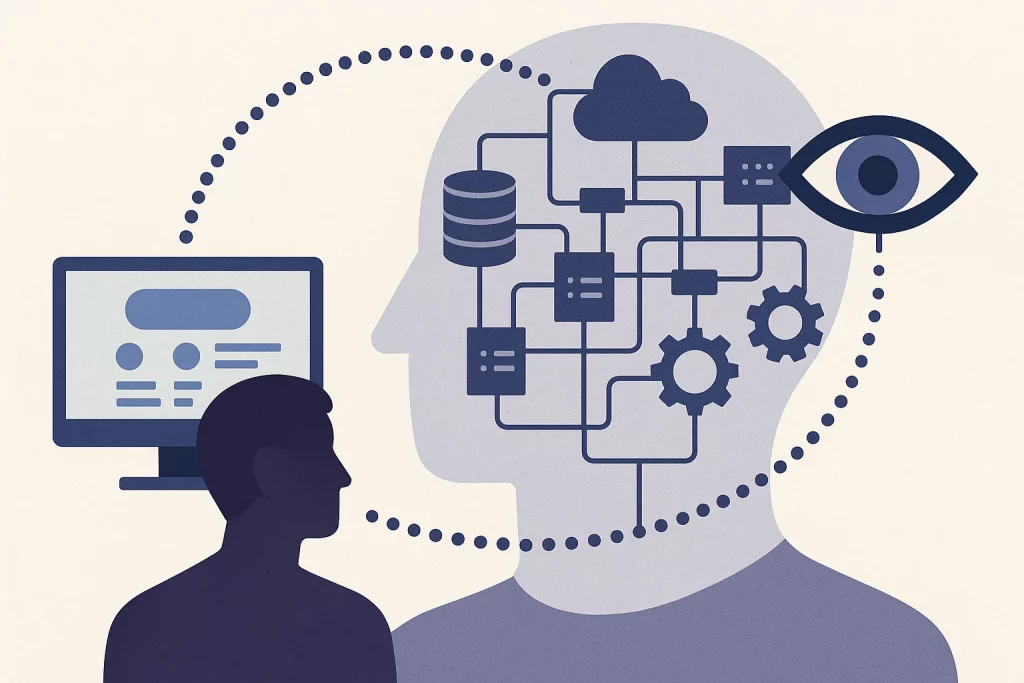
Artificial intelligence is not merely changing enterprise technology stacks; it is fundamentally redefining what organisations expect from their technology leaders. According to LinkedIn’s latest research, Indian Chief Technology Officers are rapidly transitioning from custodians of IT infrastructure to strategic leaders responsible for shaping how organisations adapt to the future of work.
The report signals a broader shift in enterprise priorities. The discussion around AI is moving beyond selecting platforms or deploying models. The greater challenge now lies in organisational transformation, workforce readiness, leadership alignment, and creating business value from AI investments.
The CTO’s mandate is expanding beyond technology
The study shows that 93% of Indian CTOs say their role is increasingly focused on helping organisations adapt to future ways of working. At the same time, 79% report that their responsibilities today include areas that were not part of their mandate just one year ago.
This suggests that the modern CTO is no longer expected to simply manage technology infrastructure or digital platforms. Increasingly, organisations expect technology leaders to influence business strategy, organisational change, workforce capability, and enterprise innovation.
The pace of this transformation is evident from another finding: 84% of CTOs believe their role is being actively redefined in real time.
For enterprise leaders, this reflects a growing recognition that AI adoption is no longer an isolated technology initiative. It has become an organisational capability that requires executive leadership across functions.
Technology is moving faster than enterprise decision-making
One of the most notable findings in the report is the widening gap between technological progress and organisational agility.
Nearly 79% of Indian CTOs say their role is evolving faster than their organisations can make decisions.
This highlights a familiar challenge for enterprise technology leaders. While AI capabilities continue to advance rapidly, governance models, investment approvals, operating structures, and change management processes often struggle to keep pace.
As a result, CTOs increasingly find themselves balancing immediate business expectations with long-term transformation agendas.
More than half (56%) identify balancing long-term AI transformation with short-term performance demands as one of their biggest leadership challenges.
Rather than viewing AI purely through the lens of technology deployment, organisations may need to reconsider how executive decision-making, governance, and business priorities evolve alongside AI adoption.
AI success depends as much on people as technology
Perhaps the strongest message emerging from the research is that enterprise AI strategies are becoming people strategies.
LinkedIn’s Head of India Engineering, Malai Lakshmanan, argues that technology alone cannot determine AI success. As organisations move from experimentation to scaled AI adoption, employees need the skills, confidence, and organisational support to integrate AI into everyday work.
This perspective is reflected throughout the survey findings.
Half (51%) of Indian CTOs identify stronger collaboration between CTOs and CHROs as the single most critical factor in building an AI-enabled workforce.
Encouragingly, this collaboration already appears to be taking shape, with 89% of CTOs saying they work closely with their CHRO counterparts.
For CIOs, this reinforces an emerging governance model where technology leadership and talent leadership become closely interconnected. AI implementation increasingly depends not only on infrastructure and applications but also on workforce capability, learning, organisational culture, and change management.
Continuous learning has become a strategic imperative
The research also underscores that AI transformation cannot succeed without sustained investment in employee capability.
An overwhelming 92% of Indian CTOs believe continuous skill-building is essential for organisations to keep pace with technological change.
Unlike previous digital transformation initiatives that focused primarily on systems implementation, AI requires organisations to continually update employee skills as technologies, workflows, and business processes evolve.
For enterprise leaders, this finding positions learning not as an HR initiative but as a core business strategy supporting AI adoption and long-term competitiveness.
Innovation remains the primary business outcome
Despite the operational challenges surrounding AI adoption, CTOs remain optimistic about its strategic value.
More than 91% identify innovation as the most important outcome of their organisations’ AI investments.
This suggests that enterprise AI initiatives are increasingly being evaluated not solely on efficiency gains or automation metrics but on their ability to enable new products, services, operating models, and business opportunities.
For CIOs, this aligns AI investment decisions more closely with enterprise growth strategies than with traditional cost optimisation objectives.
Trust may become the next executive challenge
While AI adoption continues to accelerate, the report suggests that technology implementation may no longer be the biggest hurdle.
Nearly 79% of CTOs say AI is creating entirely new roles that did not exist just a few years ago. LinkedIn notes that roles such as Prompt Engineer and AI Engineer are among India’s fastest-growing jobs.
At the same time, 81% of CTOs believe business leaders face pressure to move faster on AI than they can effectively measure its impact.
Against this backdrop, maintaining employee trust has emerged as the most frequently cited challenge AI introduces to C-suite decision-making.
This reflects a broader leadership challenge: organisations must simultaneously accelerate AI adoption while ensuring employees understand how evolving technologies will reshape roles, responsibilities, and career opportunities.