
As AI transforms data center engineering, Sanjib Seal explains why liquid cooling, modular construction, integrated engineering, and factory-built infrastructure will determine how India delivers next-generation AI-ready facilities.
Artificial intelligence is fundamentally reshaping data center architecture. Rack densities that once averaged 6–10kW are rapidly climbing beyond 100kW—and in some cases toward 600kW—forcing operators to rethink everything from cooling and power distribution to deployment timelines and construction methodologies. As India accelerates its AI infrastructure build-out, engineering challenges are becoming as critical as compute capacity itself.
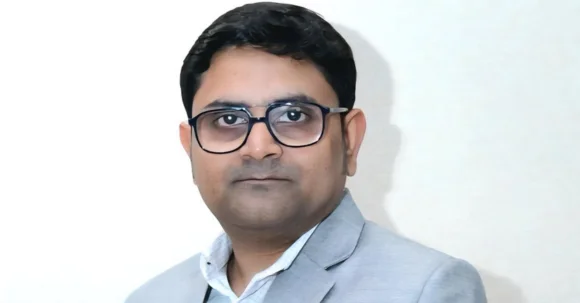
In this interview, Sanjib Seal, Head of Design and Engineering, Aurionpro Solutions, explains why traditional approaches are no longer sufficient for AI-ready facilities. He discusses the shift toward liquid cooling, factory-built modular infrastructure, sustainability-driven design, and integrated engineering models that can compress deployment timelines while preparing data centers for rapidly evolving AI workloads.
CIO&Leader: AI workloads are pushing rack densities far beyond traditional limits. At what point do conventional cooling systems become inadequate, and how is Aurionpro preparing for this shift?
Sanjib Seal: Historically, data centers started with 2–3kW per rack before moving to the industry standard of 6–10kW. Today, AI workloads have changed those assumptions entirely. The cooling strategy depends primarily on the GPU architecture being deployed, since AI infrastructure is GPU-intensive.
Many believe liquid cooling becomes mandatory at 30–40kW, but in reality, air cooling can still support rack densities of around 50–60kW, depending on the customer’s CAPEX and OPEX priorities. Beyond that threshold, however, liquid cooling becomes unavoidable because the heat generated in compact 1U and 2U servers simply cannot be dissipated efficiently using air.
Air cooling can support up to 50–60kW per rack, but beyond that, liquid cooling becomes unavoidable.
At Aurionpro, we are already designing facilities supporting rack densities of 275kW using NVIDIA’s Vera Rubin architecture, and discussions are underway for deployments reaching 600kW per rack. While liquid cooling can technically be deployed even at lower rack densities for energy efficiency, future AI factories operating at extreme densities will have no practical alternative.
CIO&Leader: Aurionpro recently secured a major AI-ready green data center project. What engineering innovations are being incorporated into such facilities?
Sanjib Seal: India’s biggest challenge today is not technology—it is execution speed and the availability of skilled manpower.
The country currently operates around 1.2GW of data center capacity, yet projections indicate this could reach nearly 9GW by 2030. Delivering that scale requires entirely new construction methodologies.
One major approach we have adopted is Design for Manufacturing and Assembly (DfMA). Instead of assembling critical electrical, cooling, and mechanical infrastructure entirely on-site, we manufacture and fully test these components in controlled factory environments before transporting them for installation.
The same philosophy extends to liquid cooling infrastructure. Specialized stainless-steel piping systems used for AI cooling cannot be fabricated like conventional piping. They require semiconductor-grade manufacturing, cleaning, testing, and quality assurance before arriving on site. This approach significantly improves quality while reducing deployment timelines.
CIO&Leader: Should operators retrofit existing facilities for AI workloads or build greenfield AI-ready data centers?
Sanjib Seal: The answer begins with understanding the workload rather than the building.
Before designing mechanical or electrical systems, operators must first understand the AI application, the GPU architecture, and the expected inference or training workloads. Many enterprises still struggle with this initial assessment.
The server architecture should dictate the facility design—not the other way around.
Hyperscalers already know exactly which servers and workloads they intend to deploy. However, many enterprises in India begin infrastructure planning without clearly defining their compute requirements. That often leads to inefficient infrastructure decisions.
The server architecture should always dictate the facility design—not the other way around.
CIO&Leader: AI dramatically increases power consumption. How can Indian operators balance sustainability goals while supporting these workloads?
Sanjib Seal: Power efficiency has become one of the defining challenges for AI infrastructure.
Earlier, data centers consumed around 4–5MW. Today, individual buildings may require 100MW, while future campuses are expected to reach 500MW.
Improving Power Usage Effectiveness (PUE) is therefore essential. Large operators are increasingly investing directly in renewable energy assets to secure 70–80% of their power requirements through solar and wind generation.
Within facilities, we focus on customized cooling systems designed specifically for Indian climatic conditions rather than simply adopting European or North American designs. By optimizing cooling architecture, selecting environmentally friendly refrigerants, and incorporating energy-efficient equipment, it is possible to achieve annual PUE values below 1.3.
CIO&Leader: How do tools like Computational Fluid Dynamics (CFD) and Building Information Modelling (BIM) improve real-world operations?
Sanjib Seal: CFD enables us to validate whether our cooling strategy will actually perform under real operating conditions by simulating airflow and thermal behavior before construction begins.
BIM, on the other hand, enables complete digital modeling of every component inside the facility—from piping and cable trays to walls and door clearances. This minimizes construction errors and significantly accelerates deployment.
Operationally, AI-driven Building Management Systems continuously analyze temperature, humidity, pressure, and environmental conditions to dynamically optimize cooling and power distribution. Once trained on facility behavior, AI can continuously improve operational efficiency.
CIO&Leader: Enterprises cannot afford to wait three years for AI infrastructure. How are modular designs changing deployment timelines?
Sanjib Seal: Traditional construction models are becoming incompatible with AI infrastructure.
Future AI factories will primarily consist of low-rise, horizontally designed buildings capable of supporting extremely high rack densities.
Factory-built modular infrastructure allows power systems, cooling modules, transformers, pumps, electrical panels, and even containerized data centers to be manufactured and tested simultaneously while civil construction continues on-site.
Factory-built modular infrastructure will reduce AI data center deployment timelines from 36 months to nearly 12 months.
Instead of waiting 24–36 months, projects can realistically be completed within 12–18 months using prefabricated systems.
Moreover, AI hardware evolves every two to three years. Since GPUs are refreshed frequently, infrastructure must prioritize flexibility over designing facilities expected to remain unchanged for decades.
CIO&Leader: Aurionpro offers both engineering consulting and turnkey execution. How do you see this model evolving?
Sanjib Seal: Traditional projects separated consultants from contractors, but AI infrastructure demands a far more integrated approach.
If design is completed first and execution begins months later, customers can lose six to eight months before actual construction even accelerates. That delay is unacceptable for AI projects where deployment speed determines competitive advantage.
Our teams are involved throughout the lifecycle—from design through execution and commissioning—which enables better coordination, faster decision-making, and fewer implementation challenges.
This integrated engineering model is already common across mature markets like the United States and Europe. India is moving rapidly in the same direction, particularly for private AI data center developments where speed has become the highest priority.