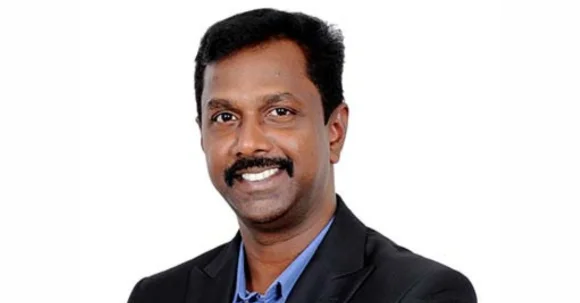
Vijayakumar Nadar,Chief AI Officer at NeevCloud outlines how sovereign AI cloud, orbital edge computing, Kubernetes-native infrastructure and GPU optimisation are shaping India’s next generation AI ecosystem.
As enterprises race to build AI capabilities, the conversation around infrastructure is shifting beyond GPUs and hyperscale cloud deployments to questions of sovereignty, edge intelligence and the future of compute itself. India’s AI ambitions are driving demand for sovereign cloud platforms, optimised GPU utilisation and cloud-native architectures that can support large-scale AI workloads while remaining compliant with emerging data governance frameworks. At the same time, next-generation concepts such as orbital edge computing are beginning to redefine how and where AI inference could be delivered for latency-sensitive and mission-critical applications.
In this interview, VijayaKumar Arumuga Nadar, Chief AI Officer, NeevCloud, discusses the vision for India’s sovereign AI cloud, its partnership with Agnikul to develop orbital edge data centres, the role of Kubernetes-native infrastructure in simplifying AI deployment, strategies for improving GPU utilisation, and how initiatives such as the IndiaAI Mission are helping democratise access to AI compute for startups while strengthening the country’s domestic AI infrastructure ecosystem.
CIO&Leader: NeevCloud’s partnership with Agnikul to develop 600 orbital compute satellites by 2030 has attracted significant attention. From both a capital investment and operational perspective, how does the economics of space-based GPU inferencing compare with conventional terrestrial, water-cooled hyperscale data centres?
Vijayakumar Nadar: Today, the biggest challenge for building data centres is no longer just constructing the facility—it’s securing land and, more importantly, access to power. In many places where land is available, adequate grid power isn’t. Conversely, locations with sufficient power often lack suitable land. Power infrastructure has become the primary constraint.
Our partnership with Agnikul addresses a different aspect of this challenge. Agnikul has developed reusable launch technology, including a patented upper stage that can be converted into an operational satellite instead of becoming space debris. That significantly changes the economics of deploying orbital infrastructure because the launch vehicle itself becomes part of the computing platform.
Another important advantage is that certain resources, particularly solar power, are naturally available in space. GPU computing in space has already been tested from a hardware perspective. The remaining engineering challenge is integrating storage, compute and service orchestration into a practical ecosystem.
Our vision is to build orbital edge data centres, not massive hyperscale facilities in space. These will be compact compute nodes specifically designed for AI inference rather than model training. The objective is to run specialised inference workloads close to where intelligence is needed and then transmit the inference results back to Earth efficiently.
CIO&Leader: Global hyperscalers continue expanding their physical data centre footprint in India. Yet you’ve argued that conventional data residency alone does not constitute true digital sovereignty. How does NeevCloud’s India-first AI SuperCloud differ from a local availability zone offered by global cloud providers?
Vijayakumar Nadar: Data residency and digital sovereignty are often confused, but they are fundamentally different concepts.
In the case of global hyperscalers, customer data may physically reside within Indian data centres, but their control plane remains globally distributed. Even when customer data stays local, metadata associated with that data is often processed or managed outside India.
Hyperscalers may keep customer data in India, but their control plane and metadata remain global. We built NeevCloud so the data, metadata, control plane, and governance all stay within India.
That distinction is extremely important.
At NeevCloud, not only does the customer data remain within India, but the control plane, metadata and operational management layer also remain inside the country. Nothing leaves the Indian jurisdiction.
True sovereignty is therefore not simply about where data resides; it is equally about who controls the infrastructure, metadata and governance mechanisms.
Our cloud has been architected with three layers of sovereignty:
- Local data residency
- Indian-controlled control plane and metadata
- Open-source infrastructure governed domestically
Many hyperscalers today market sovereign cloud offerings. However, current DPDP provisions still permit certain metadata transfers under customer consent. If future regulations become stricter around metadata governance, the distinction between genuine sovereign infrastructure and simply localised cloud regions will become even more significant.
CIO&Leader: You’re positioning orbital infrastructure as an edge computing platform. For latency-sensitive workloads such as autonomous systems, defence applications, logistics or maritime operations, how can Low Earth Orbit (LEO) compute fundamentally change real-time AI decision-making?
Vijayakumar Nadar: The biggest advantage is latency.
Consider a ship travelling hundreds of kilometres away from a coastal docking station. If all AI inference has to travel back to a terrestrial data centre before a decision is made, latency becomes substantial.
Now imagine placing an orbital edge data centre only around 350 kilometres above that operating environment.
Inference happens much closer to where intelligence is required, allowing response times in the range of 10 to 15 milliseconds.
That dramatically improves real-time decision making for mission-critical applications.
Another advantage is coverage.
There are many sensitive defence zones where physical edge data centres simply cannot be constructed due to regulatory or security restrictions. Orbital edge computing eliminates that limitation because the infrastructure remains in space while still providing ultra-low-latency intelligence to ground operations.
For sectors such as defence, shipping, remote logistics and critical infrastructure, this creates an entirely new edge computing architecture.
CIO&Leader: As NeevCloud expands this orbital computing vision internationally, every geography will have its own regulatory framework. How do you reconcile digital sovereignty with a global orbital infrastructure?
Vijayakumar Nadar: Sovereignty applies even in space.
Satellite placement follows defined orbital allocations, and those allocations are governed according to the jurisdiction they serve.
Although satellites orbit the Earth, the orbital deployment strategy is designed around the intended sovereign region. The satellite continues serving the designated geography while complying with applicable regulatory frameworks.
So sovereignty does not disappear simply because infrastructure moves into orbit.
CIO&Leader: AI developers today often work across fragmented proprietary consoles while managing Kubernetes workloads separately. How does NeevCloud integrate AI infrastructure into standard cloud-native workflows using Kubernetes primitives, CRDs and GitOps?
Vijayakumar Nadar: Kubernetes is actually the foundation of our entire control plane.
NeevCloud is built as a cloud-native Kubernetes platform, which is one of the reasons we’re participating in the open-source ecosystem.
We use Kubernetes-native technologies including Custom Resource Definitions (CRDs) and GitOps-based workflows throughout the platform.
Importantly, we are not reinventing Kubernetes.
Developers already understand Kubernetes, GitOps and the broader cloud-native ecosystem. Our philosophy is to preserve those existing workflows rather than forcing developers onto proprietary operational models.
Instead, our innovation happens in the optimisation layer.
We package, orchestrate and optimise these open-source technologies so AI workloads behave like native Kubernetes applications rather than requiring entirely different management paradigms.
CIO&Leader: GPU scarcity continues to be one of India’s biggest AI infrastructure constraints. In multi-tenant environments, GPU hoarding by one workload can affect many other customers. How does NeevCloud optimise GPU allocation while balancing enterprise isolation with startup affordability?
Vijayakumar Nadar: GPUs remain one of the most expensive infrastructure resources.
As a cloud provider, our challenge is not simply acquiring GPUs but ensuring they’re utilised efficiently.
Today we typically observe two very different customer behaviours.
Developers often drive GPU utilisation close to 100 percent, whereas many enterprise customers utilise only 30 to 40 percent of their allocated GPU capacity.
The real challenge isn’t adding more GPUs; it’s making every GPU work harder. Enterprise utilisation is often just 30–40%, and intelligent orchestration is the key to unlocking that unused compute.
That creates a significant amount of idle infrastructure.
Our control plane continuously analyses GPU utilisation and identifies unused capacity. The intelligence layer we’ve built enables those idle resources to be dynamically allocated elsewhere wherever appropriate.
At the same time, organisations that require dedicated GPU infrastructure can still receive fully isolated GPU environments.
Ultimately, our objective is simple:
Maximise GPU utilisation across the platform while maintaining enterprise-grade isolation wherever necessary.
That orchestration layer—understanding workload behaviour, data movement and GPU scheduling—is where much of our engineering investment is currently focused.
CIO&Leader: NeevCloud is also participating in the IndiaAI Mission. How is the government programme helping cloud providers and AI startups simultaneously?
Vijayakumar Nadar: We successfully cleared the fourth technical evaluation round under the IndiaAI Mission.
As part of the programme, we’re contributing 1,000 GPUs that will be made available through the government initiative.
The model is quite interesting because it supports both infrastructure providers and startups.
Government subsidises part of the GPU cost.
For example, roughly 40 percent of the GPU cost is supported by the government, while startups pay the remaining portion.
The IndiaAI Mission acquires GPU capacity from providers like us and then distributes subsidised access to startups developing AI solutions.
I believe this is one of the strongest initiatives introduced by the government because it simultaneously supports domestic infrastructure providers while making advanced AI compute affordable for India’s startup ecosystem.
It’s creating an ecosystem where both infrastructure supply and AI innovation can grow together.
.