
Rohit Shukla discusses how enterprise IT operations are evolving, the growing importance of observability in building resilience, and the path toward more autonomous operations.
As enterprises face a growing, complex digital landscape, the organisations are under pressure to quickly move from technology adoption to achieving measurable business outcomes. Amid growing infrastructure complexity, hybrid environments, and rising expectations for always-on services, many organisations still face challenges in visibility, observability, governance, and operational resilience.
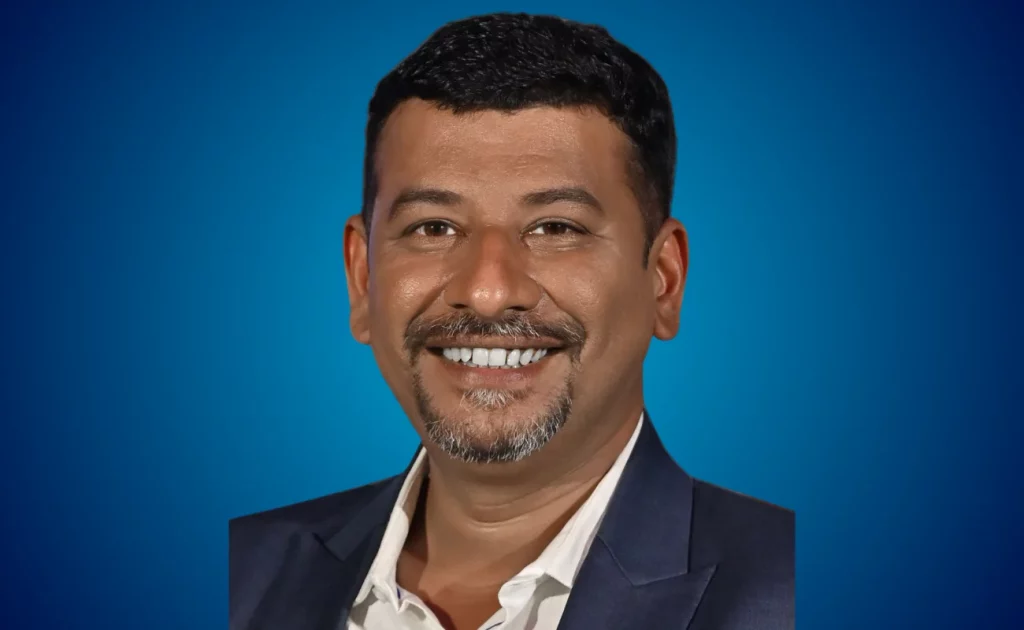
In a recent conversation with CIO&Leader, Rohit Shukla, Managing Director, APJ at SolarWinds, an enterprise software company that provides IT management, monitoring, and observability solutions for organisations, discusses how enterprise IT operations are evolving, the growing importance of observability in driving resilience, and the road toward more autonomous operations.
He also delves deeper into SolarWinds’ approach for augmenting human decision-making through intelligent automation, the role of its newly launched SW1 Agentic Teammate, and why establishing end-to-end visibility is critical for businesses to modernise their IT environments.
Shukla also reflects on SolarWinds’ journey following the Sunburst incident in 2020, the company’s continued investments in India, and how it is enabling customers with their AI strategies. Below are edited excerpts from the conversation.
CIO&Leader: AI and agentic AI are gaining strong momentum in enterprises, but many organisations are still unsure about the most impactful use cases. How do you see this market shaping up in India, and what role is SolarWinds playing in guiding customers through this shift?
Rohit Shukla: There is significant excitement about AI, but also some anxiety. Our latest IT Trends Report, with strong participation from India, shows organisations are approaching AI in two main ways.
The first is improving efficiency and productivity. Enterprises are asking how to automate routine tasks, improve business efficiency, and help employees do more with less.
The second approach is transformational. Organisations are exploring how AI can enable new capabilities, such as entering new markets, creating customer engagement channels, or unlocking entirely new business opportunities.
Meanwhile, security and governance teams are raising key questions: Do we have control? Are there guardrails? Can we trust these systems? Balancing innovation with governance is shaping the current phase of AI adoption.
AI can automate routine tasks, but customers should always retain control and determine their preferred level of autonomy.
At SolarWinds, we have already launched agentic AI capabilities on our platform. Our vision is to transition operators into orchestrators, while maintaining a “human in the loop” approach. AI can automate routine tasks, but customers should always retain control and determine their preferred level of autonomy.
CIO&Leader: How are Indian enterprises evolving in their approach to IT operations and observability? What are some of the biggest infrastructure management challenges CIOs face today?
Rohit Shukla: The biggest challenge today is that businesses have virtually no tolerance for downtime.
Boards are less concerned with specific infrastructure components and focus instead on uptime, service levels, and business continuity. CIOs and CTOs are now evaluated more on resilience than on infrastructure management.
Five pillars—governance, compliance, resilience, observability, and autonomy—will define the future of enterprise IT by 2030.
This is where observability is essential. By monitoring, correlating, and analysing the environment, organisations can predict issues and identify root causes more quickly when incidents occur.
The focus has shifted from server and network monitoring to uptime, resilience, and service-level outcomes.
CIO&Leader: How close are enterprises to achieving the vision of autonomous IT operations?
Rohit Shukla: We are still quite far from this goal. The first step is visibility, as automation is not possible without it. Many organisations lack end-to-end visibility, and some still manage assets in spreadsheets, with separate teams handling networks, servers, and storage independently.
Without a unified view, effective correlation is not possible.
Once organisations achieve visibility, they can analyse incident volumes, alert patterns, and operational bottlenecks. At this stage, AI can serve as a digital assistant, helping teams resolve issues more quickly.
This is a gradual process. Some organisations are in advanced stages, while others are just beginning. Banking and IT services are generally further ahead, while manufacturing, healthcare, and pharma are still in earlier phases.
Every organisation is on its own transformation path.
CIO&Leader: Are we overhyping autonomous IT operations before enterprises are operationally ready?
Rohit Shukla: I would not call it hype, as AI is now a reality. Some organisations will adopt autonomous capabilities by 2026, while others may not be ready until 2030. The timeline depends on each organisation’s maturity and readiness.
AI will play a major role. Unlike humans, digital assistants provide continuous monitoring and add an extra layer of operational assurance.
The question is not if organisations will adopt AI, but when.
CIO&Leader: The observability market has become increasingly crowded, with vendors specialising in infrastructure monitoring, application performance management, and security operations. How does SolarWinds differentiate itself in such a competitive landscape?
Rohit: There is no silver bullet in observability. Different vendors solve different problems and have evolved from different starting points. Some vendors built their capabilities around application performance monitoring, focusing on code-level visibility, user experience, and application behavior. SolarWinds, by contrast, established its foundation in infrastructure monitoring, with deep expertise across networks, servers, storage, databases, and hybrid IT environments. While we have since expanded into observability and application monitoring, its heritage remains rooted in infrastructure and IT operations management.
Security vendors also play an important role in the broader IT operations ecosystem by addressing threat detection, compliance, and incident response. As a result, enterprises today are not looking for a single platform that does everything. They are looking for platforms that work together effectively.
For large enterprises, the conversation is rarely about replacing one vendor with another. The real challenge is managing the complexity created by years of department-level technology purchases. Many organisations operate dozens of monitoring, management, and security tools across different teams, which often leads to fragmented visibility and operational inefficiencies.
Consolidation is now a strategic priority. Customers want to reduce dozens of tools to a few strategic platforms that offer broad visibility and operational functionality without sacrificing functionality.
We see the future as one of coexistence, not replacement. Customers may use different platforms for application performance, security operations, and infrastructure observability. The goal is an integrated ecosystem that correlates data across domains, providing end-to-end visibility and faster problem resolution.
Our strength lies in observability and infrastructure management. Other vendors may have strengths in application performance management or cybersecurity. Ultimately, customers benefit most when these capabilities work together, enabling simplified operations, better resilience, and stronger business outcomes.
CIO&Leader: SolarWinds recently introduced the SW1 Agentic Teammate. How is it enabling more autonomous and self-healing IT environments?
Rohit Shukla: SW1, or SolarWinds One, is the first agent in our broader roadmap, with more agents planned. We have integrated conversational AI into our observability platform, and existing customers can access it by upgrading to the latest version.
The response has been extremely positive. One of the first benefits we noticed was a reduction in support inquiries because customers can now ask the platform questions directly rather than opening support tickets.
We are also seeing customers experiment with entirely new workflows. They are exploring scenarios that previously required specialised expertise and are using the platform in more innovative ways.
SW1 is enhancing efficiency and enabling new operational possibilities.
CIO&Leader: Some industry analysts have warned that vendors sometimes overstate AI’s capabilities. Is SW1 truly autonomous, or is it primarily an AI assistant?
Rohit Shukla: Our philosophy is clear: human in the loop. We ensure someone oversees the AI. We have embedded trusted AI principles so customers can see how the AI reached its conclusions, which sources it used, and what information it evaluated.
We see AI as an assistant, not a replacement for humans. The future is people making faster, better, and more informed decisions with AI support. AI is the co-pilot, not the pilot.
CIO&Leader: SolarWinds met significant scrutiny following the Sunburst incident. Have you overcome the trust challenges associated with that event?
Rohit Shukla: The SEC case related to Sunburst was dismissed last year, clearing SolarWinds’ name. Notably, the incident mainly affected customers who had not upgraded their platforms despite receiving notifications.
Today, some of India’s largest and most heavily regulated banks run their observability environments on SolarWinds. These institutions have rigorous security testing processes and extensive internal controls.
For us, customer confidence is demonstrated by adoption. The continued reliance of highly regulated organisations on SolarWinds shows our progress in secure-by-design principles and software assurance.
CIO&Leader: Are Indian customers still largely cost-driven buyers, or are they increasingly prioritising resilience and operational visibility?
Rohit Shukla: I don’t believe India is a cost-driven market. India is a value-driven market. Customers want the maximum value from their investments. Of course, negotiation is part of the process, but organisations are willing to invest when they clearly understand the business value.
We are not the lowest-cost solution, but we continue to grow because customers recognise the value we provide.
Competing only on price leads to diminishing returns. We prefer to compete based on outcomes.
Competing only on price leads to diminishing returns. We prefer to compete based on outcomes.
CIO&Leader: Which industry verticals represent the strongest customer base for SolarWinds in India?
Rohit Shukla: Banking is our largest focus area, followed by IT and IT-enabled services, then pharma, manufacturing, and healthcare. These industries prioritise resilience, observability, and operational continuity, making them natural adopters of our platform.
CIO&Leader: What does SolarWinds’ long-term commitment to India look like from an investment and innovation perspective?
Rohit Shukla: India is one of our most strategic global markets. Our largest engineering team, about 500 professionals, is based in India, and our global finance operations are consolidated in Mumbai. We also invest significantly in sales, pre-sales, support, and customer-facing functions.
We see India as critical for both revenue and as a strategic hub for talent and innovation.
CIO&Leader: How is AI changing the skills organisations need, particularly in IT operations and engineering?
Rohit Shukla: We will see fewer operators and more orchestrators. AI will handle more routine tasks, allowing humans to focus on correlation, decision-making, workflow design, and long-term strategic problem-solving.
The quality of work will improve, with people spending less time on repetitive tasks and more time analysing business impact and operational relationships.
Talent is not a challenge for India, which has exceptional professionals. The real challenge is providing opportunities for talent to contribute at higher levels of value creation.
CIO&Leader: Looking ahead five years, what will enterprise IT operations look like? And what is your advice to Indian CIOs navigating AI transformation?
Rohit Shukla: My advice is straightforward: begin with end-to-end visibility, then progress to observability and correlation. Only after these steps should you scale AI. The objective is resilient operations, maximum uptime, and minimal incidents.
In the next five years, IT operations will become more autonomous, resilient, and experience-driven. Organisations will rely more on technology to automate routine tasks, allowing human expertise to focus on higher-value decisions.
Governance, compliance, and auditability will remain essential. AI adoption must always include strong supervision and responsibility.
Those pillars, governance, compliance, resilience, observability, and autonomy, will define the future of enterprise IT by 2030.