Over the past decade, the country has witnessed a significant expansion in its vehicle population, a rapid extension of its highway network, and the emergence of one of the world’s most ambitious clean energy transition agendas. Yet amid this progress, a critical gap has persisted, one that affects every driver, fleet operator, and logistics planner navigating Indian roads daily: the absence of reliable, real-time information about fueling availability.
An infrastructure built on assumption
For most of India’s fueling history, decisions were driven by familiarity and approximation. Drivers relied on known stations along familiar routes. Fleet operators depended on the experience of drivers rather than verified data. The distinction between knowing where a station exists and knowing its real-time operational status, current stock levels, queue conditions, and fuel grade availability was rarely acknowledged because the tools to bridge that gap simply did not exist.
This is now changing. And the significance of that change extends well beyond the individual driver’s convenience.
The true cost of information gaps
The inefficiency embedded in India’s fueling ecosystem has rarely surfaced as a visible crisis. Its costs are distributed and cumulative, present in every hour a commercial vehicle spends idling at a congested pump, every litre of fuel consumed while searching for an available CNG station, and every electric vehicle driver who arrives at a charging point shown as available on a static map only to find it occupied or non-functional.
These are not marginal inconveniences. For the commercial logistics sector, idle time translates directly into operational cost and delivery delays. For India’s growing base of CNG and electric vehicle users, infrastructure uncertainty functions as a structural barrier to adoption. CNG tells a similar story from a different angle. India’s compressed natural gas vehicle fleet has more than doubled in five years, crossing seven million vehicles, and the country has been adding new stations at a rate of roughly 800 to 1,000 a year. But growth in station count does not by itself solve the queue and stock-visibility problem drivers face during peak hours, particularly in dense urban corridors. The hesitation many prospective EV users feel is not solely about vehicle cost or range; it is about confidence in the ecosystem around the vehicle. That confidence is, at its core, an information problem.
What real-time visibility enables
When fueling infrastructure is integrated with live data systems, the quality of decision-making at every level of the ecosystem improves measurably. Individual drivers can plan journeys around verified fuel availability rather than assumed availability. Fleet managers gain the ability to optimise dispatch schedules based on fuel stop efficiency and predicted wait times. Station operators can anticipate demand patterns rather than react to them. And infrastructure planners, across both government and private sectors, can identify gaps and investment priorities using continuous, granular data rather than periodic surveys.
The evidence from early adoption is already instructive. In urban corridors where CNG penetration has grown significantly, improved availability data has begun to distribute demand more evenly across station networks. When drivers have access to accurate, real-time information, they make more efficient choices. Queue pressure on high-demand stations is reduced. Existing infrastructure performs better without requiring immediate physical expansion.
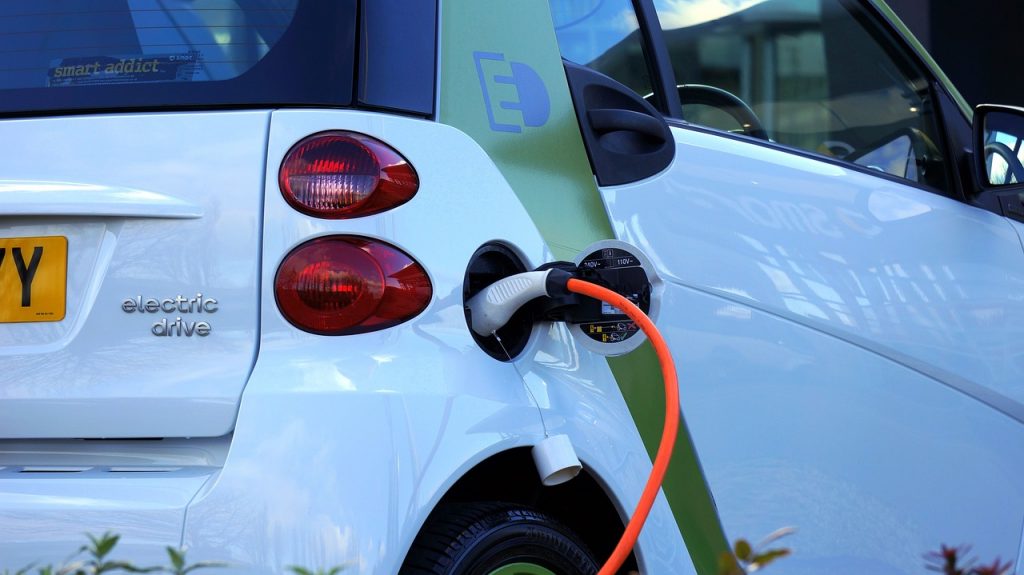
For electric vehicle charging, the implications are more consequential still. India has committed to an ambitious electric mobility trajectory, and charging infrastructure is expanding at a pace. However, growth in the number of installed charging points does not automatically translate into usable capacity. A charging station that is perpetually occupied, technically faulty, or simply invisible to most drivers contributes little to the transition. Real-time status data is the mechanism that converts installed infrastructure into reliable, accessible infrastructure. The scale of this gap is significant. As of March 2026, India had over 27,000 public charging stations installed, but nearly 5,000 of them were non-operational at any given time, invisible dead ends on a map that otherwise looks complete. With over six million electric vehicles now on Indian roads, the charger-to-vehicle ratio stands at roughly one to 235, well behind the one-to-6 to one-to-20 range considered adequate internationally. A map that cannot distinguish a working charger from a broken one does little to close that gap.
Building the intelligence layer
What is emerging across India’s fueling ecosystem, gradually and often without formal recognition, is an intelligence layer that sits above the physical infrastructure. The assets themselves, petrol stations, CNG outlets, EV charging points, and emerging hydrogen infrastructure, are essential but insufficient on their own. What makes them function effectively at a national scale is the continuous flow of data surrounding them: live availability, pricing, wait times, compatibility information, and reliability history.
This intelligence layer is not an optional enhancement. In a country of India’s geographic scale and diversity, where a long-haul driver may cover 800 kilometres with limited refuelling options and an urban commuter may have numerous options but no visibility into any of them, real-time data is the connective tissue that holds a functional fueling ecosystem together.
It is also the prerequisite for the next generation of fueling infrastructure capabilities: dynamic pricing that responds to real demand, predictive restocking that prevents fuel shortages before they occur, and integrated journey planning that incorporates fuel stops as naturally as traffic management. None of these outcomes is achievable without a live, accurate data foundation.
The road ahead
India’s fueling infrastructure transformation will not be announced by a single milestone. It will advance incrementally, station by station, data point by data point. Its consequences, however, will be felt at scale: in the efficiency of the logistics sector, in the accelerated adoption of clean-fuel vehicles, and in the everyday experience of hundreds of millions of road users.
The vehicles are getting cleaner. The networks are expanding. The policy intent is clear. What has been missing, and what is now within reach, is the informational infrastructure to make it all work with the reliability and efficiency that India’s mobility ambitions demand.
The physical foundation is largely in place. The intelligence layer is what comes next.
Authored by Vaibhav Kaushik, Co-founder & CEO of Nawgati